A young woman who found an eternal light within the darkness of physical silence.
Location: Sirmione | Desenzano del Garda | Era: 1950s – 1960s | Reading Time: 4 Minutes
In the vibrant setting of Lake Garda during the 1950s, a young medical student walked the streets of Sirmione, hiding an immense spiritual strength behind a fragile exterior. This is the story of Benedetta Bianchi Porro, a woman who, despite losing her sight, hearing, and mobility, became a beacon of hope and was declared Venerable by the Catholic Church.
🗝️ Key Facts
- Where: Sirmione (Historic Centre) & Desenzano del Garda.
- Era: 20th Century (1936–1964).
- Visitability: Visible from outside (Commemorative plaque in Sirmione).
A Bright Mind on the Shores of Garda
Benedetta was born in Dovadola, near Forlì, on August 8, 1936. Her life was marked by challenges from the very beginning; polio struck her at just a few months old, permanently affecting her right leg. However, her connection to Lake Garda began in 1952, when her family moved to Sirmione. Her father, an engineer named Guido, had accepted the position of Technical Director at the renowned Sirmione Thermal Baths.
Despite her physical limitations—wearing a back brace and undergoing surgeries—Benedetta possessed a brilliant and determined mind. She attended the Classical High School in Desenzano del Garda, graduating in October 1953. A touching anecdote from her final oral exam highlights her condition: when asked a question, Benedetta remained smiling but silent. She had not heard the examiner. The professors, realizing the situation, switched to written questions, allowing her to complete her diploma with dignity.
Driven by a desire to alleviate human suffering, she enrolled in the Faculty of Medicine at the University of Milan. She passed several exams with determination, even as her health rapidly declined.
The Diagnosis and the Darkness
In 1957, utilizing her own medical training, Benedetta diagnosed herself with diffuse neurofibromatosis (Recklinghausen’s disease), a condition causing multiple tumors on the nerves. Her intuition was tragically correct. The disease was relentless.
By 1959, following spinal surgery, she was paralyzed in the legs. In 1962, she traveled to Lourdes seeking spiritual rather than physical healing. The progression of her illness was merciless: by 1963, she had lost her hearing, sense of touch, taste, and smell. Totally paralyzed and eventually blind, she was trapped in a silent, dark prison. Yet, she found a way to communicate through a rudimentary alphabet tapped out on her right hand, the only part of her body that retained a minimum of sensitivity.
Benedetta passed away on January 23, 1964, at the young age of 27.
A Legacy of Light
Far from being a story of despair, Benedetta’s life is remembered as a testament to joy and faith. On December 23, 1993, Pope John Paul II proclaimed her Venerable. In Sirmione, her memory is preserved by a commemorative plaque placed at the entrance of her former home in November 1996.
Benedetta’s writings reveal a profound spirituality comparable to St. Catherine of Siena or St. Teresa of Lisieux. She viewed her suffering not as a curse, but as a path to truth. She wrote that “the cross is the meaning of everything” and that one must “trust in God with eyes closed.”
From her silent room, she dictated thoughts that continue to inspire. Her handwriting, though uncertain in her final years, conveyed crystal-clear concepts: “Charity is dwelling in others,” and “Love is light that comes from heaven.”
The Final Message
Benedetta’s life transformed the hearts of those around her. In a letter to a friend named Natalino, who was also suffering from a severe infirmity, she wrote: “I know that at the end of the road, Jesus is waiting for me. First in the armchair, now in bed… I have found that God exists and is love, faithfulness, joy.”
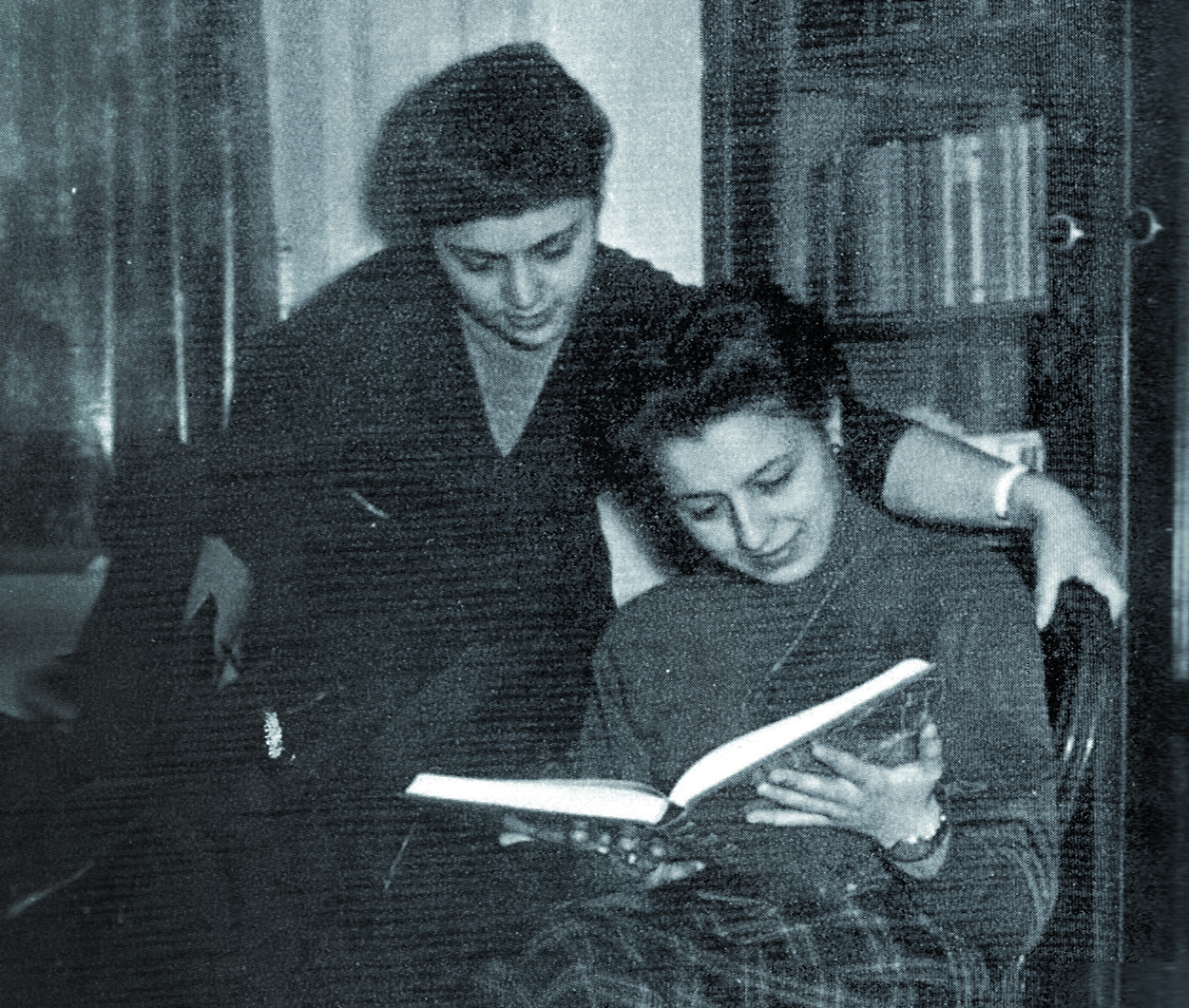
She often asked her mother to read her the poetry of Giovanni Pascoli, finding comfort in the verse: “The cloud that was blackest in the day / was the one I see pinkest / in the last evening.”
Benedetta Bianchi Porro remains a luminous figure in the history of Sirmione, a reminder that even in the deepest shadows, the human spirit can shine with an unquenchable light.