Garda and Bardolino’s Medieval Lombard and Adelaide History Presentation
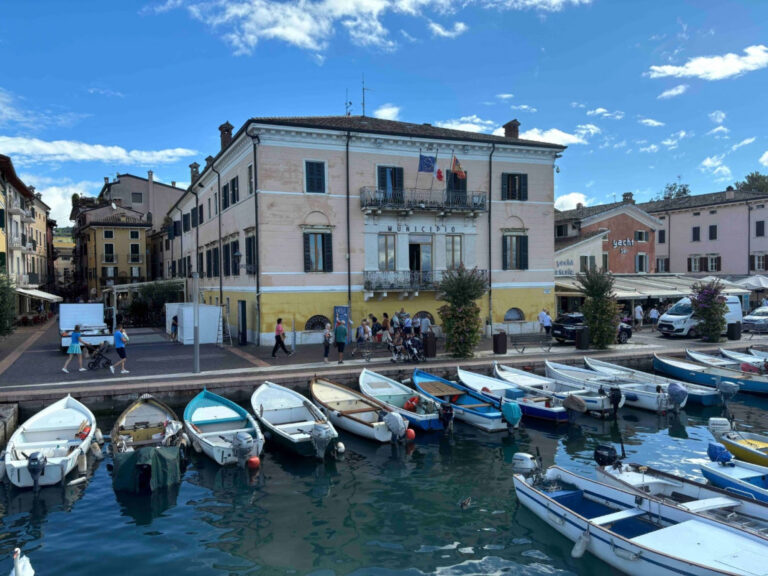
Adelaide and the Lombards arrive at the literary cafés of Christmas amidst olive groves. Tomorrow at 6 PM, the booklet “La Rocca di Garda fra mito, storia e leggenda” (The Garda Fortress between Myth, History, and Legend) will be presented, which contains the story of the medieval fortress where Adelaide of Burgundy was imprisoned—Queen of Italy and later Empress—along with the biography of this important woman of European medieval history, as well as an illustration of the Lombard itinerary that unfolds between Garda and Bardolino, revealing ancient chapels and ruins of millennia-old castles.
Venue and Organization of the Event
Where does the presentation take place? At the Hotel Regina Adelaide, of course: could the choice have been different? The publication of the Adelaide booklet has been coordinated by Fabio Gaggia, vice-mayor and culture councilor in Garda, responsible for the Adelaide ’99 project (initiated by the municipal administrations of Garda and Bardolino and the Province of Verona), as well as one of the leading figures in the Lake Garda cultural scene.
«This is», Gaggia explains, «a reworking of a booklet we already published two years ago, which quickly sold out. The original text has been reviewed, and a chapter has been added about the Lombard itinerary conceived within the Adelaide ’99 project and the exhibition in Brescia on the future of the Lombards».
Contents and Routes Presented
The pages of the booklet (texts are in Italian and English) first focus on the figure of Adelaide, on the Old Fortress (currently undergoing an archaeological campaign led by Gian Pietro Brogiolo’s team), and on the Camaldolese hermitage of Monte San Giorgio (the “friars’” fortress). Then, as mentioned, the Lombard itinerary that develops between Cisano, Bardolino, and Garda, leading to the discovery of the Pieve di Garda (Garda Parish Church), the Fortress, the church of San Severo in Bardolino, and further into Bardolino territory, the beautiful church of San Zeno within the town, and San Vito di Cortelline, in the countryside.
In Cisano, visitors are directed to see the church of Santa Maria, whose façade reflects Romanesque architecture.
Angelo Peretti