Garda Bomb Inquiry: Lega Nord Questions Lake Safety, Radioactivity
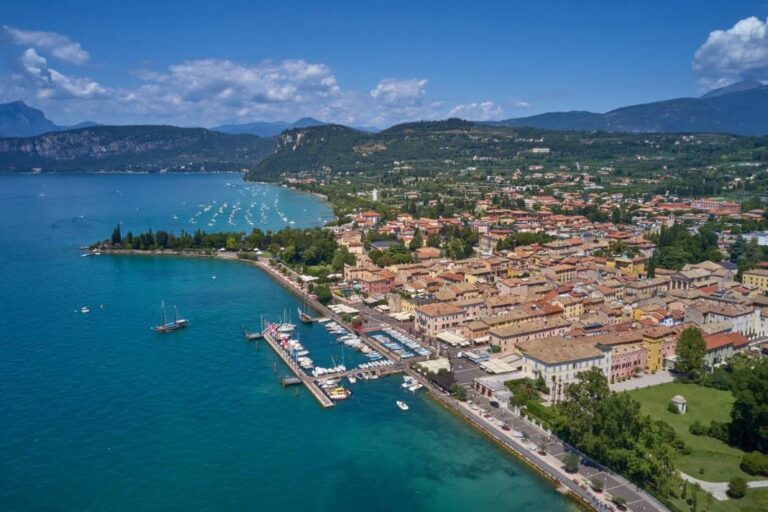
The Garda seeks clarity regarding the bombs dropped into the lake on April 16, 1999, during the full-scale Kosovo war, by a NATO F-15 in distress. The six devices—three laser-guided and three cluster bombs—have not yet been recovered, despite investigations launched a year and a half ago.
Concerning this incident, which has sparked controversy and countless calls for explanations, the Lega Nord of the Province of Trento has now also intervened with a parliamentary question addressed to President Lorenzo Dellai. Essentially, the Lega requests to know what the Trentino provincial government intends to do to address and resolve the issue.
It is yet another quest for truth amid a tale riddled with uncertainties. A truth that today, amidst controversy over the military use of depleted uranium, is earnestly demanded by all the residents of Garda.
Requests by Lega Nord
The Lega Nord Trentina specifically asks whether the operation to recover unexploded ordnance and the remediation of the Garda Lake bottoms has been completed; whether analyses have been carried out to verify the presence of radioactive isotopes (additives based on depleted uranium or other substances) on the recovered ordnance and what the results of those tests are; and whether the presence of these devices has caused damage to the lake environment or compromised water safety.
The matter, which is also part of an investigation initiated by Brescia prosecutor Giancarlo Tarquini, was recently addressed by the Brescia, Trento, and Verona sections of Rifondazione Comunista, which filed double reports (to both the military and civil judiciary).
However, regarding the nature of the bombs—dropped at an unspecified point in Garda—there remains, for now, a thick veil of mystery.