Gardesana Tunnel Excavation Plan to Create Lakefront Parking and Green Space
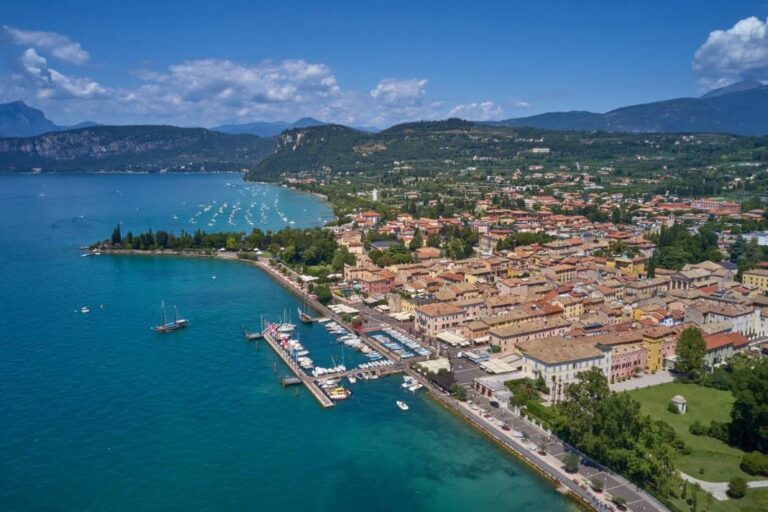
The idea, although not entirely original, is bold: to tackle two birds with one stone. Specifically, to find a solution for the massive pile of rocky material that will be produced in very short order from the excavation of the tunnel toward Limone on the Western Gardesana, and at the same time generate valuable space for the city, right on the lake, suitable for creating the long-held dream of a parking lot (similar to Limone) or for gaining green space and a promenade.
Essentially, it involves widening the lakeside area in front of the Ponale power plant, from Piazza Catena to the Casa Rossa. Councilor Matteotti has already secured approval from the city council and provincial authorities, both political and technical: now awaiting confirmation from the water service.
Technical and procedural details
The starting point is straightforward. The tunnel’s cross-section is 80 square meters, with a base of 11 meters (two lanes of 3.5 meters each plus sidewalks and safety zones). The excavation length is planned to be approximately 1200 meters, of which 960 meters for the main roadway tunnel and an additional 160 meters for a service tunnel, perpendicular to the main one.
From the mountain, approximately 90,000 cubic meters of rock need to be excavated. Since the excavation progresses at a rate of 21 meters per day (seven meters on three fronts simultaneously), the total time needed is 120 working days. According to engineer De Col, it will require 150 trucks for each of those 120 days of excavation.
It is true that the big construction transport bins hold between 7 and 8 cubic meters; however, the volume of gravel and soil extracted is greater than that of solid rock (and the 90,000 cubic meters refer to the volume of solid rock).
The proposal by Deputy Mayor, supported by the entire city council and backed by Dellai and the Trentino technical experts, is to dump this waste material into the lake in front of the power plant to create a parking area up to the Casa Rossa.
The idea had already circulated twenty years ago when removing the enormous pile of rock excavated during the tunnel construction in Ledro: the debris mountain remained parked on top of Via Ardaro for several years.
Provincial technicians have asked the municipality to make at least one hectare of land available for depositing the Trentino portion of the waste material. At that time, Councilor Matteotti also proposed: why not instead dump the inert material into the lake, creating a shoreline defense like the one used during the construction of the lakeside promenade?
There are surveys of the depth in that stretch; however, more precise measurements will be conducted. Additionally, sheet piling will be used on the lakebed to contain the rocks toward the open water.
The project will definitely be realized. If the very short timeframe does not allow obtaining the necessary permits to start using the stones from the new Gardesana next month, the extracted material from beneath Lavino will be placed at the lake bottom by next year, at the latest in 2003, once the tunnel for the western bypass is finally built.