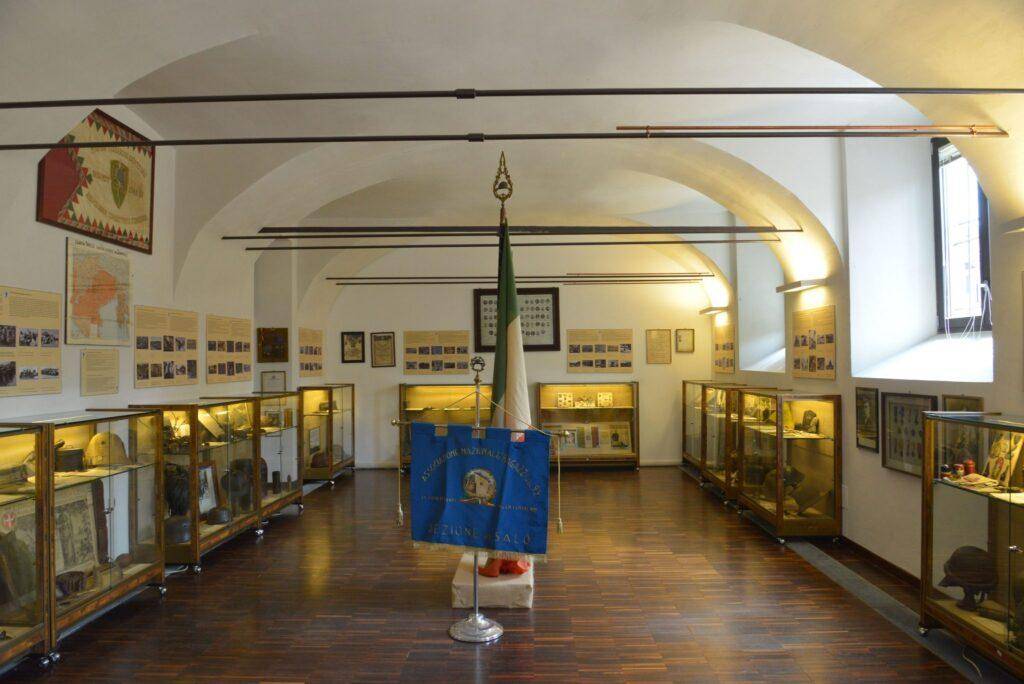
The Museo del Nastro Azzurro in Salò, housed in the former Santa Giustina monastery at the MuSa, preserves memorabilia, documents and memories covering about two centuries of the area’s socio-military history. The collection spans the period from 1796 to 1961, from Napoleon’s arrival through the wars of independence and the world conflicts, focusing on decorated service members and the communities of the Salò area.
The museum’s core dates back to 1934, when the local Nastro Azzurro group was promoted by decorated individuals including doctor and former Alpini officer Adolfo Battisti and printer Luigi Ebranati, a former Bersaglieri. After Battisti’s death in 1942, Ebranati continued the project for 40 years, dedicating it to decorated individuals, the fallen and his late friend. In 1949 the museum-sacrarium was named after Battisti, and in 1976 the Fondazione Museo Storico del Nastro Azzurro was created, becoming a legal entity in 1981 under President Sandro Pertini.
The exhibition brings together weapons, uniforms, insignia, publications, plaques and sculptures, along with documents and propaganda posters. It highlights three main threads: stories of military valor awardees, wartime events involving Salò, and the evolution of propaganda across different eras. According to the MuSa, the section is unique in Italy and complements the other collections hosted at Santa Giustina.
Italian Version