Garda Olive Oil: Certification, Tradition, and Market Preservation
A niche product that must be valued but also protected through the acquisition of DOP certification. These are the conclusions reached by the speakers at the conference organized by Adiconsum of Verona in collaboration with the Comune di Brenzone, titled “From Origins to Quality of Garda Extra Virgin Olive Oil.” “Obtaining quality certification is not simple because the product must meet specific requirements outlined in the relevant regulation,” explained Michele Abruzzi, evaluator at the Centro sperimentale per la qualità alimentare di Thiene.
To obtain DOP certification, the first requirement is to guarantee the provenance area, that is, demonstrate that olive groves are located within the DOP zone, with precise varietal percentages, and that cultivation has been carried out using traditional techniques. The second set of requirements concerns the milling process, meaning the harvesting, transportation, and storage phases. The maximum allowed yield is 50 quintals per hectare; the pressing must occur within five days of harvesting in a designated area specified by the regulation, and the oil yield must be 22 percent per quintal of olives. Finally, the product must exhibit specific physical-chemical and organoleptic characteristics.
Additionally, packaging must be documented with numbered seals to ensure product traceability, and labels must include the production year. “But the most important aspect is the ability to document to an independent body, such as CSQA, that these requirements have been met,” concluded Abruzzi. “This includes cadastral maps, milling registers, labels—everything needed to prove adherence to the regulation. The final decision will rest solely with the European Union.”
Recovery and protection of oil-growing tradition in Garda
Equally important for the revival of Garda’s olive oil is the need to overcome sectionalism. For Alfonso Garampelli, Adiconsum Veneto, “the key is to work as a team. Olive growers need to unite, create supply chains together with restaurateurs and those who can propose this product on the market,” Garampelli stated. “Commercialization already exists. The oil is part of the agri-food basket of a territory that is exceptional as a whole.”
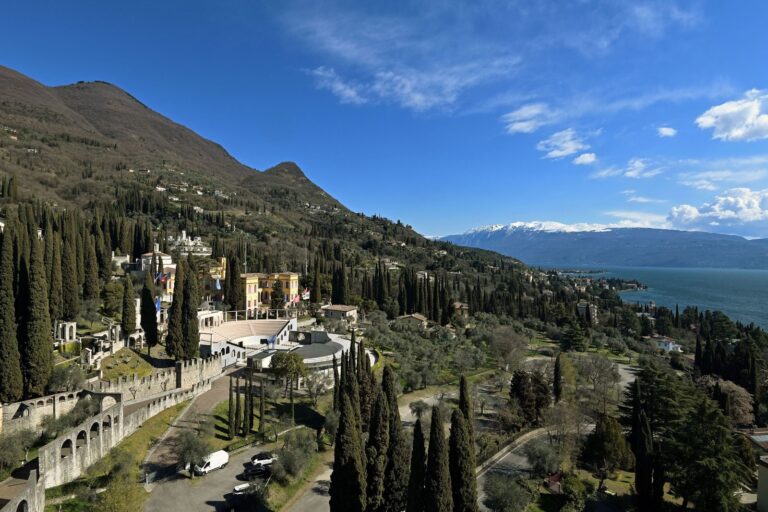
“Garda olive oil is a niche product that must be valorized because of its very high production costs. If left anonymous on the market, it risks disappearing.” Luigi Miele of Ial Cisl recounted the history of olive growing in Garda. “Producing oil in Garda has always been challenging due to the rugged terrain. The first plantations date back to the early Middle Ages, around the 9th century, when, following the fall of the Roman Empire and the closure of trade routes, Spanish imports were no longer possible,” he explained.
“Only then did peasants clear forests, terrace the land, and plant the first olive trees in an area previously considered inaccessible and climatically unsuitable. Garda is, in fact, the northernmost region in the entire Mediterranean where olives grow. The reasons were primarily religious; it was the only fat that could be consumed instead of animal fats during periods of Lent, and it was also used for lighting chapels because it was considered sacred and pure. Monasteries, from San Zeno to Bobbio and San Colombano near Piacenza, were among the major consumers,” he added.
Since the Middle Ages, techniques of cultivation, harvesting, and milling have not changed significantly, but now we are witnessing significant transformations. However, our oil faces competition from regional oils which are less expensive. To prevent damaging repercussions—especially for small producers—it is crucial to protect it by all possible means,” concluded Antonella Traina.