Giorgio Scerbanenco’s Mantua Novel Highlights Local Scenes
This evening in Borghetto, during the banquet on the Visconteo bridge, a special award will be presented to Arena for its ongoing support of the event over the years. Piero Marcolini, journalist and author of detective novels for young readers, will be awarded the «Nodo d’Amore» prize. But Valeggio and the Mincio Valley have already served as the setting in a novel by Italy’s most famous Italian-style crime writer: Giorgio Scerbanenco.
Biography of Giorgio Scerbanenco
The title of the book is «Elsa e l’ultimo uomo» (Elsa and the Last Man). Giorgio Scerbanenco was born in Kiev in 1911. His father was a Greek language professor of Ukrainian origin. His mother, who was Mantuan, took little Giorgio to Milan during the tumult of the October Revolution, a period during which the whereabouts of his father were lost.
Scerbanenco began writing for women’s weekly magazines. After meeting Oreste del Buono, he started creating «dark» stories: «Venere privata», «Traditori di tutti» (Traitors of All), «I ragazzi del massacro» (The massacre boys), followed posthumously by collections of stories from «Milano calibro 9» and «Il centodelitti». This gloomy and lonely man died in Milan in 1969, unwittingly becoming a classic, after receiving the «Grand Prix de la Littérature policière» in 1966.
Publications and Themes
«Elsa e l’ultimo uomo» was first published in serialized form in the weekly «Annabella» and later as a book published by Rizzoli in 1958, reissued in a new edition in February 1975. The jacket description states, «This is the story of a bad man» and «and a woman in love with him. For the protagonist, Elsa, discovering who the man she loves truly is is a terrible experience».
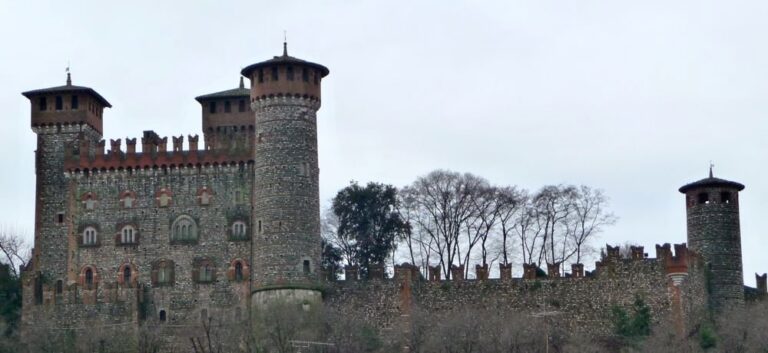
The novel is set in Mantua, but lively scenes in pinkish hues depict other parts of the Mincio: Valeggio, Borghetto, the Scaliger castle, the Visconteo bridge (Ponte Rotto), as can be seen by flipping through the volume at various points.
Scenes from the Novel
On page 101: «…Dear Antonio, don’t come to pick me up, I’m going to Borghetto on my own, then I’ll come to see you and explain»; on page 103: «After Valeggio, under the ever warmer sun, in the vast sea of green fields bursting with spring vitality, they crossed the Ponte Rotto»; further impressions follow sequentially.
On page 104: «He leaned out the window and saw behind him the towering castle of Valeggio. In front of them, the bridge spanned the entire valley of the Mincio; the road on the bridge was new, paved, but supported by crumbling, dilapidated, ancient walls». On page 107: «Look!» Elsa said, opening the sunroof windows. «From there, you could see the entire Mincio valley, the winding, sparkling river under the sun, the Ponte Rotto, and in the background, the castle of Valeggio. Last year, I was here myself, and I had to run away, or I’d gain too much weight».
Additional Details and Dedications
Who wouldn’t think of the typical local dish, tortellini? On page 127: «Everything was shining, the sun high and hot, the clear green water of the Mincio, and the vast valley where the river flowed beneath the blue sky…» Valeggio could dedicate a street to the Italian-Russian novelist who involves it firsthand, avoiding figures who have nothing to do with the town, like the proverbial cherry on the cake.