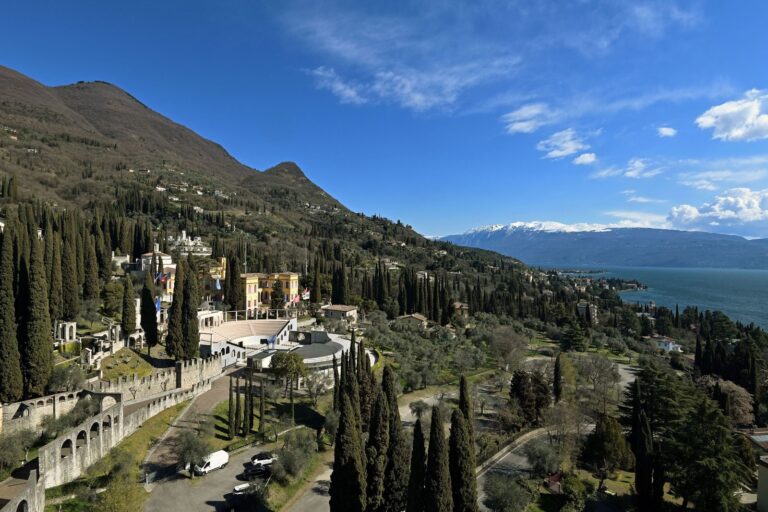
Lake Garda Waters Clear: No Toxic Algae, Beaches Open Across the Lake
There are no toxic algae in the waters of the Brescia Riviera of Lake Garda. This has been confirmed for several weeks by the specialized analyses carried out by the ASL di Brescia, which has activated a genuine water monitoring program even in this extremely sensitive sector.
In fact, the waters of Italy’s largest lake are used not only for bathing during the summer months but also by local residents. The water supplies of several municipalities, starting with Desenzano, the capital of Garda, draw water from the lake, treat it to make it potable, and then feed it into the urban water network for consumption.
Therefore, periodic checks are carried out to detect the presence of any toxic algae. The control systems are quite sophisticated and have now been activated, after previous years’ tests, regularly, so that it is possible to speak of a comprehensive monitoring process.
The monitored areas coincide with those checked for bathing suitability. This is the latest development in environmental monitoring on Lake Garda: it complements the ongoing analyses that focus on physicochemical water parameters for bathing purposes.
Bathing conditions and environmental status
Again, the environmental situation of the lake can be described as excellent. In fact, the latest bathing suitability bulletin issued by the ASL di Brescia gives the green light to all 54 beaches on the lake. There are no current bathing bans, as the alert registered a week ago in Desenzano, which restricted three areas from diving, has now been resolved.
Now, the situation has returned to normal and, most importantly, Lake Garda is clean. The bathing suitability bulletin issued by Summer Service, in collaboration with the ADAC, the powerful German Automobile Club with 14 million members, reports that all beaches are suitable for bathing.
Swims are therefore allowed everywhere at the 125 monitored points along the Brescia, Verona, and Trentino shores. Water temperatures have risen to a maximum of 26 degrees Celsius, visibility varies between 5 and 10 meters, and daytime air temperatures hover around 32 degrees Celsius.
Additionally, thanks to a decree recently approved by the Senate, which is expected to soon receive approval from the Chamber of Deputies, oxygen levels in the water will no longer pose a problem.
The Senator Massimo Wilde from Sirmione, the Undersecretary Ombretta Fumagalli Carulli, to whom the Brescia parliamentarian had turned, has announced this. She shared concerns about the very low oxygen limits.
Garda experienced some exceedances earlier this season, but these will no longer result in bathing bans, as the Senate has introduced a derogation to Italian regulations that adopted European ones, setting the oxygen limit values at 70 and 120.
The derogation raises the threshold to 170, which will likely be significant for Lake Idro, also currently open for bathing. However, the Eridio recorded serious issues last season due to dissolved oxygen concentrations, leading to frequent bans, but these problems can now be avoided.
Algae and other species situations
A high oxygen concentration is considered an alarm signal because it indicates eutrophication, a condition that facilitates algae growth.
Regarding algae, it is worth noting that there are no current signs of danger concerning the proliferation of non-harmful algae in the area between Sirmione and Peschiera, particularly colonized by Elodea nuttallii.
This plant, after multiplying due to the heat, typically detaches and, carried by currents, reaches the shoreline where, under the effect of sun and heat, it decays, causing odors.