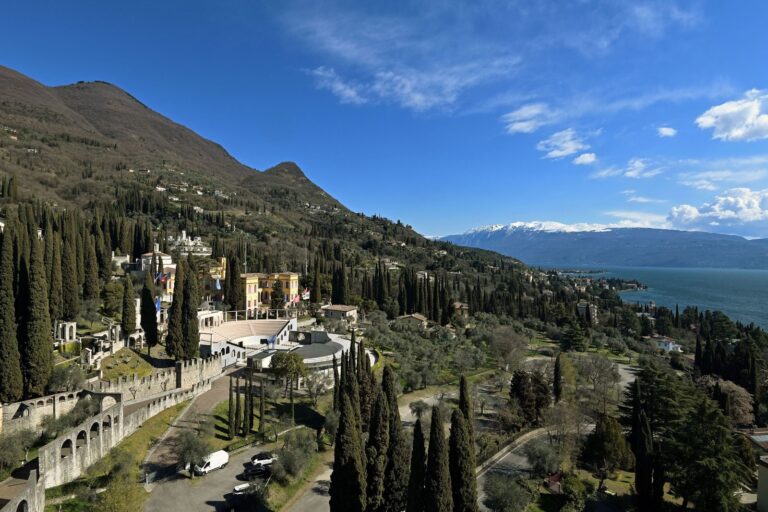
Tourism in Lake Garda: Limited Data and Growing Visitor Trends
The impression is that the 2000 tourist season is “going well” for the small holiday capitals around Lake Garda. This is confirmed by the opinions of some presidents of hotel associations. However, there are no statistical data to support these impressions. The Brescia Tourism Promotion Agency responds negatively to requests for data.
Statistics and Digitalization
The latest available statistical data are from the end of the year. Since January, partial data have been available, covering only a portion of the hotels in the Province of Brescia, including those in the Garda area. Paradoxically, the “gap,” explain the Apt, stems from a regional pilot project for computerization, even in the Internet and telematics era.
This project was launched with Law No. 28, which funded the installation of computers and data transmission systems. About 200 of the approximately 1,100 hotels in Brescia are involved. These are connected with the Regione Lombardia and send the “numbers” regarding occupancy figures directly to Milan.
The remaining hotels continue to transmit their data to the provincial Apt. Paradoxically, the two entities seem not to communicate. In fact, the Brescia Apt only has partial data. The missing figures have been requested, and the office responds politely, but so far without success.
As a result, no one appears able to provide current figures for tourism in the Brescia province, not even for the Garda region, which attracts nearly 16 million official overnight stays across its three shores: Brescia, Verona, and Trentino.
Tourist Movements and Destination Preferences
At the end of 1999, the movement recorded by the Brescia, Riviera degli Olivi, and Garda Trentino tourism promotion agencies, reprocessed by the study office of the Comunità del Garda, registered 2,936,653 arrivals, an increase of 3.5%, and almost 16 million overnight stays, up 5.64% compared to the previous year.
Out of the arriving tourists, 1,845,068 opted for hotel accommodation, while others chose alternative lodging options. In terms of overnight stays, the Brescia side logged 5,127,219; the Verona side 8,189,135; and Garda Trentino 2,456,627.
Brescia and Trentino clients prefer hotels; Veronese visitors lean toward camping and guesthouses. Regarding nationality, the main international clients after Germans and Italians are Dutch, followed by English and Scandinavian visitors.
Operators’ Opinions and Current Situation
Therefore, in the absence of official figures, we rely on impressions. “The season in Sirmione is going well,” confirms Dino Barelli, president of the hoteliers’ association of the peninsula. “We started off well; July is doing reasonably well. I am convinced that there is an increase compared to what was already a good season last year.”
“The trend is positive,” confirms Vittorio Cerini, a hotel owner from Desenzano, proprietor of the Park Hotel. “The tourist season started well in Desenzano and continues with good rhythms even in July, which is usually a slow month.”
“I agree,” continues the Garda operator. “The decision to host events in the castle courtyard is a good one. I applaud the decision to keep the Tourism Information Office open continuously from 9 a.m. to 9 p.m., even on weekends, thanks to the agreement between Apt and the tourism department.”
“There are many tourists,” he adds. “Many are foreigners. The thermometer is pointing up, and perhaps the credit goes to the websites that have been very successful and received numerous contacts.”
These websites, which allow real-time updates of occupancy data for about two hundred Brescia hotels, have paradoxically created a dual monitoring system without exchange, ultimately unable to generate comprehensive global data.