Garda Tourism Booms Amid Traffic Woes and Infrastructure Challenges
Tourist Situation and Visitor Influx
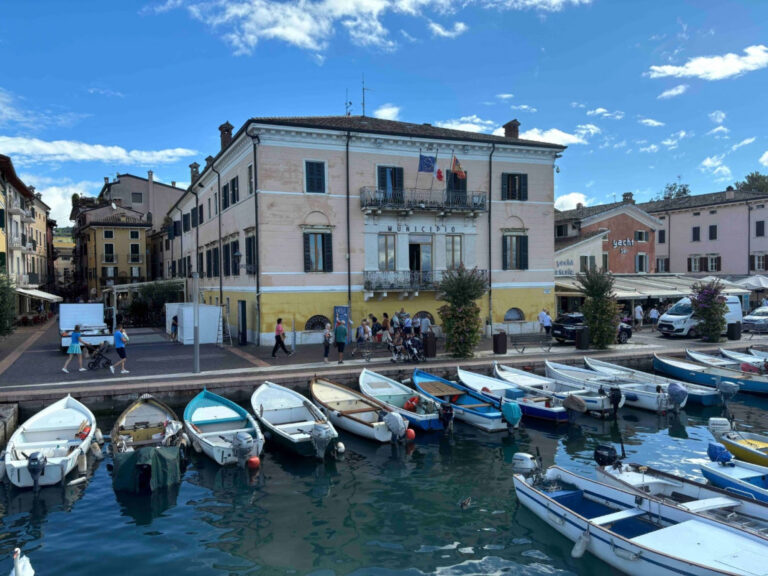
The full house, very welcomed by the tourism operators, has only one downside: traffic congestion. But let’s see what the current situation is. “It’s a golden holiday period that runs from Easter eve until Monday evening, May 1st,” comments Marcello Beschi, president of the hoteliers’ association in Toscolano Maderno. “Consider that on Easter eve, our information and booking office had to turn down requests for 380 hotel rooms just in our town. Yes, it was an exhilarating Easter like we haven’t seen in many years. I believe more than half of the guests were German, and moreover, this boom affected all the lakeside towns.”
“The very positive trend was highlighted,” continued Beschi, “during a meeting of hoteliers gathering operators from all the medium and upper lake towns, from Salò to Limone. Things went very well everywhere. And now we’re preparing to replicate this success because many of our clients have extended their stay, prompted by the good weather. In short, everything will be fully booked from Saturday to Monday.”
Situation in the Lower Lake
Similar reports come from the Lower Lake area. “Easter went very well, and we are full of tourists during the May 1st holiday as well,” says Dino Barelli, president of the Associazione albergatori di Sirmione, the main tourist center on the lake. “Easter was excellent; many guests extended their stays, and more are arriving today and tomorrow. We will once again have a full house. The season has started very well.”
Unfortunately, the overall situation of Garda’s holiday industry is weighed down by traffic issues, the real Achilles’ heel of what can be considered one of the most vocally European tourist areas in northern Italy.
The small vacation capitals are served by old, narrow roads that often cut through residential areas. These are roads suitable for traffic from 30-40 years ago, not for today’s volume, causing traffic jams, pollution, and protests. Especially considering that German tourists, Garda’s main clientele, prefer to travel by private car.
It takes only a few hours to reach the lake via the Brenner Pass, but once there, guests find themselves caught in kilometers of traffic jams close to their destination. “Our concern is the 45bis,” says Marcello Beschi, president of the hoteliers in Toscolano. “Improvements to Garda’s road network are needed to create smooth roads that allow travel times to match today’s expectations. For the Upper Lake, the critical issue is the 45bis—hope is that it will be completed in the Villanuova and Salò area.”
There is also the issue of the connection between Salò and Riva del Garda, where the national road is scenic but prone to landslides, disruptions, and closures. Garda’s tourism industry cannot risk being isolated. Investment is necessary to develop a viable alternative,” he adds.
The same reasoning applies to the Lower Lake. Currently, the pressing issue is resolving the roundabout in the Perla area of Desenzano. Yet, completing the major bypass of the State Road 11 of Lower Garda, which is currently blocked among vineyards in Lugana di Sirmione where the asphalt suddenly ends at the Veneto border, is still essential.
This highway should be completed at least until it connects to the Peschiera bypass, and if needed, extended to Castelnuovo and Affi. Meanwhile, each mayor is seeking solutions for traffic issues and parking, another critical topic. Sirmione plans to build a large parking lot in Colombare, to transport guests into the historic center, either via shuttle bus or boat taxi, though the decision has yet to be made.
Desenzano will address the problem through its Traffic Plan. Many are also considering utilizing water transportation as an alternative route. Overall, Garda’s tourism future cannot risk being suffocated by cars.