Garda Flood Damage Assessment and Restoration Efforts in Torri
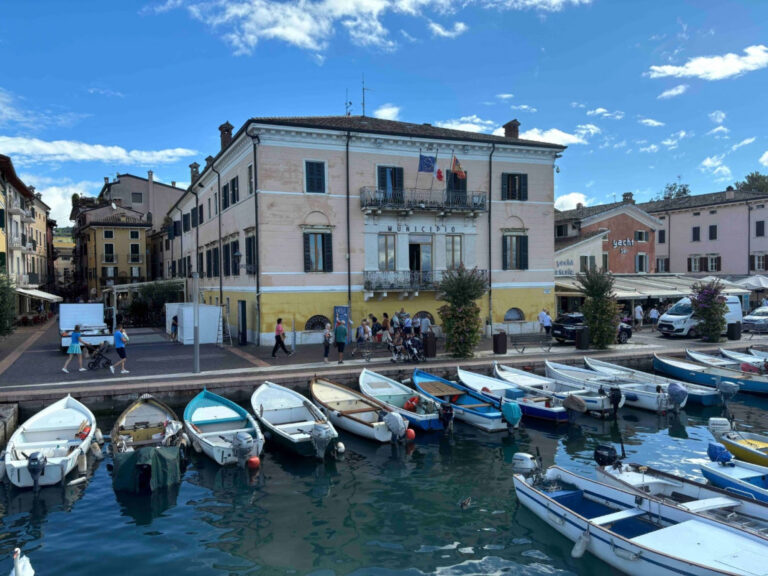
The emergency has receded, but the damage remains. Absolutely. With a detailed report from the municipal technical office, the two surveyors appointed by Mayor Alberto Vedovelli have drafted a “preliminary” map of the damages sustained at the end of November due to the “flooding of Lake Garda,” as it has been officially termed—the rise and overflow of Lake Garda. Although the waters of the lake are now, at least within the municipal territory of Torri, at the brink of control, no longer capable of spilling into streets near the historic center and flooding the entire promenade areas, the danger and alert status are slowly diminishing.
State of damages and safety measures
As a precaution, the entire lungolago Barbarani and parts of the streets leading from the center to the promenade remain fenced off and closed to pedestrian and vehicular traffic, as ordered by the mayor. “Regarding the damages that have so far been assessed,” explained Mayor Alberto Vedovelli, “an initial assessment—certainly widely underestimated—estimates the damages at over two hundred million euros. However, this estimate is highly approximate. It is still difficult to determine what exactly has been damaged, especially in the area of lungolago Barbarani, where the waters have carried away nearly all of the breakwater rocks, but where, given the high water levels, pinpoint accuracy is impossible.”
The municipal administration has already filed a damages report, like many other lakeside towns, with the Regional Assessor for Environment and Civil Protection Massimo Giorgetti. But the mayor of Torri has become more concerned about the damages in the areas of “Baia Stanca,” “Punta Cavallo,” and “Baia dei Pini.” Here, in fact, the most frequented and appreciated beach during the summer, entire stretches of lakeside pavement in porphyry were lifted by the fury of the waters, propelled by the strong north wind that often blows in from the north.
Description of specific damages
“Large sections of paving,” as noted in the technical report, “have been eroded and lifted, along with the corresponding stone curbs, some of which have been submerged and are probably irreparable.” But that’s not all. “Accumulation of gravel, stones, and debris from piers,” “uprooting of some willow trees,” “structural collapses in masonry,” “destruction of entire piers,” such as the one at Lido Bagni owned by the municipality, among various other damages, have been recorded in localities like “Saldam,” “San Faustino,” “Piaghen,” Pai, “Spiaggia d’Oro,” and “Molo De’ Paoli.” In short, a veritable war report on all the main promenades in the town.
But, having passed through a lot of water—perhaps not only underneath the bridges but also above and beside them—there is now hope that the relevant authorities will keep their word and restore the serious damages to the lakeside communities. “There is time, but we still need to act quickly,” concludes Mayor Vedovelli, “since the promenade areas and beaches are now truly unpresentable. Knowing the time needed to act, we can only hope to put everything back in order before next spring and the upcoming tourist season.”
Gerardo Musuraca