Uncertainty Looms Over Lost WWII Bombs in Lake Garda After 1999 Airstrike
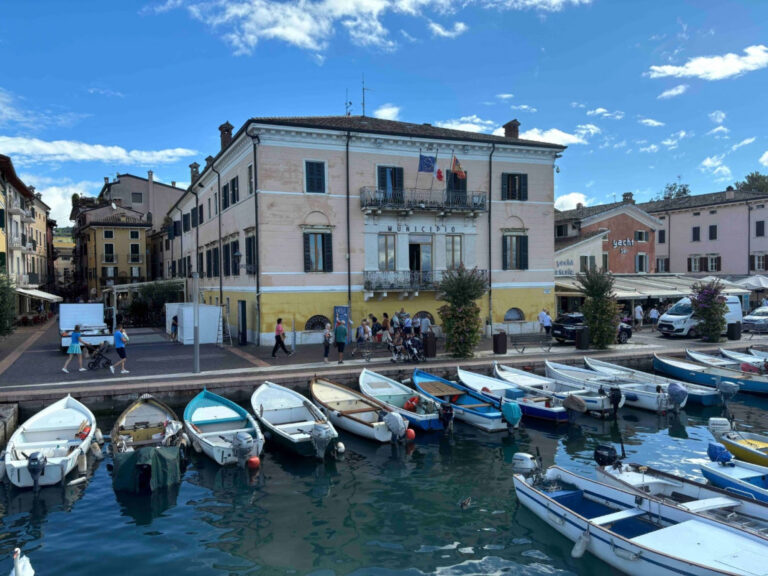
Where did the bombs dropped on April 16, 1999, into Lake Garda by a American aircraft, a F15 Eagle, returning from Kosovo, run out of fuel and was forced to drop the ordnance into Lake Garda to lighten itself and reach the Ghedi airbase? This is the big question that helps maintain an aura of mystery over this incident, which has come back into the news following the issue of depleted uranium. To bolster those demanding clarity, such as the mayors of the Brescia side of Garda, Prefect Anna Maria Cancellieri intervened during her visit yesterday to Puegnago and the Valtenesi municipalities. The State representative promised her involvement to expedite the identification of the weapons. Between San Vigilio, Sirmione, Manerba? Or further east, towards the Verona side? “Difficult to say,” comments Antonino Chilà, a ballistic expert and Carabinieri marshal who has just completed an assessment commissioned by a private individual. “Because one must consider several variables: the altitude at which the aircraft was flying at the time of the release (estimated at around 600 meters), its position relative to the lake surface, the moment when the bombs contacted the water, the currents, and the depth of the seabed.” That day, the aircraft had to divert to Ghedi instead of Aviano, which was closed following an incident. The change caught the F15 low on fuel, forcing it to drop weight to conserve fuel. Subsequent searches using sonar and cameras yielded no results. “Even though I believe,” states Chilà, “that more sophisticated technologies should have been used. I also think it would be necessary to involve a geologist with good knowledge of the lake’s seabed.” If the bombs are not found, it means they are “safe,” and thus harmless… “I wouldn’t say that,” he adds. “I hope that in the coming months, further recovery attempts will be made. I refuse to think they might remain there simply because people believe they are not dangerous. This concerns the peace of mind and tranquility of an area where some tourists might always be tempted to look for bombs.” It is precisely on the safety of the devices that Chilà expresses some concern. Given the documentation provided by the Americans, these explosives should have nothing to do with depleted uranium; another issue concerns the type of bombs that ended up in the water. Chilà is worried about three cluster bombs (the “cluster bomb” and three laser-guided ones), which are casings filled with many small bombs (about 200), roughly the size of a Coca-Cola can. They work as follows: the aircraft drops the cluster bomb containing an explosive charge that causes it to open at a specific altitude. The small bombs then exit and fall guided by a small parachute, exploding upon contact with the target. There is also a variant with an unarmed landing, transforming the terrain into a minefield. Chilà has examined similar bombs found on the seabed of the Adriatic Sea, off Chioggia. Bombs dropped from aircraft returning from Kosovo that opened, releasing their unsettling contents. One such device, caught in a fisherman’s net, miraculously avoided causing a massacre. To be honest, Chilà explains, the cluster bombs should not have opened, as the pilot would disable them upon release. However, the risk of the “shell” breaking at the moment of collision with water or after impact with rocks cannot be excluded. Chilà issues a warning: “If the cluster bombs that fell into Lake Garda opened upon contact with water, the inside bombs scattered across the seabed. Currents, movement, shocks could trigger explosions of the individual devices: and since nobody knows where they landed, the risk to public safety should not be underestimated.” One last note. The social movement Fiamma Tricolore, whose section in Desenzano is headed by Giovanni Barbi, commissioned the assessment from Antonino Chilà, has issued a statement expressing “hope that the Brescia Province will coordinate with the provinces of Trento and Verona to address the issue by acting as an intermediary with the Italian State concerning justified fears for people’s health and safety, as well as to inform citizens about the true intentions regarding the recovery of the dangerous explosive devices.”