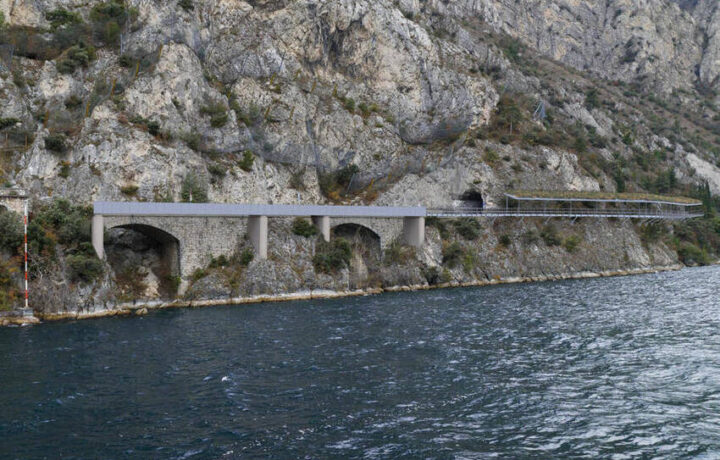
Water Management on Lake Garda faced a defining test during the summer of 2026, as intense, persistent heatwaves pushed climatic conditions across northern Italy to historical extremes.
While the Po River saw its flow drop close to all-time record lows with seawater intruding significantly up the delta, Lake Garda maintained a water volume close to 50% of capacity. This resilience is neither accidental nor an anomaly: it is the direct outcome of meticulous, proactive coordination between AIPO (the interregional agency managing water levels), the Mincio Consortium (representing downstream agricultural users), and the Garda Community.
For decades, water regulation relied on rigid 1965 parameters that no longer align with today’s climate realities. Today, through shared forecasting, real-time consumption monitoring, and major PNRR modernization works—such as the €20 million overhaul of the Salionze regulator and Mincio hydraulic works—regulations are executed dynamically, prioritizing conservation whenever possible.
However, long-term challenges loom large. Warming waters—with significant temperature rises detected even at depths of -270 meters by APPA Trento—increased lake surface evaporation, and shrinking alpine glaciers in the Adamello-Presanella group feeding the Sarca river underline the urgent need for environmental engineering and habitat protection upstream, ensuring both water volume and supreme water quality for generations to come.
Article curated by Filippo Gavazzoni, Vice President of the Garda Community. Part 2 will follow in mid-September at the conclusion of the irrigation season.
Read more from GN Magazine – September 2026
-
Desenzano del Garda Mayors in the 1900s: The Historic 1919 Elections and Political Rebirth
In the aftermath of the First World War, the municipal governance of Desenzano del Garda entered a pivotal era with the general elections of November 16, 1919 under acting mayor Lorenzo Papa. Conducted under universal male suffrage, the elections witnessed the emergence of new mass political movements, notably the Italian Socialist Party and Don Luigi […]
-
GN Magazine – September 2026
Welcome to the digital edition of GN Magazine – September 2026. Here you will find the complete English translations of the main articles published in the print edition, bringing the history, culture, and events of Lake Garda to our international readers. Editorial: Summer at the Finish Line, The Resilience of Lake Garda and Future Challenges […]
-
Curzio Malaparte: A Cursed Tuscan and His Final Literary Journey
Curzio Malaparte (Kurt Erich Suckert) remains one of the most provocative, nonconformist literary giants of 20th-century Italian culture, immortalized in his masterpieces Kaputt, The Skin, and Maledetti Toscani. Reflecting on the fierce pride, sharp wit, and unyielding independence of Prato and Tuscan heritage, Malaparte dismantled hypocrisy with unsparing intellect. In his final months following his […]
-
TOURIST! Exhibition at MuSa Salò: The Charm of Lake Garda Travel
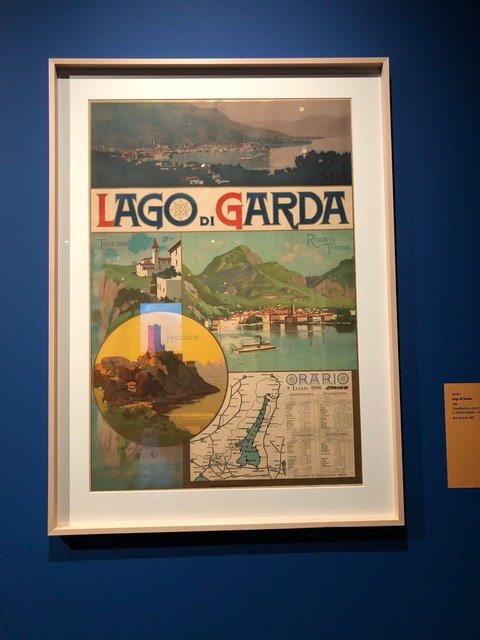
The TOURIST! Exhibition at MuSa Salò welcomes visitors with Stendhal’s famous words—“probably the most beautiful landscape in the world”—and Goethe’s 1786 sketches of Torbole, tracing two centuries of allure across Lake Garda from Romanticism to the Belle Époque. Open until October 4, 2026 at the MuSa (Museo di Salò), the exhibition curated by P. Boifava […]
-
A Book for Don Gianni Capra: The Beloved Provost Who Transformed Salò
A new landmark publication honours Don Gianni Capra, who served as provost and parish priest of Salò from 1965 to 1971, leaving an indelible legacy of dialogue, humility, and pastoral renewal. Published through the joint dedication of the Parish, Municipality, and Ateneo di Salò, the volume gathers historical conference proceedings and archival writings from the […]
-
The Power of Machines: Technology, Society, and Environment in 16th-Century Trentino
The Power of Machines transformed Renaissance society, reshaping the delicate balance between humanity, natural resources, and technological progress. In the evocative setting of Palazzo delle Albere in Trento, a landmark exhibition and scholarly symposium explored the dramatic events of the 1525 Peasant Revolts and the advent of water-powered machinery. During the 16th century, the harnessing […]