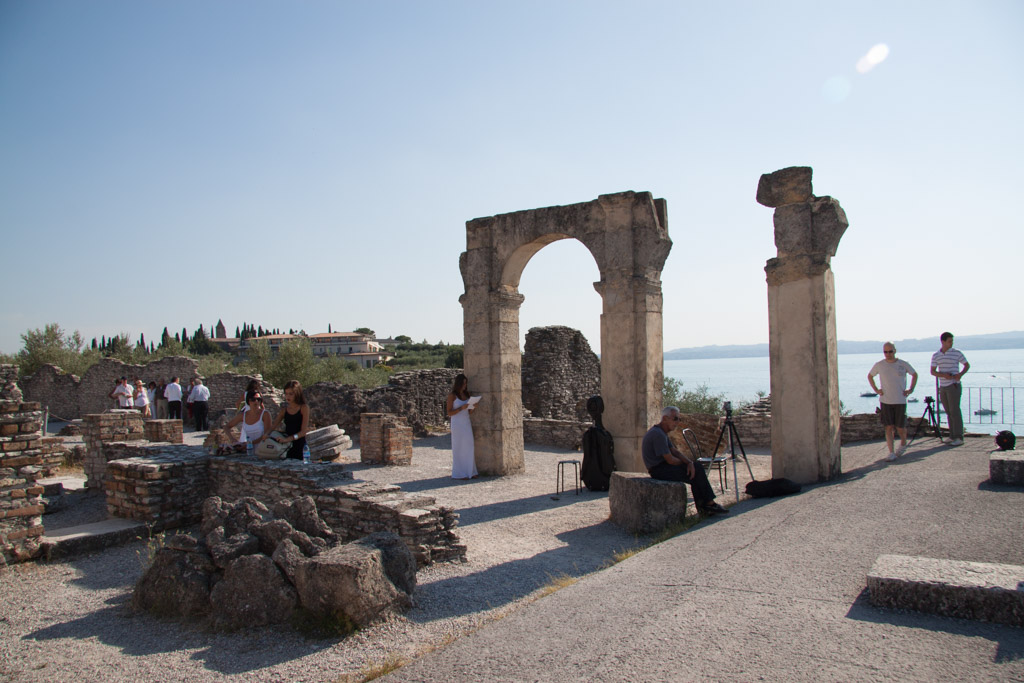
The Grotte di Catullo in Sirmione are the most imposing and significant Roman residential archaeological complex in northern Italy, covering about two hectares on the extreme tip of the Gardesana peninsula. Overlooking the lake from three hundred and sixty degrees, the large imperial villa d’otium combines the engineering boldness of monumental substructures with a unique landscape setting, drawing hundreds of thousands of visitors each year from around the world.
The archaeological area is part of the state museums network managed by the Direzione Regionale Musei Nazionali Lombardia. It brings together the grand Roman walls with an antiquarium museum focused on the ancient history of the Sirmione peninsula and a historic olive grove with more than 1,500 olive trees.
Construction of the complex is dated to the end of the 1st century BC and the beginning of the 1st century AD, in the Augustan age, with later modifications during the Tiberian and Julio-Claudian periods. The association with the Verona poet Gaius Valerius Catullus (84-54 BC) is based on Renaissance historiographical tradition, though the monumental structure visible today was built after the poet’s death, likely by members of the powerful patrician gens Valerii. The name “Grotte” dates back to the 15th century, when early humanists and travellers rediscovered ruins overgrown with dense spontaneous vegetation, which appeared like natural caves due to the collapsed underground spaces and vaulted corridors; early scientific excavations began in 1801 under the impetus of the Napoleonic general Lacombe Saint-Michel, and continued in the 20th century with the archaeological superintendent’s work to clear the full perimeter of the residence.
Italian Version