Baldo Mountain Risks and Prevention Efforts by Civil Protection
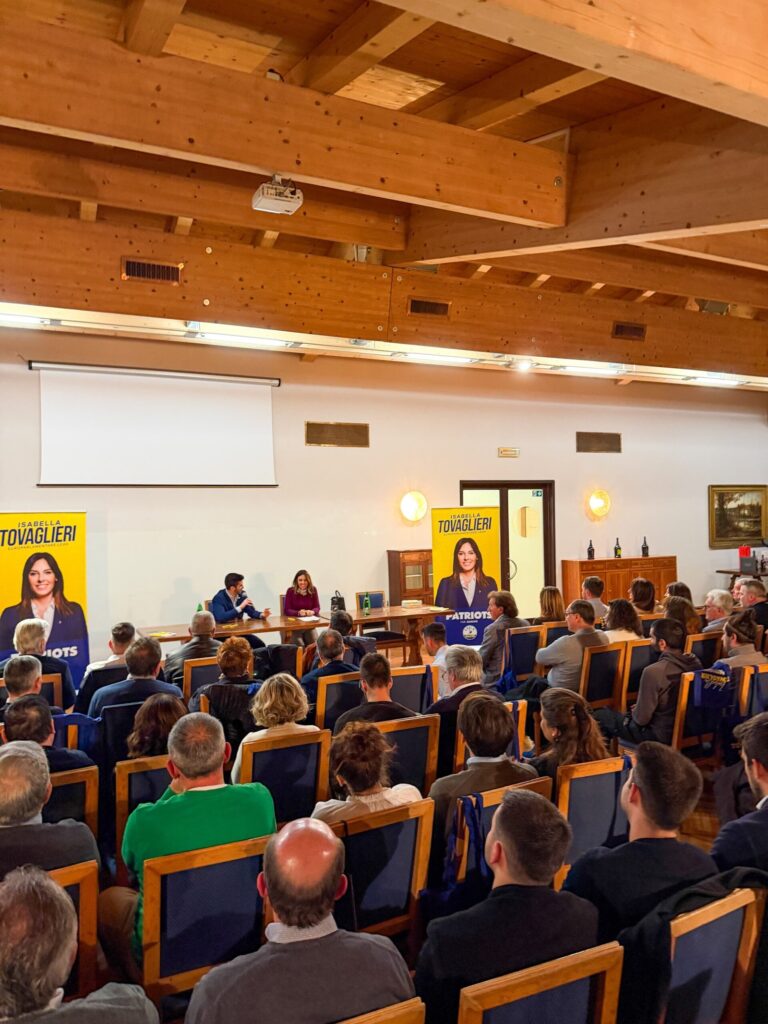
A mountain to know and love, but also to fear and respect for its unique features. The opposite of a typical Baldo is what emerges from the conference “Baldo pericoloso” (“Dangerous Baldo”), held in the civic hall of the Caprino Veronese courthouse. Four hours of presentations focused on understanding to prevent.
But “examining risks also helps us love a place more and manage it correctly,” explained Maurizio Deliberi, a member of Ctg and one of the organizers of the conference, in his introduction. A mountain that is easy to reach and, therefore, heavily frequented, but whose dangers are often underestimated.
The risk of Baldo and the volunteers’ intervention
“But Baldo is dangerous,” stated Gianfranco Prandini, head of the regional Civil Protection service of the Baldo Mountain Community. “In just the Malcesine area alone, 1500 people ascend via cable car every year. These are people moving about, using trails, forests, practicing sports like mountain biking and paragliding, which pose risks both to the territory’s health and to the safety of the individuals.”
Over a thousand interventions are carried out annually by volunteers. Their work ranges from trail maintenance and forest fire prevention to collaboration in rescue operations. Volunteers are the engine of Civil Protection. “Each municipality should have had its own Civil Protection plan since the 1980s, but this has not happened.”
Things changed in 1992 when specific legislation on Civil Protection was enacted, making the mayor solely responsible and the coordinator for interventions and structures. But it’s still not enough,” continued Prandini. “In 1998, the nine municipalities of the Mountain Community signed an agreement to submit to a unified service that coordinates various interventions. This is a step forward that allows us to overcome local rivalries and to rationalize the limited resources in the means we have.”
The role and prevention activities of Civil Protection
Vittorio Mascagno, provincial head of the State Forestry Corps, also emphasized the importance of Civil Protection services and the preventive role they can play. “The origins of fires are due to social, environmental, and historical causes that vary from region to region,” Mascagno explained. “Consider practices like slash-and-burn to rejuvenate pastures or to allow construction; rural depopulation leads to forest encroachment, increasing the fire risk, but it also enables the mountain environment to develop naturally.”
Prevention work is a way for residents to reclaim their territory. It involves land clean-up interventions and educating tourists to visit the area, which also serves as a means of transmitting local culture. This can even become a significant income source for mountain communities.”
There are 25 volunteers from the National Alpine and Speleological Rescue Corps operating on Monte Baldo, Carega, and Lessinia. “But 70 percent of our activity takes place on Baldo,” explained Ernesto Chesta, a rescue volunteer from Verona. “It’s a mountain where reaching high altitudes is easy, but the return can be difficult if you don’t know the terrain, which changes with the seasons.”
Until last year, Alpine Rescue averaged about 25 interventions annually, with at least two being fatal incidents. Since 1999, there has been a sharp decline, with only nine interventions, likely due to better physical and psychological preparation of hikers and the prevention and education efforts by volunteers.”
Poisonous species and natural risks
A naturalistic highlight was the presentation on hemlock, one of the many poisonous species living on Baldo. “When small, it is easy to confuse with parsley,” explained naturalist Daniele Zaninì, “which makes it dangerous. But hemlock is not the only deadly poisonous species on Baldo. Nearly equally dangerous is the mandrake, a small tree that in spring produces clusters of yellow flowers shaped like bunches, which are attractive and resemble those of the black locust, and can be eaten safely if battered and fried.” “The flowers of the mandrake,” Zanini clarified, “are poisonous and are even avoided by cows, which shouldn’t graze under its branches.”