Traveling to Lake Garda in Autumn reveals an entirely different pace and landscape as summer beach crowds recede between late September and mid-November.
The transition into the fall season brings crisp alpine air from the north, golden light across the hillsides, and the commencement of the region’s two most revered agricultural traditions: the grape harvest across the lakeside appellations and the olive pressing in the historic oil mills. With open roads, manageable temperatures, and uncrowded historical centers, autumn represents the ideal period for cultural exploration, culinary journeys, and outdoor excursions.
Microclimate and the 50 Billion Cubic Meter Thermal Flywheel
The autumn climate on Lake Garda is remarkably benign compared to the surrounding northern plains. Containing approximately 50 billion cubic meters of fresh water, the lake functions as an immense natural thermal flywheel. During summer, this vast reservoir absorbs heat, which is then gradually released throughout October and November.
This thermodynamic buffer moderates evening temperatures, prevents early frost, and creates ideal growing conditions for sub-Mediterranean vegetation such as olive trees, cypresses, and citrus groves. Daytime temperatures frequently hover between 16°C and 22°C well into late October, providing optimal weather for hiking and cycling without the intense heat of midsummer.
Harvest Season in Bardolino, Lugana and Valtenesi
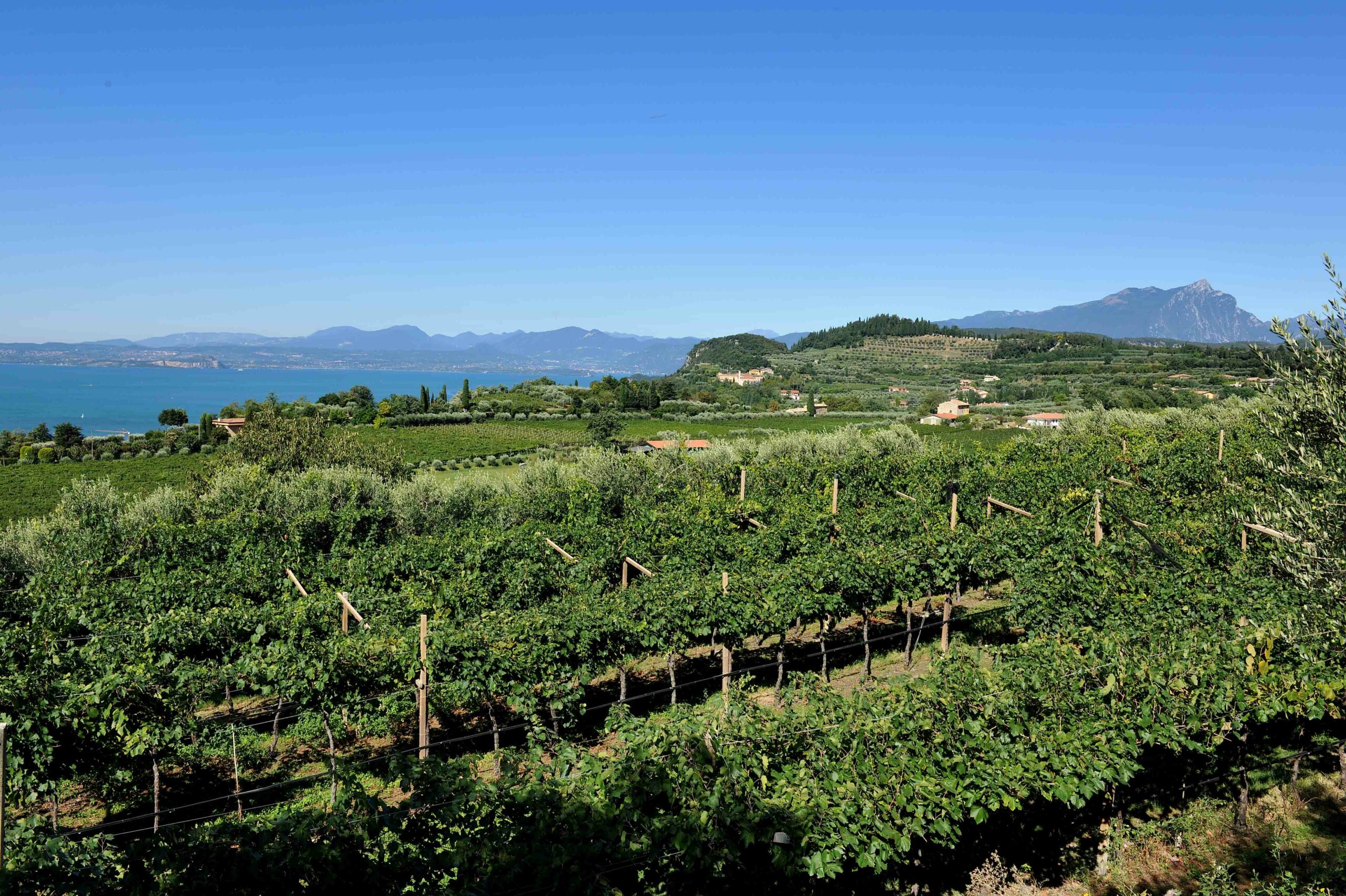
Autumn on Lake Garda is inextricably tied to viticulture. On the southeastern morainic hills around Bardolino, Lazise, and Cavaion Veronese, the harvest of Corvina, Rondinella, and Molinara grapes yields the ruby-red Bardolino and fresh Bardolino Chiaretto DOC.
Simultaneously, the clay-rich soils of the southern shore around Sirmione and Desenzano see the harvest of Turbiana grapes for the crisp, mineral Lugana DOC. Across the western Brescian shore, the rolling hills of Valtenesi harvest the indigenous Groppello grape, known for producing elegant, delicate rosés. Many family-owned wineries open their cellars for seasonal tastings and vineyard walks, offering visitors direct insight into local winemaking heritage.
Olive Harvest and the Extra Virgin Olive Oil Mills
Between mid-October and late November, the focus shifts to the olive groves flanking the coastal hillsides. Lake Garda represents the northernmost commercial olive-growing region in the world, sheltered by the surrounding mountain walls.
The primary cultivar is the hardy Casaliva, which produces Garda DOP extra virgin olive oil renowned for its low oleic acidity (regularly below 0.3%), light fruity profile, and delicate almond finish. Historic cooperatives and private frantoi across Malcesine, Brenzone, Torri del Benaco, and Puegnago begin active pressing within hours of harvest, allowing visitors to sample freshly extracted green oil paired with traditional crusty bread.
Monte Baldo Foliage and Chestnut Harvests
Rising above the eastern shoreline to elevations exceeding 2,200 meters, the Monte Baldo mountain chain displays brilliant autumn foliage starting in early October. The beech, chestnut, and larch forests shift through vivid ochre, copper, and amber tones.
On the western slopes facing the lake, the town of San Zeno di Montagna celebrates its prized harvest of Marrone di San Zeno DOP, a sweet, plump mountain chestnut cultivated since medieval times. Hiking trails along the intermediate ridges, such as the Sentiero del Ventrar or paths connecting ancient stone contrade, offer sweeping panoramic views across the mist-shrouded lake basin.
Autumn Logistics and Ferry Mobility
Navigating the lake during autumn is notably smoother than during peak season. Lakeside roads, including the scenic Gardesana Occidentale (SS45bis) on the west and the Gardesana Orientale (SR249) on the east, experience significantly lighter traffic volumes.
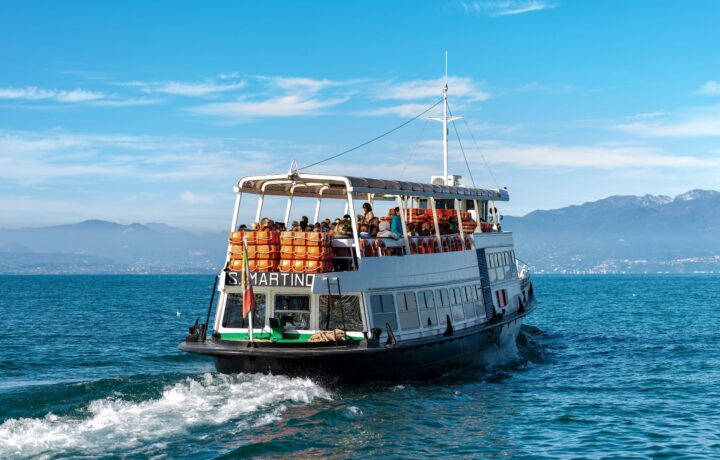
Public passenger ferries operated by Navigarda maintain continuous trunk connections, particularly between the central lake hubs, alongside dedicated year-round car ferry routes linking Toscolano Maderno on the western shore with Torri del Benaco on the eastern shore. This maritime link allows travelers to cross between Lombardy and Veneto in approximately thirty minutes, bypassing the longer road circuits around the southern basin.