Lions Launch Water Awareness CD to Promote Education and Conservation
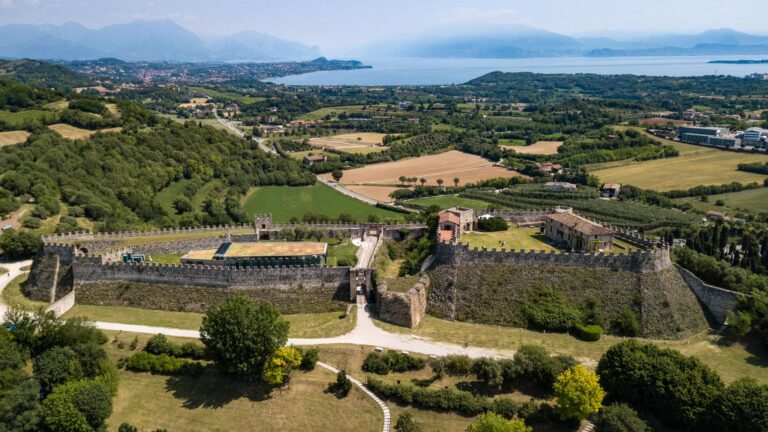
At the «Monastero» in Soiano, the CD on «Sorella Acqua» was presented, produced by the Lions of the area. The district president, Leone Mondadori, who succeeded Settimio Nolli, announced that in the coming days, the CD will be further supplemented and, in about two weeks, it will begin to be distributed in schools and among anyone interested (private individuals, public associations, etc.).
Message and Initiatives of the Lions
«The CD hits the mark » – said Mondadori –. We carry out an opinion service, and this is it. The wars of the third millennium must be fought with culture, intelligence, availability, and financial aid, to overcome ignorance, backwardness, superstition, and slavery. Our commitment extends likewise. Additionally, we plan to organize competitions and distribute scholarships to young people who excel in research.»
«In 2025 » – added Giorgio Foschini from Desenzano – «half of the Earth’s inhabitants will lack access to water. And this problem is more critical than gasoline shortages. Over the next ten years, each European will consume between 280 and 500 liters daily, often with pollutant waste that is difficult to control. Water resources are abundant (about 1.5 billion cubic kilometers exist), but most are salty: only 2.5% is fresh, of which 88% is frozen in polar ice masses.»
In conclusion, humans only use 0.06% of the water sourced from springs, aquifers, rivers, lakes, and atmospheric precipitation. Through beverages and food, an adult needs to intake about two and a half liters daily, and cannot survive more than four or five days without drinking (40 days without eating). Consumption has increased due to needs linked to industrial activities.
To produce one kilogram of steel, for example, 300 liters of water are required; for one kilogram of sugar, 10-15 liters; for one of petroleum, 20 liters; and for one kilogram of paper, 40-50 liters. Broadly speaking, 70% is used for agriculture, 20% for businesses, and 10% for individuals. Today, one in three people (around two billion) does not have access to potable water. If the trend continues, by 2020, that number will exceed three billion.’
Since 1950, many efforts have focused on building large dams (more than 35,000), but their efficiency has been less than expected. In some cases, they caused accidents and pollution with irreversible effects. According to the World Bank, urgent intervention is needed to prevent by 2050 a fifth of the planet’s population from suffering from thirst and water rationing affecting 40% of the population.
It is necessary, in this regard, to invest at least 60 trillion dollars. Urban areas have seen increased pressure towards privatization of water services. In the last four years, Córdoba, Casablanca, Jakarta, Manila, Buenos Aires, Dakar, La Paz, Medina, Cairo, Nairobi, and Mexico City have chosen this route.
However, the British experience initiated in the 1980s caused tariffs to increase by 450%, without adequate expenditure by private companies. «Water is a source of life, not profit. It is a patrimonial good belonging to the inhabitants of the earth», emphasizes Riccardo Petrella.
The Role of Schools and Institutional Interventions
The CD from the Lions district of Lake Garda and Valle Sabbia will allow students to reflect on a matter of significant importance. Among those who participated in the evening, held following the conference last May, was the provincial Environment assessor, Enzo Cossu.