The geological Origins of Lake Garda and the formation of its southern morainic amphitheatre are being revealed by deep continuous core drillings in Castelnuovo del Garda, where an international scientific consortium is analyzing half a million years of Alpine glacial cycles.
The research is conducted under the umbrella of DOVE (Drilling Overdeepened Alpine Valleys), a prestigious research initiative coordinated by the International Continental Scientific Drilling Program (ICDP). The international scientific team—featuring Giancarlo Scardia from UNESP and CNR-GEO, Giovanni Monegato from CNR-GEO Padova, and Markus Fiebig from BOKU University in Vienna, in collaboration with the Universities of Bern, Fribourg, and Padua—presented preliminary findings to the public in Castelnuovo del Garda, synthesizing years of subsurface core sampling across the lower lake.
Reading Ice Ages in Morainic Sediment Strata
The deep boreholes pierce down through the southern morainic amphitheatre between Castelnuovo, Peschiera del Garda, and the headwaters of the Mincio basin. Continuous mechanical core extraction has recovered intact sediment sequences exceeding sixty metres in depth, cutting through alternating layers of alluvial gravels, fine lacustrine silts, compressed clay lenses, and massive glacial erratics (massi erratici) transported from the Alpine Adige valley.
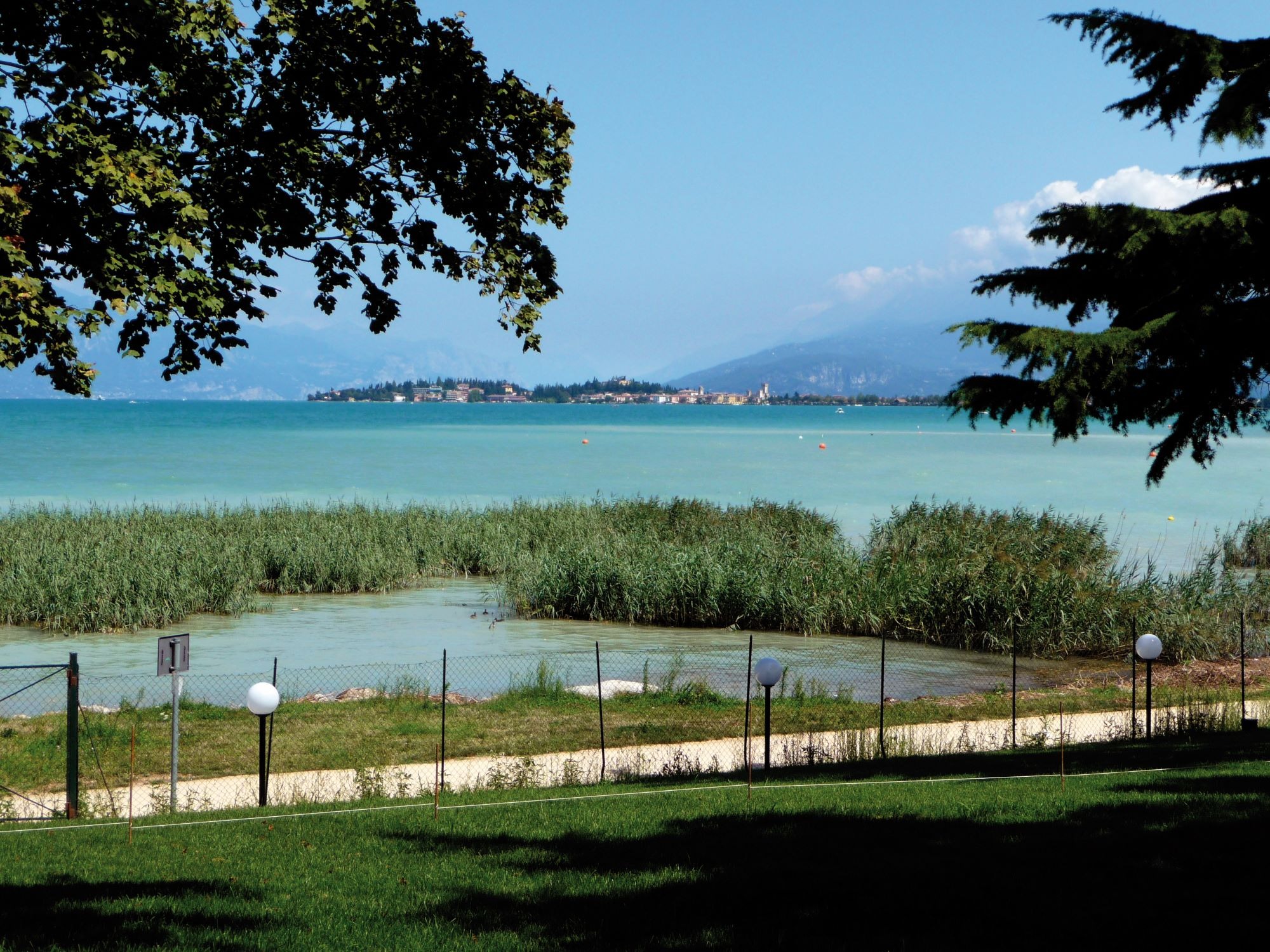
These stratigraphic layers act as a high-resolution geological archive, chronicling the dramatic alternation between glacial maxima and warm interglacial epochs across the Mindel, Riss, and Würm periods over the past 500,000 years. During peak ice ages, colossal glacial tongues carved the lake’s overdeepened bedrock trough—reaching depths exceeding 300 metres below modern sea level—before melting waters transformed the depression into Italy’s largest natural water reservoir, holding a massive volume of 50 billion cubic metres of freshwater.
Ancient Paleo-Lakes and Morainic Topography
Crucially, the core samples recovered in Castelnuovo document the existence of isolated ancient paleo-lakes. These temporary water basins formed behind concentric frontal morainic ridges before being drained as evolving river systems carved drainage channels southward toward Valeggio sul Mincio.
This dynamic glacial deposition sculpted the undulating topography of the Morainic Hills (Colline Moreniche) that embrace the southern lake. The alternating gravels and clay lenses created shallow phreatic aquifers, mineral-rich thermal waters, and highly permeable soils that today foster world-renowned vineyards and olive orchards across Lazise, Castelnuovo, and Peschiera.
From Deep Aquifers to Seismic Microzonation
Beyond academic insights into Alpine glaciology, the DOVE findings deliver vital practical applications for regional infrastructure and environmental safety. Supported by Regione Veneto, Azienda Gardesana Servizi (AGS), and Acque Veronesi, the sediment analyses provide precise geotechnical data on ground resonance and mechanical soil resistance.
This information is being integrated into updated seismic microzonation maps for the lower Benaco, ensuring that future transport corridors, subterranean pipelines, and water defense works are calibrated to the actual physical behavior of morainic strata. For travelers admiring the sweeping waters aboard Navigarda lake ferries, the scientific cores prove that Lake Garda’s majestic landscape is the living product of half a million years of profound climate transitions.