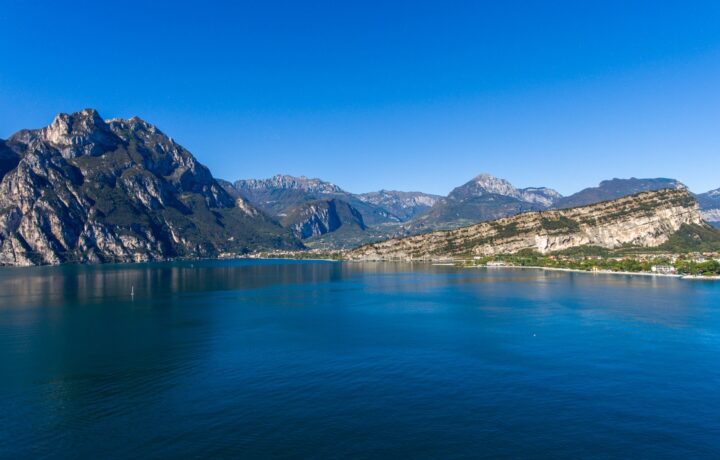
After 20 years, a phenomenon has occurred in Lake Garda that deserves to be better understood, precisely because it illustrates how dynamic, alive, fascinating, and resilient a lake environment can be.
Lake Garda (or Benaco), as an oligomictic lake, falls into this category: a lake that only “occasionally” mixes its entire water column from top to bottom.
Water temperature is a fundamental parameter in this process, and it is also crucial for assessing the overall health of a lake.
Vertical mixing depends on temperature: when surface water warms up, it becomes lighter and tends to stratify (like oil on water in a glass), whereas when it cools, it sinks, mixing the entire water column during its descent.
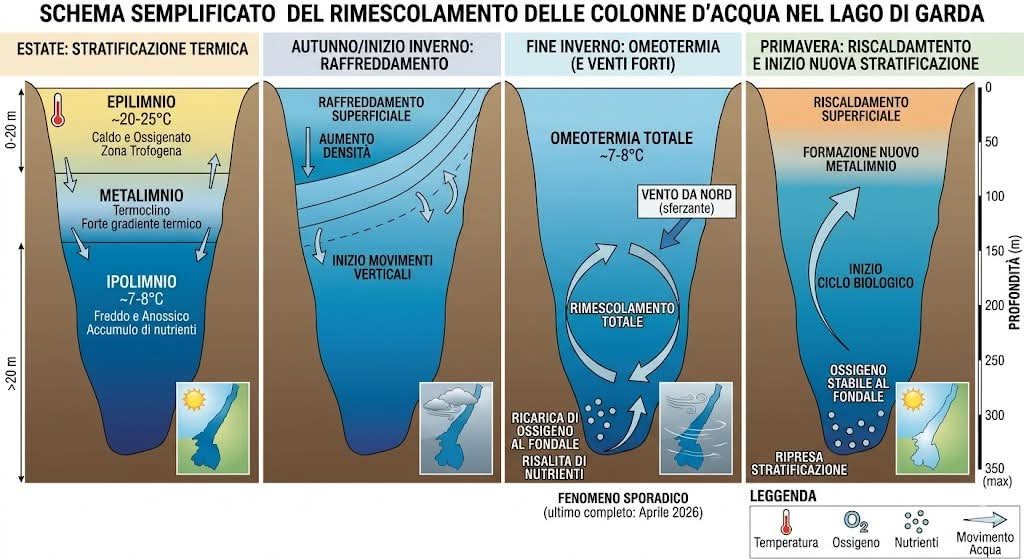
To put it simply, the interest lies not only in the movement of the water itself, but in what this circulation triggers.
Imagine this phenomenon as an elevator that descends to the ground floor (the lakebed), carrying oxygen loaded at the top floor (the surface).
Once the oxygen is delivered to the depths, the returning “elevator” brings nutrients—such as phosphorus—back to the surface from the bottom where they accumulate. This two-way journey is driven by temperature differences, homeothermy, wind, and waves.
When these nutrients (acting like fertilizers) reach the surface, solar radiation triggers the production of phytoplankton biomass (such as algae and cyanobacteria). The abundance of this biomass determines the transparency and quality of the water.
So, what happened in the end?
In theory, as occurred during the last complete mixings in 1999/2000 and 2004/2005, the surface waters should be fertilized by the mobilization of nutrients stored at the bottom.
We might therefore expect increased algal blooms and phytoplankton growth in the coming weeks, though much will depend on weather conditions, sun exposure, and incoming storms.
Meanwhile, the oxygen level at the lakebed, which had not been replenished for 20 years, has already increased by about a third, which is undoubtedly positive.
While waiting for further data to describe this phenomenon, I am curious to analyze the temperature measurements, which leave me somewhat puzzled.
APPA (Provincial Agency for Environmental Protection) recorded a temperature of 9.45°C at a depth of one meter on April 1st of this year—the exact same temperature recorded months earlier at a depth of 270 meters. This shows a homeothermy of the entire water column at that temperature, which, combined with favorable wind events, allowed for the complete water turnover.
In the book The Fish Fauna of Lake Garda (L’Ittiofauna del Lago di Garda), written in the early 1990s by Ivano Confortini, a graph showed late March temperatures in 1993: from the surface down to 260–280 meters, the temperature ranged between 8.79°C and 7.88°C–7.90°C.
This is a significant difference compared to current readings (9.45°C), as are the oxygen values (in mg/l) at those depths.
For now, this describes a concerning trend driven by global warming.
Despite these figures, news reported a sudden cooling of the waters in the northern part of the lake a few days ago.
However, this is explained by a shallow mixing of only the top meters of the lake, caused by the winds and storms of recent weeks, which brought cooler waters from a few meters down to the surface.
This is a transient phenomenon: the high temperatures we are experiencing will quickly warm the surface waters, reinforcing the thermal stratification of the lake.
Filippo Gavazzoni
Read more from GN Magazine – July 2026
-
The History of Terme di Sirmione: The Interwar Period
The transition period between the two World Wars saw Sirmione gain popularity as a spa resort, thanks to the combination of excellent therapeutic results and the natural beauty of the location. However, it also had to face economic difficulties related to the devaluation of the Lira and a period of stagnation. In 1938, following extensive […]
-
Radio Popolare Lonato: Year Zero (Part 1)
By Roberto Darra It was August 18, 1976, when a new sound burst onto the airwaves in Lonato. It was not a RAI broadcast, but a private radio station broadcasting music and news from a garage in Via Ludovico Ariosto. After numerous preparatory meetings at the bakery of the brothers Franco, Giordano, and Ezio Stuani, […]
-
Virgilia AI: The Artificial Intelligence Connecting Municipalities, Businesses, and Local Territories
Digital transformation is no longer just about administrative processes or corporate communication. Increasingly, it represents a strategic tool to promote local territories, improve access to information, and create new development opportunities for local tourism. This is the context for Virgilia AI – AItalian Beauty, a platform developed by the L&T Group in collaboration with Microsoft […]
-
A Testimony of Hope from the Sanctuary of San Polo
Good day to everyone. Today I would like to share, in a few simple words from the bottom of my heart, my personal testimony and what I received from this place. I prefer to remain anonymous because this is a delicate subject for me, one that almost no one knows about, but which I would […]
-
The Compagnia de Riultèla: 30 Years of Success
Making theater that makes people laugh, offering carefree hours, is the specialty of the Compagnia de Riultèla, which celebrates 30 years of activity this year. A long history that has seen numerous actors and collaborators succeed one another, always with a focus on dialect theater. These years have also been marked by the difficulty of […]
-
The Aloisian Year: Historical Sites to Visit in Castiglione delle Stiviere
The Aloisian Historical Museum The museum dedicated to Saint Aloysius (San Luigi) is located in the College of the Virgins of Jesus (Collegio delle Vergini di Gesù). This institution was founded on June 21, 1608, by Cinzia, Olimpia, and Gridonia—daughters of Rodolfo, the brother to whom Aloysius had surrendered his birthright. Inspired by their uncle, […]
-
When Goethe Arrived on Lake Garda: Goethe in the Footsteps of Winckelmann
In 1765, at the age of sixteen, Goethe followed his father’s wishes and studied Law in Leipzig, Saxony. In truth, he would have preferred to study Classical Literature in Göttingen. To distract himself from his studies, he read widely, visited the theater, and spent time with artists and writers. He met the painter and sculptor […]
-
Budibà Presents Puppets: Tartaglia, the Mask That Never Finishes a Sentence
His name immediately recalls his most obvious trait: Tartaglia is the mask that stutters (tartaglia in Italian). The question is inevitable: did the mask name the verb, or was it the other way around? It appears the verb “tartagliare” (to stutter/stammer) is older than the theatrical character. Thus, the mask, which appeared in the Commedia […]
-
The Monumental Lions by Ghidoni Relocate to Lonato del Garda
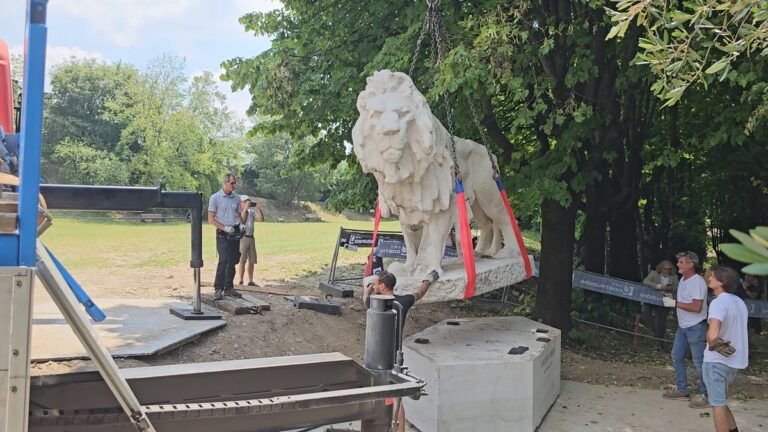
The “PTM Round Trip” project concludes: the sculptures leave Piazza Moretto in Brescia to find their permanent home in the park of the Rocca. After nearly four years standing guard at the entrance of the Pinacoteca Tosio Martinengo in Piazza Moretto, the monumental Lions by sculptor Domenico Ghidoni have left the city of Brescia. Their […]
-
Roman Ruins in Toscolano: History and Archaeological Discoveries
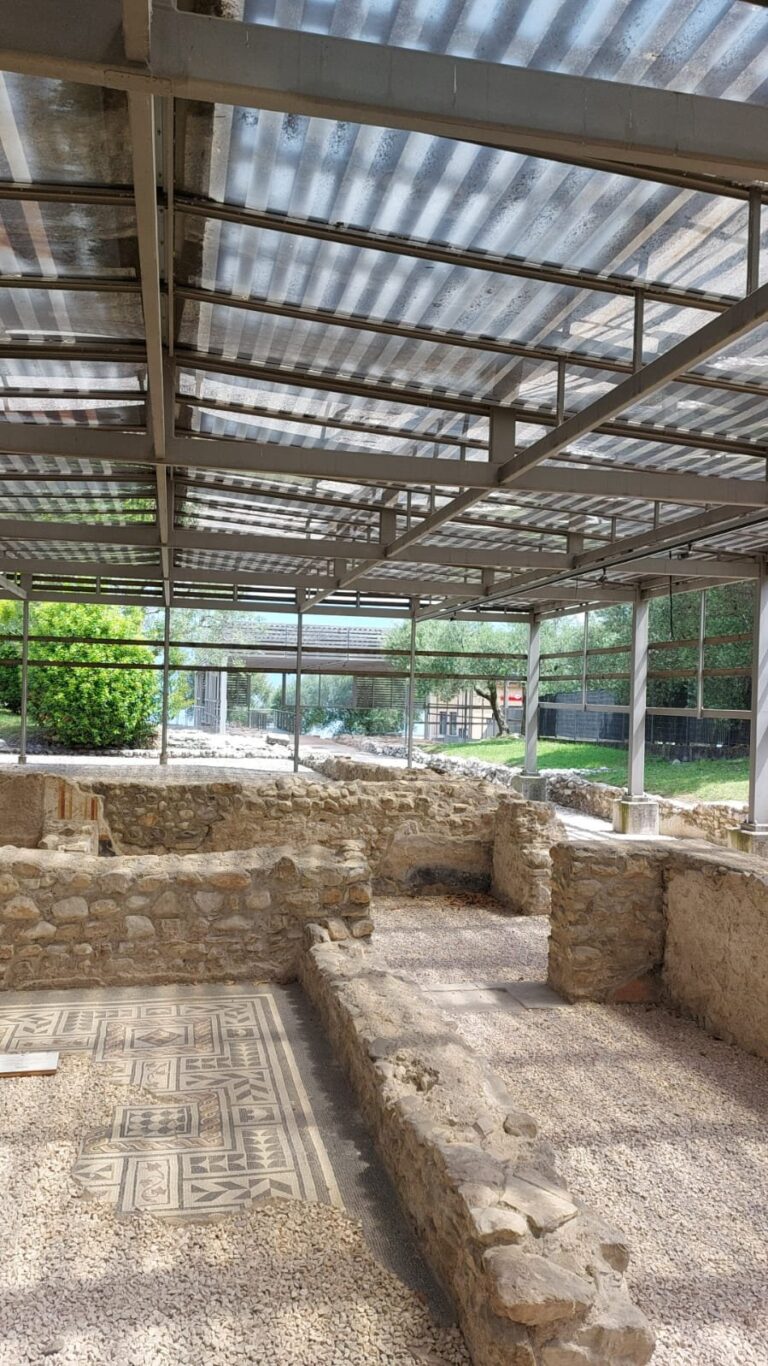
The first discoveries of Roman remains near the port of Toscolano date back to the 15th and 16th centuries. These findings were significant enough to inspire local poets to feed the legend of the fabulous city of “Benaco,” which was supposedly destroyed by an earthquake in 243 AD and subsequently submerged by the lake’s waters. […]
-
July at the Parco Giardino Sigurtà: Blooms, Events, and Promotions
Following a festive spring visit, I am pleased to offer suggestions for visiting the Parco Giardino Sigurtà in July, where spectacular summer blooms renew: roses, water lilies, lotus flowers, hydrangeas, medicinal plants, echinacea, daylilies, and water hyacinths brighten the 60 hectares of greenery, creating ever-changing landscapes. The charm of nature is enriched by wellness events—the […]
-
The TAV Tunnel Sinkhole in Lonato Closes
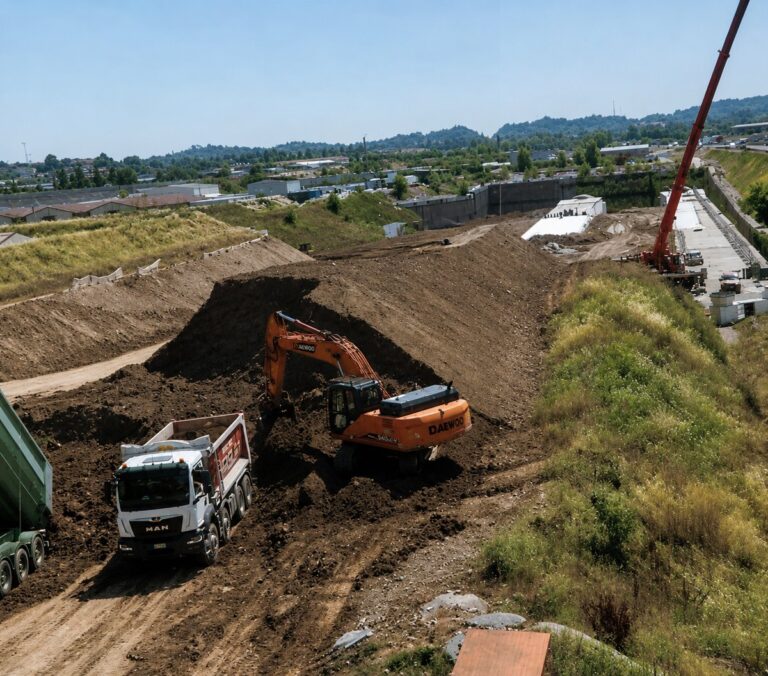
On June 3rd, the first experimental run of a train took place on the TAV tracks laid at the bottom of the massive excavation site (under the “Campagna” bridge in Lonato). For a couple of years, the site was dominated by the so-called “tunnel boring machine” (TBM)—an enormous machine that excavated the railway tunnels at […]
-
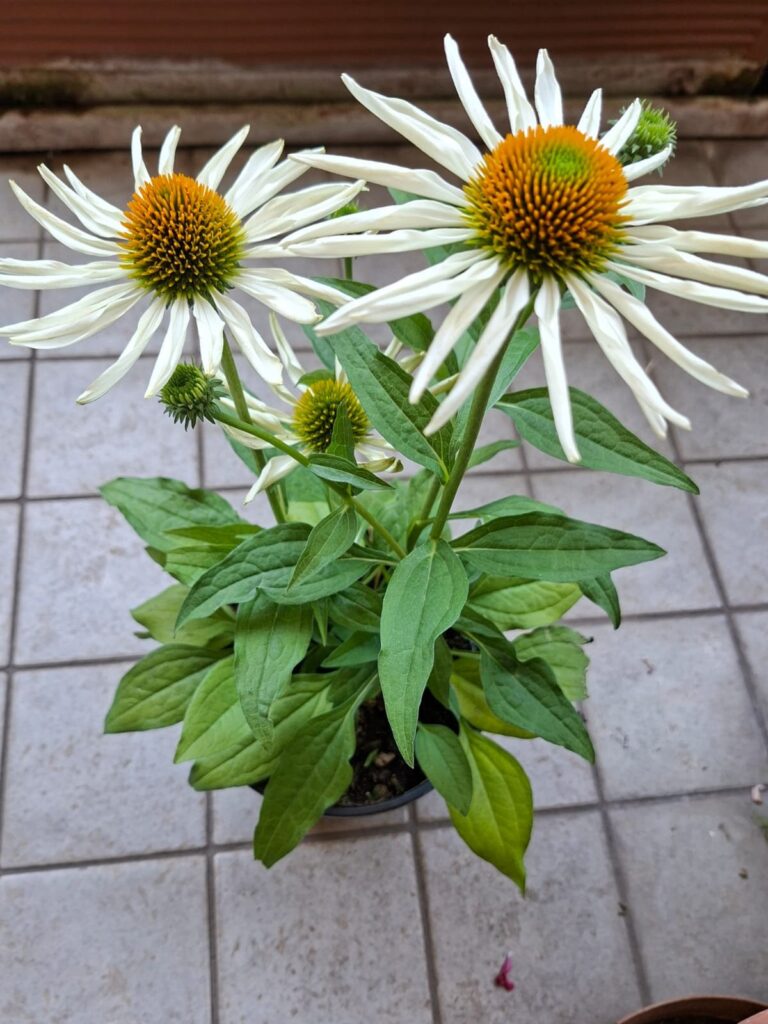
The Green Witch: Echinacea
The warm July sun brings us into the height of summer, where the sweet and frantic song of the cicadas accompanies our days in nature. Given the high temperatures, I chose to talk about a very rustic plant for this month. It tolerates heat and drought very well, yet it can also survive down to […]
-
In the Heart of Summer
Welcome to the heart of the summer season on Lake Garda. With the arrival of July, our lake lights up with a vibrant, intense glow, while the Pèler breeze caresses the shores and accompanies the warm days of a season now in its full splendor. It is the time when the region reveals all its […]
-
GN Magazine – July 2026
Welcome to the digital edition of GN Magazine – July 2026. Here you will find the complete English translations of the main articles published in the print edition, bringing the history, culture, and events of Lake Garda to our international readers. July 2026 Articles Select an article below to read the full translation: Share this […]
-
Kurt Erich von Suckert, alias Malaparte: A Maledetto Toscano (Part 3)
We conclude with the excerpt titled “The Widows” (Le vedove), which contains observations on social customs that may seem outdated today but remain partly valid. My “Battibecco” column on that difficult profession of being a widow earned me a hundred letters from widows all over Italy. Not all, of course, poisoned their husbands with rat […]
-
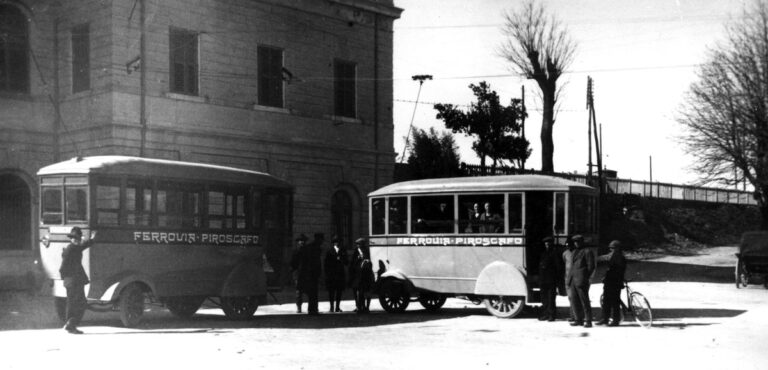
A History of Trains and Railway Workers
Changes in the railways at the turn of the 20th and 21st centuries. Dear Luigi, when a century is about to end, ushering in a new millennium, events often occur that disrupt the normal course of things. The final years of the 20th century, when Italian Lire still circulated, marked the maturity of my working […]
-
A Centenary to Remember: The Union of Rivoltella and Desenzano in 1926
One hundred years ago, in July, the union of the Municipality of Desenzano with the Municipality of Rivoltella took place, through the royal decree of July 29, 1926. This established the merger of “Desenzano sul Lago” and “Rivoltella sul Garda” into a single municipality named “Desenzano del Garda”. At the time, Desenzano had 6,227 inhabitants […]
-
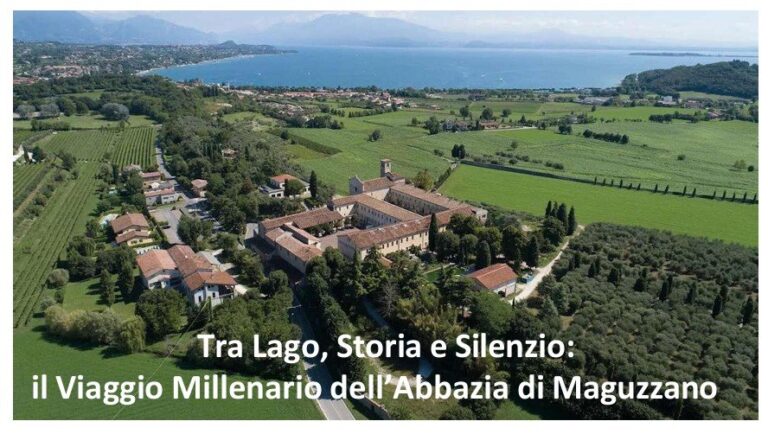
The Abbey of Maguzzano: A Haven of Peace and Spirituality
The Abbey of Maguzzano is located on the lower Lake Garda, in a suggestive natural setting between morainic hills and water reflections, representing a place of great quiet and spirituality. Its origins date back to the 9th century, when Benedictine monks founded a small abbey in a strategic position near Verona and Brescia, important not […]
-
Sirmione Retains the Blue Flag
For the fourth consecutive year, the Municipality of Sirmione has obtained the prestigious 2026 Blue Flag, the international award assigned by the FEE (Foundation for Environmental Education). The quality seal was awarded again this year to the famous Jamaica Beach (Lido delle Grotte), confirming the excellence of bathing waters, the protection of the natural heritage, […]
-
Salò and Music: The Garda Music Summer
Salò has been hosting a musical event since 1958 that has achieved national acclaim over time: the Garda Music Summer (Estate Musicale del Garda). I would like to offer the readers of GN a summary of the history of this festival. I must begin by saying that, through a meticulous year-long effort, I have narrated […]