Desenzano Marina Project Combines Habitat Preservation with Nautical Expansion
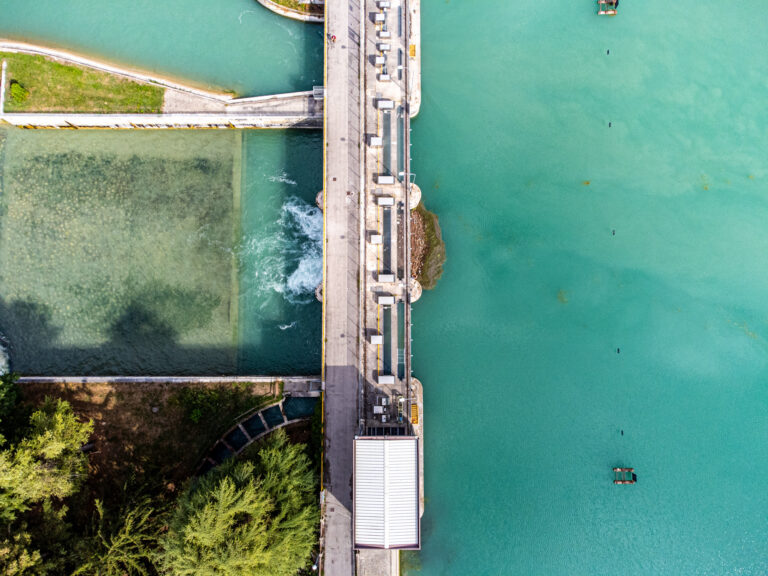
Many of the recent port projects submitted to the Comune and the Regione now have another to consider. Lega Navale Italiana, a historic and prestigious maritime association with longstanding roots on Lake Garda, recently unveiled a project to build a marina between the existing port at Diga and the Feltrinelli beach area for small and medium-sized boats. The plan also includes a beach and — the most surprising innovation — a riparian habitat zone with “capacity for phytoremediation and water circulation”. In other words, a small oasis of fish fauna designed to coexist with the nautical activities of a tourist port. If memory serves correctly, this is an entirely new idea that might frankly astonish many environmentalists at first glance.
How, then, could birdlife coexist alongside motorboats and their undeniable atmospheric and noise pollution? The project planners state: “The inclusion of a naturalistic area with landscape value, forming a riparian flora-fauna habitat, aims to both host aquatic animals already present in the area and to accelerate the natural self-purification processes of the water, through the use of macroflora and microalgae capable of metabolizing potential hydrocarbon discharges from boats.” In fact, over the years, a sizable colony of ducks, swans, and teal has established itself among the hundreds of moored boats in Desenzano’s port.
Impact on fauna and projects
This area was chosen, of course, for its very mild climate but also for the good “relationship” established with humans, who protect and even feed the birds continually. Considering that so far, the birds have even nested and proliferated among the boats, the Lega Navale project’s designers observe, it is almost certain that a well-protected and “equipped” bathing area would allow the colony to grow in number and thrive in an even better habitat than currently exists.
However, as mentioned, the project also involves constructing a marina with floating pontoons capable of accommodating up to 300 vessels. The marina would be protected by a breakwater. In another zone, a small harbor would be created to house smaller boats, to prevent overcrowding of the main basin.
Finally, there is the planned beach area. It involves enlarging and redistributing public lakefront spaces between Lungolago Battisti and the Desenzanino beach through the creation of a natural swimming pool using lake-filtered and purified water, along with planted green areas, a zone reserved for sunbathers, and pedestrian pathways.
This appears, at first glance, to be a futuristic or perhaps “revolutionary” project. Still, it is not entirely impossible. The mayor of Desenzano has generally given a positive initial opinion. However, the project faces the looming threat of the Soprintendenza’s restrictions, as the area is protected under strict landscape regulations.