Lonato’s History in Art: Students Create the 8th Edition Lunario
This year once again, the students of the fourth year at the Pedagogical and Linguistic High School of Istituto Paola Di Rosa in Lonato created their “Lunario”: it is the eighth edition. The work is the product of the students’ creativity, supported by teachers Maria Gioia Casagrande (drawing and art history) and Stefania Pozzi (letters), and in collaboration with photographer Mauro Pezzotta. With this edition, the authors aimed to portray the millennial tradition of the city of Lonato.
The Historical Lunario of Lonato
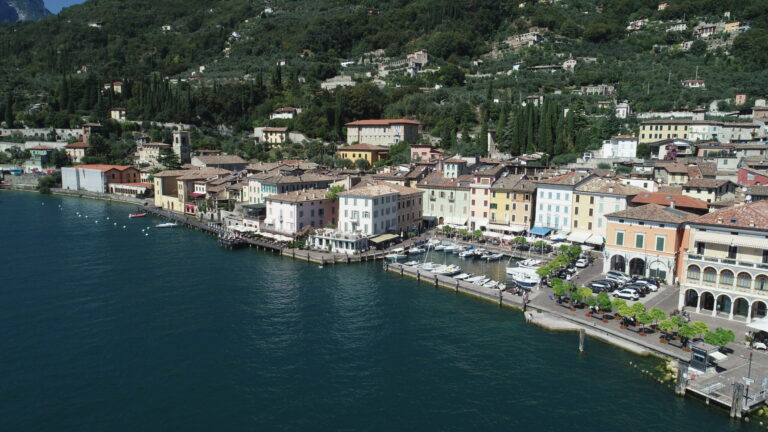
A historical lunario, therefore, that depicts buildings and monuments linked to particular events through drawings. The setting of various historical events, Lonato witnessed the passage of different populations – Celts, Romans, Longobards – who left enduring traces.
During the medieval period, the town became a fortress city, and its walls still surround the hill on which it is built. The period of greatest development occurred during the Renaissance, thanks to the Milanese influence and especially the Venetian presence.
“The Lonato tradition,” explain the authors, “blends elements of Lombardy with features more closely associated with Venice, although giving priority to the latter. The residence of the Podestà of La Serenissima still bears the Venetian lion holding an open book, and the same coat of arms also depicts another lion with the town’s keys.”
Historical Events and Architecture
“An important center in the morainic plain,” continue the authors of the Lunario, “Lonato could not escape the plague epidemic of 1630, which caused the decimation of a large part of the population. Yet, the residents found the strength to recover, which is evidenced by the completion of the Cathedral’s facade by architect Pao-lo Sorattini.”
In the subsequent centuries, the surrounding territory became the theatre of the Second War of Independence, as depicted by Giovanni Fattori in his painting “Assalto a Madonna della Scoperta,” realistically illustrating the outcomes of the clash.
The 19th and 20th centuries
Finally, the twentieth century brought significant technological and industrial innovations, establishing Lonato as a city in full development. Thanks to the collaboration of the Comune (Municipality) and several companies, the calendar will be printed in 5000 copies.
Roberto Darra