Cisano Pile Dwelling Revealed: Key Bronze Age Findings Resurface
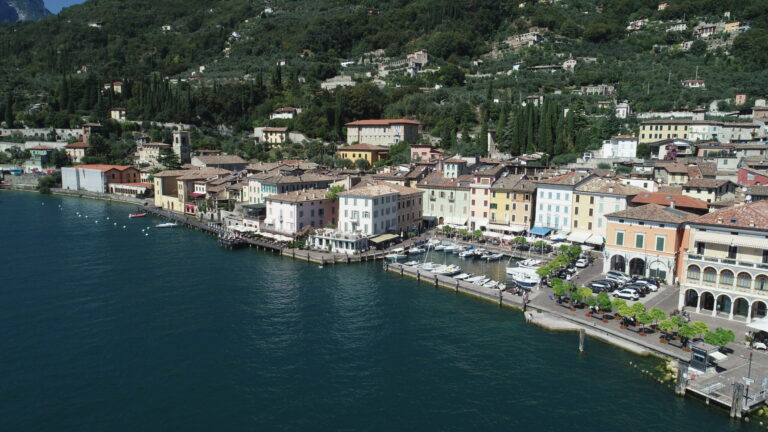
And the second collector of eight billion stumbles upon the Cisano pile dwelling. But this does not cause delays, as today it is possible to quickly excavate an archaeological area, but for professionals and enthusiasts of the earliest settling of Lake Garda, it represents another valuable fragment of lake history—a significant testimony of when the «lacustrine citès» of Benaco were the protagonists of the Bronze Age in Italy (2nd millennium BC). That there was a pile dwelling settlement at Cisano, in the stretch facing the village, was known since the 1920s. Then, in 1938, dredging work was carried out for the construction of the new port, and everyone said that despite many materials recovered, the central area of the settlement had been completely destroyed. But Francesco Zorzi, director of the Verona Civic Museum of Natural History, stubborn as a mule, proved otherwise, and from pioneering dives carried out at the end of the 1950s and early 1960s and the perplexed smiles of colleagues, he wrote that «the pile dwells was still intact and located near the shore». Fortunately, in the spring of 1984, the installation of the sewer collector took place, and the richness of archaeological materials «spat out from the earth» on that occasion led, in 1986, to the intervention of the Superintendency of Archaeology of Veneto, during the square’s restoration work, which confirmed Zorzi’s insights. A trench just over 21 meters long was excavated, and within the mud, for the first time, nearly 500 piles, a load of large cobbles, a walkway, and a marvelous series of artifacts made of ceramics, bone, metal, and flint, attributable to an advanced phase of the ancient Bronze Age and an early phase of the Middle Bronze Age (17th-16th century BC), were seen and almost touched (rather than explored with costly underwater investigations). Today, another fragment of the Cisano pile village comes to light. And this pleases us immensely, if only because it enriches our knowledge of that distant past.