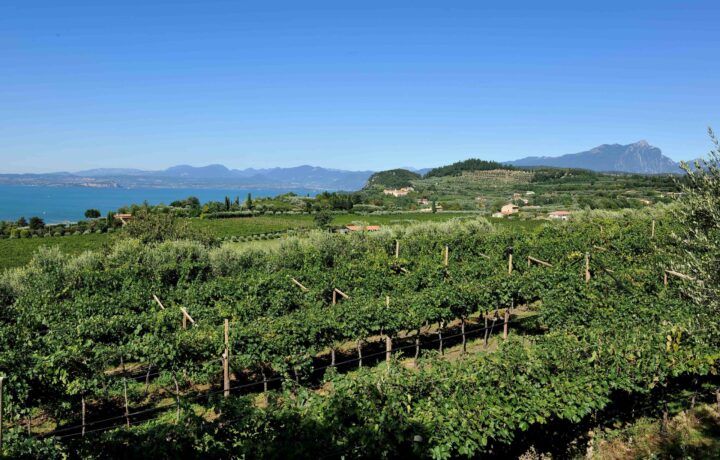
The activity of the brand-new Centro Vitivinicolo Bresciano winery has commenced in recent days, located at the Villa Barboglio headquarters, on via Bornata, in Brescia. It is a state-of-the-art subterranean facility that will provide a prestigious location for microvinifications not only from Brescia but also from other parts of Lombardy.
The same president of the Centre, the Provincial Councillor for Agriculture Dr. Guido Galperti, who strongly advocated for the construction of both the technical facility and the new headquarters, expressed his overall satisfaction with the entire structure built at this Villa owned by the Province of Brescia.
There is also satisfaction regarding the start of winery activities that will enable investigations—highly important into new clones and new grape varieties—not only for the province of Brescia but also for other public entities in Lombardy.
Activities and collaboration at the new headquarters
The old vinification cellar, managed by the Istituto Agrario Pastori, will continue to operate at the new location, allowing students to directly learn all the essential knowledge and secrets for continually improving wine production, of which the province of Brescia has always been a major player.
Currently, around 100 microvinifications are ongoing, with grapes sourced not only from the 6 hectares of vineyard surfaces of the Provincial Centre but also from other provinces in Lombardy.
This year, and for the first time since its establishment, there are a University Diploma student and four interns at the provincial facility, who, under the guidance of Dr. Giovanni Tassini, coordinate all operations related to microvinification.
Methodology of experimentation and analysis
“For the varieties under experimentation, a sample is collected from different vines, no more than 6 to 10 plants,” explains Dr. PierLuigi Villa, director of the Centre. “This is considered.”
“Sufficiently representative.” The selected plants for experimentation are counted for their fertile buds, the number of grape bunches, which are also weighed to determine the average weight of each bunch.
Furthermore, chemical analyses are performed on each collected sample, measuring % sugars, total acidity, pH, malic acid, and tartaric acid.
Currently, around twenty microvinifications are underway using grapes produced in the vineyards of the Centro Vitivinicolo, aiming for a total of about fifty samples by the end of the period.
In addition to these,” continues Villa, “we are also vinifying samples from other areas of Lombardy: from Oltrepò Pavese, for example, 27 have already been vinified.”
These studies are conducted in collaboration with the Faculty of Agriculture at the Università di Milano, ensuring scientific rigor.
For the remaining grapes produced by the Centro Provinciale, the scheduled harvest is in full swing, variety by variety, following the natural maturation timeline, starting with Pinot Nero and then moving on to other Pinots, Bianco and Grigio, all four Chardonnays, and other varieties in the collection of regional and national interest.
“Of course,” says Villa, “I will also continue working with the ‘old varieties’ collected here, because the collection and preservation of ancient genotypes is one of the main objectives of the Centre.”