Trentino and Enel seek to save Lake Garda’s lacustrine trout from extinction
If the lacustrine trout of Lake Garda is at risk of extinction, it is “the fault” of Trentino and Enel. Ever since, 50 years ago, they built the hydroelectric plant on the Sarca River, created artificial dams, and Enel diverted water from the river, the poor fish have been unable to swim upstream to lay their eggs.
Thus, it will be the Province of Trento, in collaboration with those of Verona and Brescia, to save the prized lacustrine trout from the danger of extinction. The plan was presented in recent days in Arco, the town of 14,000 inhabitants in Trentino’s Garda area, through which the final part of the Sarca River flows. The situation for this fish species is not outright catastrophic, but it is undoubtedly concerning.
Details of the conservation project
Just enough to prompt the Wildlife Service of the autonomous Province to step directly in to save the Benacense fish species. The lacustrine trout (not to be confused with the marble trout, typical of rivers, or with the iridea or fario) can no longer ascend the Sarca River to deposit its eggs in the sandy meanders of the watercourse, mainly due to two barriers.
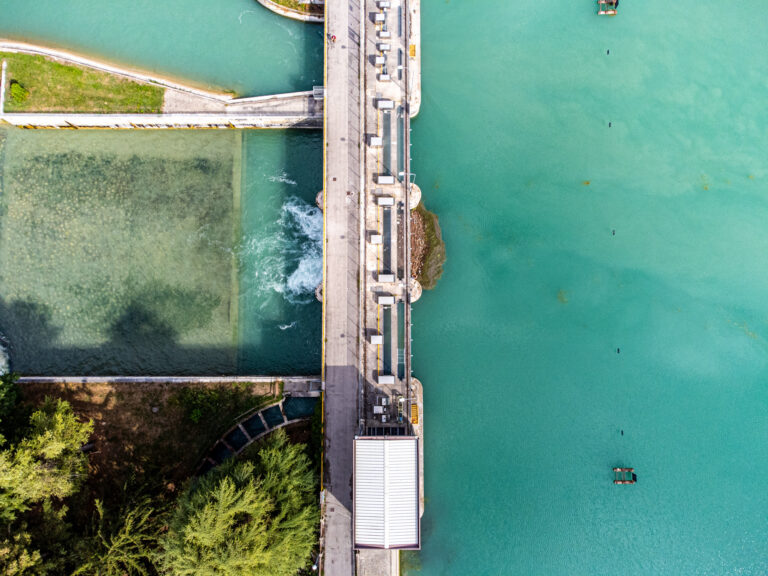
Firstly, the drastic reduction of water flow in the Sarca, caused by hydroelectric exploitation, and secondly, the dams and concrete barriers placed horizontally along the riverbed, which the trout cannot jump over. There is one at Torbole, near the hydroelectric plant, one kilometer from the mouth; others in Linfano (municipality of Arco), about two kilometers from Lake Garda; and another at Ceniga, seven kilometers upstream.
In the splendid hall of the Arco town hall archives, the municipal environmental assessor Fabrizio Miori hosted Romano Masè, head of the Provincial Wildlife Service of Trentino, ichthyologist Lorenzo Betti, the president of the Fishermen’s Association Stefano Trenti, and Paola Testa, also from the Wildlife Service, to present the project already in an advanced stage of development.
The plan aims to reduce the dams and make them passable for fish. Secondly, while the provincial administration is re-discussing the General Plan for the use of public waters, it will also request an increase in the flow of the Sarca River from the current two cubic meters per second to five-nine, which are necessary.
To make the conservation plan concrete, it relies on the project study carried out by ichthyologist Betti, with the assistance of engineer Giuliano Trentini. Verona will be involved through ichthyologist Ivano Confortini, to oversee monitoring and seeding, which means producing fry in laboratory incubators for release into the lake waters.
The process will start with careful monitoring of the fish fauna in Garda and the Sarca, and while waiting to begin construction, to avoid further delays, laboratories from the Provinces of Verona and Brescia will assist in breeding the young lacustrine trout.
Restoration projects and collaborations
Within this species recovery effort, the discussion also includes the Sarca River park project, which Miori and the Arco municipal administration are advancing, seeking synergies with neighboring municipalities, Dro, Riva, and Nago Torbole. The plan involves phased work, beginning with the restructuring of the dams and subsequently naturalizing the watercourse.
This evolving process aims to restore the river’s livability to the community, with its environmental landscapes, sports opportunities (from canoeing to cycling), and tourism value.