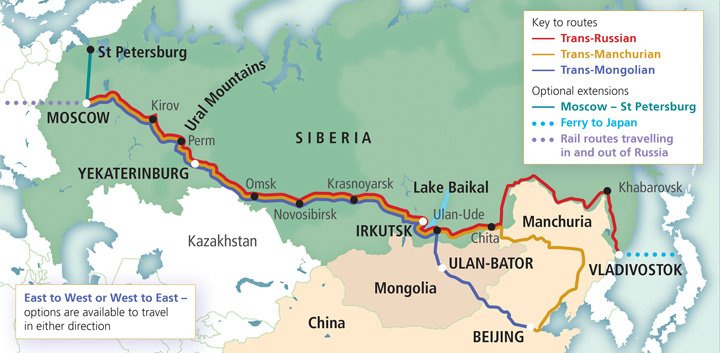
The history of the Trans-Siberian Railway is one of the most extraordinary sagas of human engineering. Holding the undisputed title of the longest continuous railway line on Earth but also holds the undisputed title of the longest continuous railway line on Earth. Spanning a vast 9,288 kilometers (5,772 miles), it traverses eight time zones, linking the historic heart of Moscow to Vladivostok on the shores of the Pacific Ocean.
The Trans-Siberian was not Russia’s first railway line. As occurred in other nations, the initial impetus came directly from royal decree. In 1836, Tsar Nicholas I commissioned Austrian engineer Franz von Gerstner to build a private imperial line connecting Saint Petersburg to the summer residences at Tsarskoye Selo and Pavlovsk. Opened on November 11, 1837, this 27-kilometer stretch introduced rail transport to the Russian Empire.
By comparison, in the Italian peninsula, Ferdinand II of Bourbon inaugurated Italy’s first railway on October 3, 1839, connecting Naples to Portici. Both the Russian and Italian pioneering lines relied on foreign engineering expertise and imported materials, including rails and locomotives supplied by Belgium, England, and Germany.
In 1851, Russia opened its first double-track trunk line connecting Saint Petersburg to Moscow. Crucially, for strategic defense and military considerations, Russia adopted a broad gauge of 1,520 mm rather than the 1,435 mm standard gauge used throughout Western Europe. This 85 mm difference persists to this day, requiring bogie exchanges or train transfers at border crossings with standard-gauge nations such as China.
Full-scale construction of the Trans-Siberian commenced in the spring of 1891 following extensive surveying. The ambition was staggering: to forge an uninterrupted steel link from Moscow through Siberia to Vladivostok. The easternmost leg connecting Chita, Harbin, and Vladivostok was completed between 1897 and 1901.
The historical route linked major continental centers: Moscow, Ryazan, Samara, Ufa, Chelyabinsk, Kurgan, Petropavlovsk, Omsk, Novosibirsk, Krasnoyarsk, Irkutsk, Ulan-Ude, Chita, Khabarovsk, and Vladivostok—a monumental journey that remains the world’s longest single train route.
The official groundbreaking ceremony took place in Vladivostok on May 31, 1891, presided over by Tsarevich Nicholas (later Tsar Nicholas II). Over the following decade, work progressed at a formidable average rate of 740 kilometers per year. Lacking modern machinery or excavators, tens of thousands of workers constructed massive embankments and laid track using only shovels, pickaxes, wheelbarrows, and light handcarts.
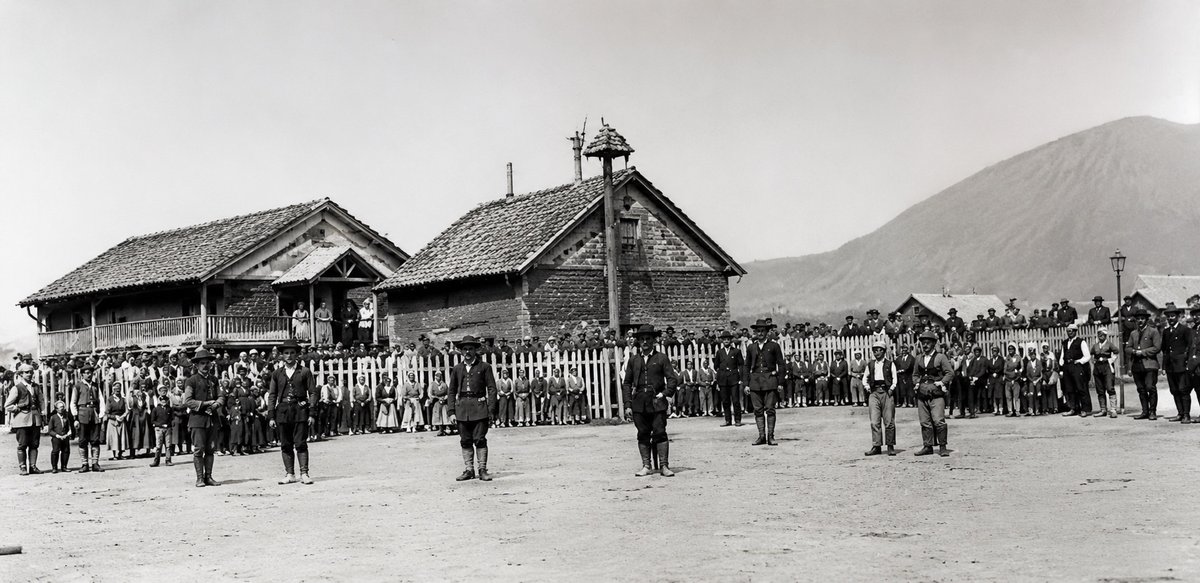
At peak periods, the workforce exceeded 90,000 men. A substantial portion consisted of convicts and forced laborers drawn from penal colonies across remote Siberian territories. The working conditions were brutal; severe winter temperatures and extreme physical toil claimed thousands of lives through exhaustion and disease.
By November 3, 1901, track laying was complete across the mainland, with Lake Baikal initially crossed using specialized icebreaking ferries ordered from abroad. The circum-Baikal section, completed on October 29, 1905, presented immense engineering challenges, requiring dozens of tunnels bored through sheer cliff faces and iron bridges erected over steep ravines descending into the deepest lake on Earth (1,642 meters).
Because local labor was scarce in Siberia’s uninhabited expanses, skilled stonemasons, excavators, and builders were recruited from abroad—including significant numbers from Italy, particularly the Friuli and Veneto regions. Their arduous yet romantic story inspired Italian literature, notably celebrated in Carlo Sgorlon’s novel La conchiglia di Anataj.
During harsh Siberian winters, workers sheltered in wooden barracks, sharpening tools and resting until spring brought the dramatic awakening of the taiga. As Sgorlon evocatively wrote, they awaited the return of sun and blossom, amidst ‘the pale light of the taiga through the mist, and the arrival of wild storks, cranes, and ducks.’ With these memorable words, we leave you with the enduring spirit and distant horizons of the Trans-Siberian Railway.
Read more from GN Magazine – August 2026
-
Wels Catfish Lake Garda Emergency: Contextualizing Environmental Challenges
Explore the Wels Catfish Lake Garda Emergency by Filippo Gavazzoni: containment strategies, native fish protection, and sewage purification priorities.
-
GN Magazine – August 2026
Digital index and English edition of GN Magazine August 2026 (Issue 212). Discover articles on Lake Garda history, culture, and nature.
-
Borage Edible Flowers Green Advice: The Green Witch August Guide
Discover Borage Edible Flowers Green Advice by Marina Boschetti: cultivation tips, culinary uses in savory pies, and eco-friendly water recycling.
-
Emilio Berti and Lake Garda’s Mandolin Tradition: Adriana’s Memories
Discover the story of Emilio Berti (1908-1987) and Lake Garda’s mandolin tradition, preserved through music, family memories, and passion.
-
Terme di Sirmione Count Rambaldo di Collalto: Legacy of Spa Excellence
Discover the history of Terme di Sirmione Count Rambaldo di Collalto: 40 years of visionary leadership, Catullo spa foundation, and medical innovation.
-
Sandrone and Fagiolino: Emilian Puppet Heroes of Italian Theater
Discover the story of Sandrone and Fagiolino, the iconic Emilian puppet characters from Modena and Bologna that shaped Italian folk theater.