Changes in the railways at the turn of the 20th and 21st centuries.
Dear Luigi, when a century is about to end, ushering in a new millennium, events often occur that disrupt the normal course of things.
The final years of the 20th century, when Italian Lire still circulated, marked the maturity of my working life in the railways. Gradually, I rose through the ranks to become Depot Manager at the Locomotive Depot in Verona. One day, a new engineer arrived, selected directly from private industry by the management of the Ferrovie dello Stato (State Railways) in Rome. These engineers did not go through the usual public competitive examination but were headhunted for their management and organizational skills.
It was immediately clear that these unannounced arrivals would soon bring about epochal changes. The signal from Rome was political, likely negotiated with national union leaders. The directive was to modernize and drastically reduce staff in almost all sectors. Rolling stock maintenance was the first to suffer severe downsizing.
The new engineer, pragmatic and direct, stated that he was sent to change many things. In early meetings, he reminded the technical staff that in his previous corporate roles, he had implemented company directives by laying off thousands of workers and closing unprofitable sites.
Office life became frantic. He frequently called me in for operational data, loading me with responsibilities I did not think fell within my role. He began sending me to private railway maintenance workshops to negotiate contracts and manage asbestos removal from carriages, railcars, and locomotives.
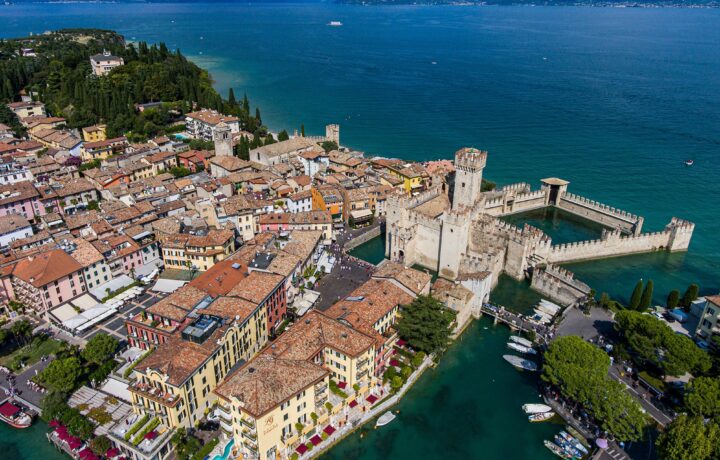
Private contractors with external staff began arriving at the Verona Locomotive Depot. They often lacked adequate technical training, requiring close supervision, especially regarding safety. I was assigned a service mobile phone, which became a direct, 24/7 hotline to the engineer. Family life soon suffered, as I no longer returned home at regular times. I recall a Saturday evening in Sirmione with my family. Around 10 PM, the phone rang: “Ganzerla, where are you?” I replied that I was having dinner in a pizzeria with my family. He said bluntly: “You must go immediately to Desenzano station; they had to decouple a carriage from the Express train due to a suspected fire. Call me when you get there.”
I left my family and hurried to Desenzano. I found the carriage isolated on a siding, with firefighters monitoring smoke coming from the undercarriage. A braking system malfunction had caused the brake pads to remain stuck to the discs, overheating them and causing smoke. I arranged to isolate the brake and sent the carriage to the maintenance yard with a freight train, returning to my family after midnight.
Depots Closure and Personnel Downsizing
Luigi, I recount this episode to show how difficult it was for me and many colleagues to accept such sudden changes. It was clear that private operators would soon replace railway workers. Small locomotive depots, vital for quick repairs on secondary lines, began to close.
I was ordered to close the Mantua and Vicenza depots, which depended on Verona, and persuade the remaining staff to transfer. Some accepted; others negotiated early retirement packages with cash incentives. For many, commuting to Verona after working in their hometown for years was a hard choice.
By the early 2000s, special representatives approached employees offering early retirement packages matching their final salaries. It was a once-in-a-lifetime opportunity.
To be fair, everything was handled smoothly. The financial guarantees were higher than expected, and no one was laid off. Some used the incentives to pay off their mortgages, support their children at university, or buy a new car. Within a few years, railway staff rapidly declined.
We began to see new generation electric trains. The purchase packages included maintenance by the manufacturers, eliminating the need for many maintenance workers, track walkers, stationmasters, and inspectors.
Several stations along the lines were closed. Families living on the upper floors of stations had to relocate. Even the Austrian-era Desenzano station remained empty on the upper floors. The neoclassical station in Lonato was leased to the Municipality for use by the local Pro Loco association.
In 2025, the FS Group declared that it managed 17,000 kilometers of lines, 1,600 tunnels, 23,000 bridges, and 2,200 stations. Currently, 1,700 RFI (Rete Ferroviaria Italiana) stations are unstaffed. About 345 have been leased for free use to associations, municipalities, or local authorities.
Recently, DB (German Railways) announced the sale of about 200 carriages capable of 200 km/h, likely to end up in Eastern Europe. Soon, locomotive-hauled trains will disappear, replaced entirely by electric multiple units.
Since early June, test runs have been underway on the Brescia-Verona section of the TAV (High-Speed Train) with multiple daily round trips at 30 km/h.
Dear Luigi, the new railways have arrived!
Giancarlo Ganzerla
Read more from GN Magazine – July 2026
-
The History of Terme di Sirmione: The Interwar Period
The transition period between the two World Wars saw Sirmione gain popularity as a spa resort, thanks to the combination of excellent therapeutic results and the natural beauty of the location. However, it also had to face economic difficulties related to the devaluation of the Lira and a period of stagnation. In 1938, following extensive […]
-
Radio Popolare Lonato: Year Zero (Part 1)
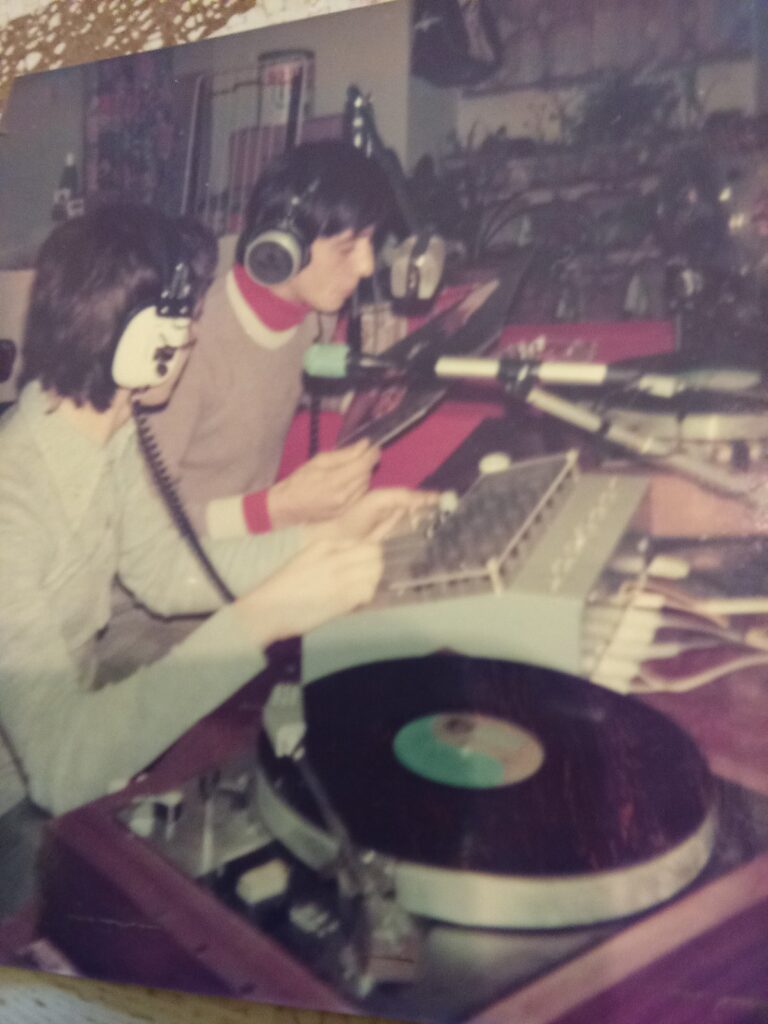
By Roberto Darra It was August 18, 1976, when a new sound burst onto the airwaves in Lonato. It was not a RAI broadcast, but a private radio station broadcasting music and news from a garage in Via Ludovico Ariosto. After numerous preparatory meetings at the bakery of the brothers Franco, Giordano, and Ezio Stuani, […]
-
Virgilia AI: The Artificial Intelligence Connecting Municipalities, Businesses, and Local Territories
Digital transformation is no longer just about administrative processes or corporate communication. Increasingly, it represents a strategic tool to promote local territories, improve access to information, and create new development opportunities for local tourism. This is the context for Virgilia AI – AItalian Beauty, a platform developed by the L&T Group in collaboration with Microsoft […]
-
A Testimony of Hope from the Sanctuary of San Polo
Good day to everyone. Today I would like to share, in a few simple words from the bottom of my heart, my personal testimony and what I received from this place. I prefer to remain anonymous because this is a delicate subject for me, one that almost no one knows about, but which I would […]
-
The Compagnia de Riultèla: 30 Years of Success
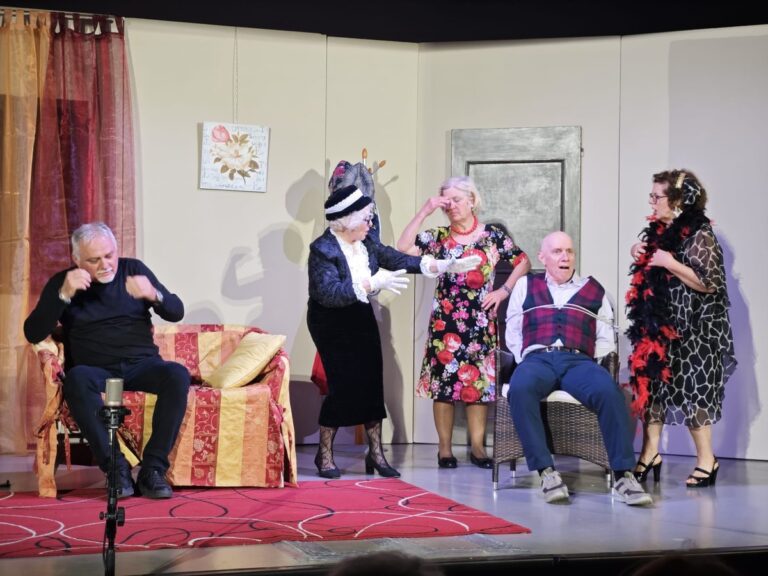
Making theater that makes people laugh, offering carefree hours, is the specialty of the Compagnia de Riultèla, which celebrates 30 years of activity this year. A long history that has seen numerous actors and collaborators succeed one another, always with a focus on dialect theater. These years have also been marked by the difficulty of […]
-
The Aloisian Year: Historical Sites to Visit in Castiglione delle Stiviere
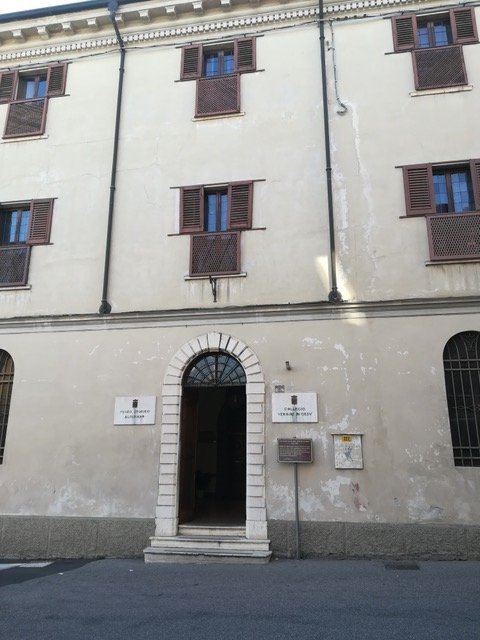
The Aloisian Historical Museum The museum dedicated to Saint Aloysius (San Luigi) is located in the College of the Virgins of Jesus (Collegio delle Vergini di Gesù). This institution was founded on June 21, 1608, by Cinzia, Olimpia, and Gridonia—daughters of Rodolfo, the brother to whom Aloysius had surrendered his birthright. Inspired by their uncle, […]
-
The Dynamics of Lake Garda: Water Turnover and Climate Change
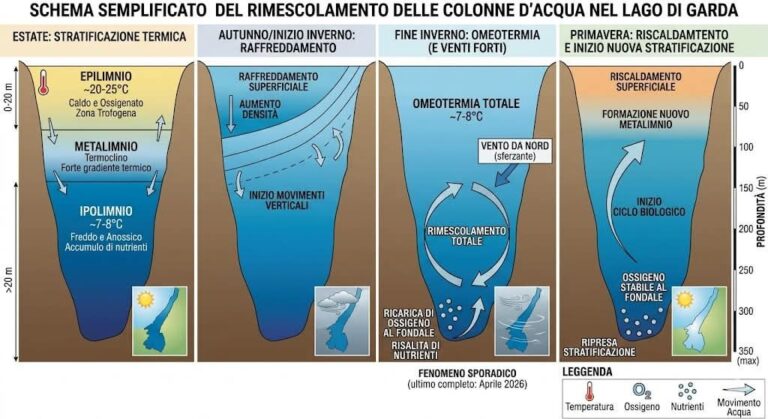
After 20 years, a phenomenon has occurred in Lake Garda that deserves to be better understood, precisely because it illustrates how dynamic, alive, fascinating, and resilient a lake environment can be. Lake Garda (or Benaco), as an oligomictic lake, falls into this category: a lake that only “occasionally” mixes its entire water column from top […]
-
When Goethe Arrived on Lake Garda: Goethe in the Footsteps of Winckelmann
In 1765, at the age of sixteen, Goethe followed his father’s wishes and studied Law in Leipzig, Saxony. In truth, he would have preferred to study Classical Literature in Göttingen. To distract himself from his studies, he read widely, visited the theater, and spent time with artists and writers. He met the painter and sculptor […]
-
Budibà Presents Puppets: Tartaglia, the Mask That Never Finishes a Sentence
His name immediately recalls his most obvious trait: Tartaglia is the mask that stutters (tartaglia in Italian). The question is inevitable: did the mask name the verb, or was it the other way around? It appears the verb “tartagliare” (to stutter/stammer) is older than the theatrical character. Thus, the mask, which appeared in the Commedia […]
-
The Monumental Lions by Ghidoni Relocate to Lonato del Garda
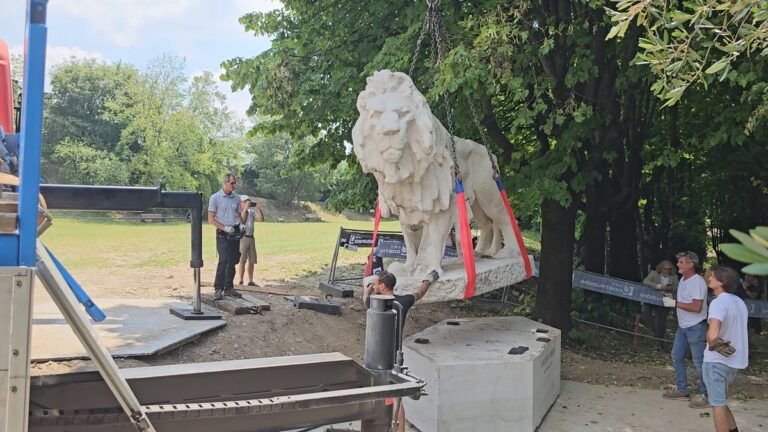
The “PTM Round Trip” project concludes: the sculptures leave Piazza Moretto in Brescia to find their permanent home in the park of the Rocca. After nearly four years standing guard at the entrance of the Pinacoteca Tosio Martinengo in Piazza Moretto, the monumental Lions by sculptor Domenico Ghidoni have left the city of Brescia. Their […]
-
Roman Ruins in Toscolano: History and Archaeological Discoveries
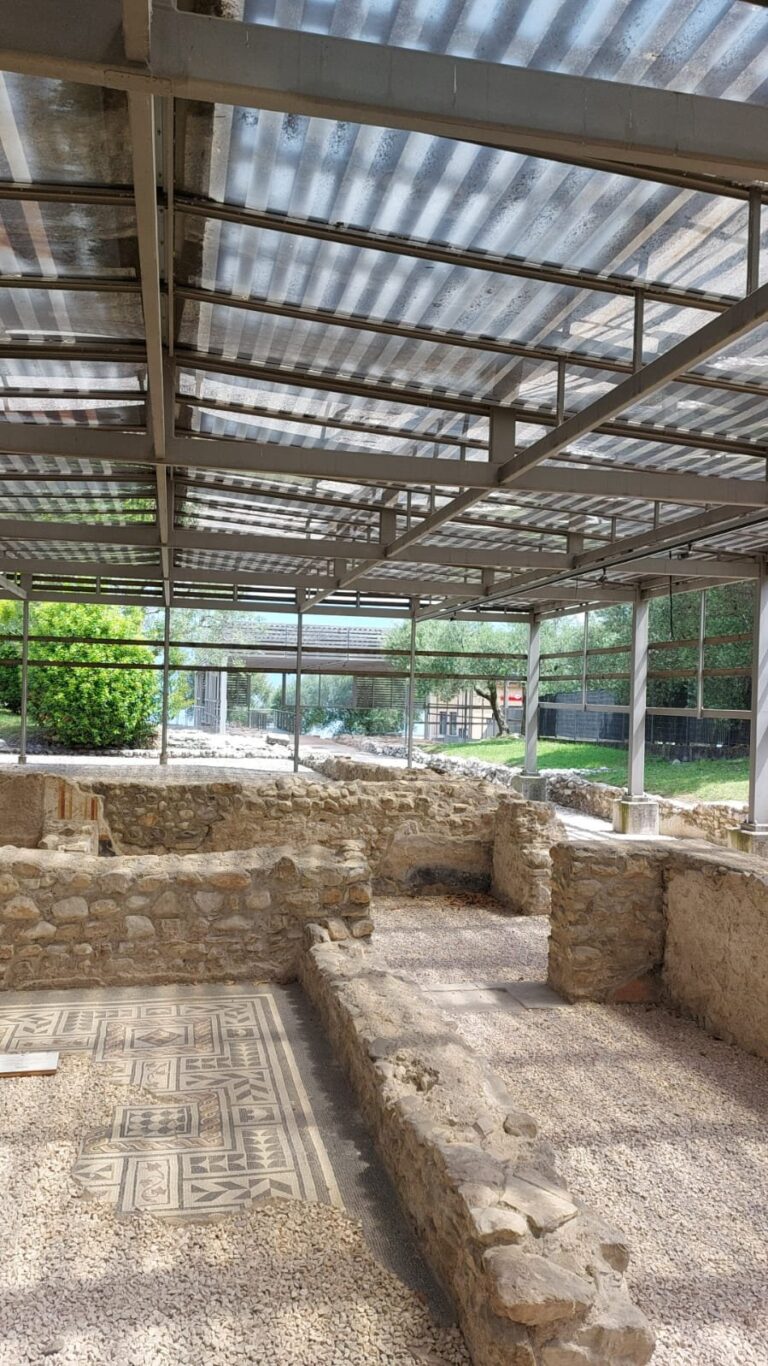
The first discoveries of Roman remains near the port of Toscolano date back to the 15th and 16th centuries. These findings were significant enough to inspire local poets to feed the legend of the fabulous city of “Benaco,” which was supposedly destroyed by an earthquake in 243 AD and subsequently submerged by the lake’s waters. […]
-
July at the Parco Giardino Sigurtà: Blooms, Events, and Promotions
Following a festive spring visit, I am pleased to offer suggestions for visiting the Parco Giardino Sigurtà in July, where spectacular summer blooms renew: roses, water lilies, lotus flowers, hydrangeas, medicinal plants, echinacea, daylilies, and water hyacinths brighten the 60 hectares of greenery, creating ever-changing landscapes. The charm of nature is enriched by wellness events—the […]
-
The TAV Tunnel Sinkhole in Lonato Closes
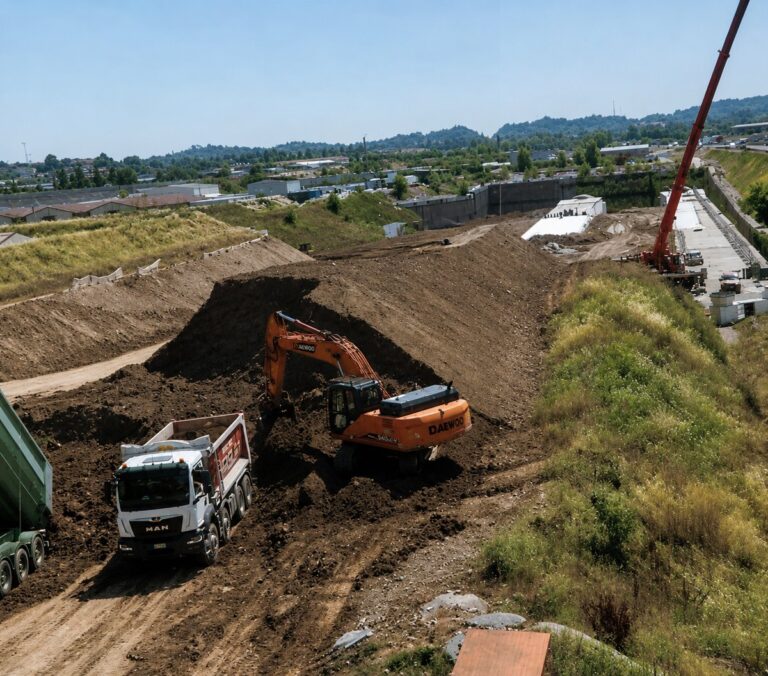
On June 3rd, the first experimental run of a train took place on the TAV tracks laid at the bottom of the massive excavation site (under the “Campagna” bridge in Lonato). For a couple of years, the site was dominated by the so-called “tunnel boring machine” (TBM)—an enormous machine that excavated the railway tunnels at […]
-
The Green Witch: Echinacea
The warm July sun brings us into the height of summer, where the sweet and frantic song of the cicadas accompanies our days in nature. Given the high temperatures, I chose to talk about a very rustic plant for this month. It tolerates heat and drought very well, yet it can also survive down to […]
-
In the Heart of Summer
Welcome to the heart of the summer season on Lake Garda. With the arrival of July, our lake lights up with a vibrant, intense glow, while the Pèler breeze caresses the shores and accompanies the warm days of a season now in its full splendor. It is the time when the region reveals all its […]
-
GN Magazine – July 2026
Welcome to the digital edition of GN Magazine – July 2026. Here you will find the complete English translations of the main articles published in the print edition, bringing the history, culture, and events of Lake Garda to our international readers. July 2026 Articles Select an article below to read the full translation: Share this […]
-
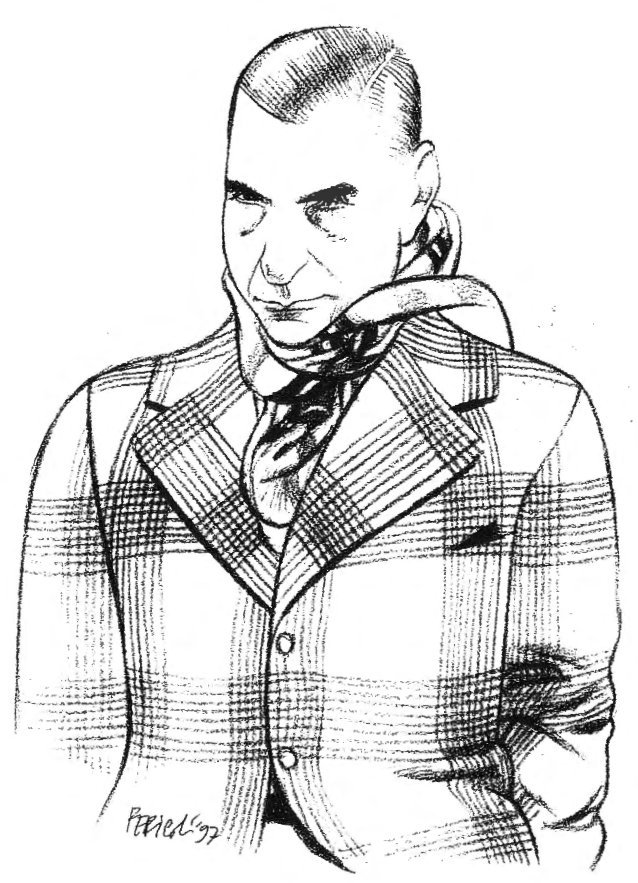
Kurt Erich von Suckert, alias Malaparte: A Maledetto Toscano (Part 3)
We conclude with the excerpt titled “The Widows” (Le vedove), which contains observations on social customs that may seem outdated today but remain partly valid. My “Battibecco” column on that difficult profession of being a widow earned me a hundred letters from widows all over Italy. Not all, of course, poisoned their husbands with rat […]
-
A Centenary to Remember: The Union of Rivoltella and Desenzano in 1926
One hundred years ago, in July, the union of the Municipality of Desenzano with the Municipality of Rivoltella took place, through the royal decree of July 29, 1926. This established the merger of “Desenzano sul Lago” and “Rivoltella sul Garda” into a single municipality named “Desenzano del Garda”. At the time, Desenzano had 6,227 inhabitants […]
-
The Abbey of Maguzzano: A Haven of Peace and Spirituality
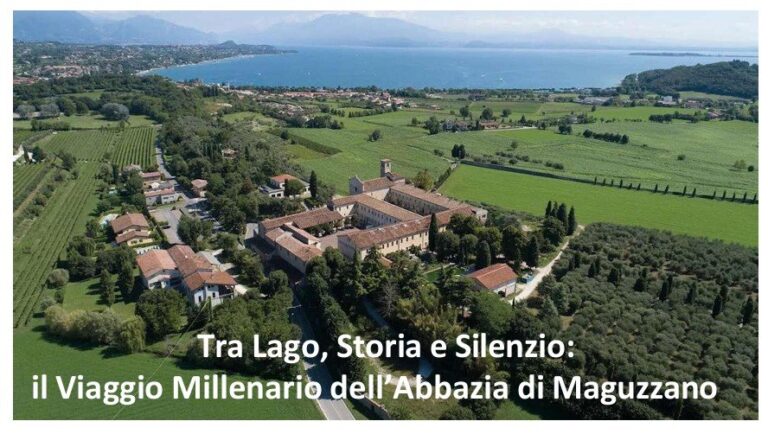
The Abbey of Maguzzano is located on the lower Lake Garda, in a suggestive natural setting between morainic hills and water reflections, representing a place of great quiet and spirituality. Its origins date back to the 9th century, when Benedictine monks founded a small abbey in a strategic position near Verona and Brescia, important not […]
-
Sirmione Retains the Blue Flag
For the fourth consecutive year, the Municipality of Sirmione has obtained the prestigious 2026 Blue Flag, the international award assigned by the FEE (Foundation for Environmental Education). The quality seal was awarded again this year to the famous Jamaica Beach (Lido delle Grotte), confirming the excellence of bathing waters, the protection of the natural heritage, […]
-
Salò and Music: The Garda Music Summer
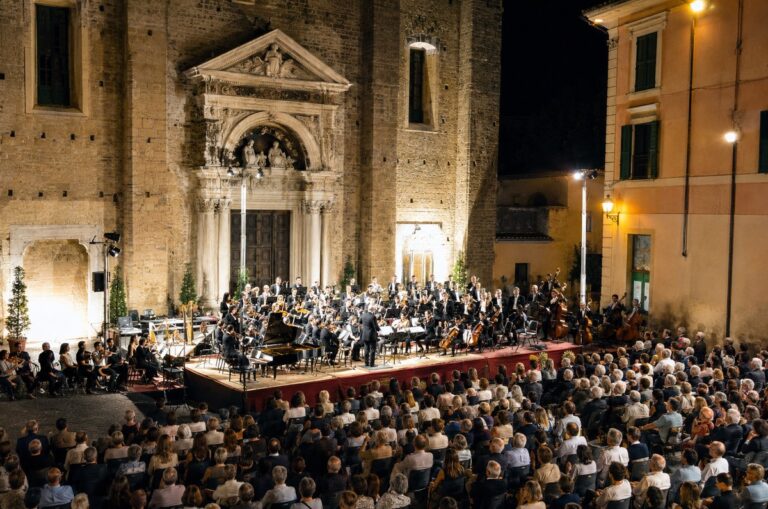
Salò has been hosting a musical event since 1958 that has achieved national acclaim over time: the Garda Music Summer (Estate Musicale del Garda). I would like to offer the readers of GN a summary of the history of this festival. I must begin by saying that, through a meticulous year-long effort, I have narrated […]