
August 2026 – When Goethe Arrived on Lake Garda – curated by Pia Dusi
Goethe and Art
In Italy, Goethe satisfied many of his cultural desires. Right from his departure for the beautiful country, he sharpened his eyes on everything. Like a child enchanted in front of an unexpected yet wished-for toy, he looked around to observe how, descending southward, the morphology of the land changed, how the air became progressively clearer and the plants ever more lush, and how, despite taking constant notes, he found no time to organize them. There were too many things to see, to write down, to delve into with the guidebooks he had brought along. But what mattered most to him was to assess ‘the impressions of the senses, which no book, no picture can give.’ Having left his country behind, he was ‘reigniting his interest in the world,’ testing his power of observation and verifying whether he could ‘enrich himself with new knowledge.’ Lake Garda turned out to be for him ‘a wonder of nature, an enchanting spectacle,’ and the ancient Scaliger Castle of Malcesine perched over the lake an irresistible attraction, worthy of being drawn on a sheet of paper as a memory.
In Italy, Goethe admired statues, busts, ancient and more recent architecture, spent much time in museums, churches, and theaters, filling his soul and heart with the paintings and frescoes of the greatest masters; but he did not limit himself merely to looking—he also expressed his opinion, demonstrating remarkable expertise.
In Verona, he found a special fascination in the Arena and in Titian’s Assumption of the Virgin contemplated in the Cathedral, although ‘much blackened.’ In Verona, he also visited the Gherardini Gallery (dispersed in the 19th century) with beautiful paintings and Palazzo Bevilacqua, where he particularly praised a ‘so-called Paradise by Tintoretto, which is actually a Coronation of Mary (now in the Louvre), queen of heaven, surrounded by all the patriarchs, prophets, apostles, saints, angels, etc.’ In this regard, Goethe wrote in his Italian Journey with an astute observer’s comment: ‘[…] the artist thus has the opportunity to unfold the full happiness of his genius. Lightness of the brush, spirituality, multiplicity of expression: to properly admire all this and enjoy it as it deserves, one would have to possess the painting and keep it before one’s eyes for a lifetime. The painting extends into infinity, and even the last angel heads vanishing in glory still retain a precise character. The largest figures are at most a foot high; Mary and Christ placing the crown on her head are about four inches tall. But the most beautiful female figure in the painting is Eve, slightly lascivious as she has been since ancient times.’
In Palazzo Bevilacqua in Verona, Goethe also admired portraits by Paolo Veronese and found the collection of ancient sculptures exceedingly beautiful. Goethe’s reflection on this matter is eloquent: ‘It is in my nature,’ he noted, ‘to venerate readily and joyfully that which is great and beautiful; there is no happier sensation than cultivating this inclination day by day, hour by hour, in the sight of such splendid works.’
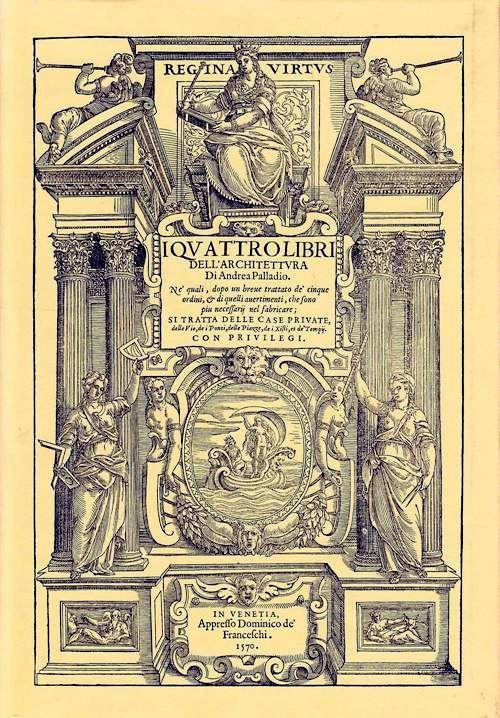
In Vicenza, Goethe lost his head over the architecture of Andrea Palladio (1508–1580), which he already knew from reading. Seeing them in their context, however, both in the city and in the countryside, prompted him to purchase in Padua a copy of ‘I quattro libri dell’architettura’ by Palladio—books he subsequently read during his travels through Italy and to which he frequently referred.
In Padua, at the Scuola di Sant’Antonio, he was able to observe with respect several works by Titian, which reminded him of ancient German painters. Of Titian, he would later admire in Rome at Villa Borghese the painting Sacred and Profane Love, so much so that a copy of it exists in his home in Weimar. Still in Padua, he remained ‘astonished’ by Mantegna’s frescoes: ‘What incisive, confident concreteness in those paintings!’ He noted an ‘authentically genuine realism,’ ‘harsh, clear, luminous, minute, conscious, delicate, defined, and which at the same time possesses something severe, scrupulous, labored’—a string of adjectives that only a connoisseur trained in art could highlight.
According to philosopher Giovanni Reale (1931–2014), Goethe, after his pre-Romantic period celebrating sentiment and individual freedom, opposed sentimentalism and grew to increasingly appreciate the healthy ‘ingenuousness’ of the ancients, to which he nevertheless associated a ‘critical torment,’ ‘an anxiety reborn from every achievement,’ unknown to the ancients and unleashed by the inner drives typical of the modern era. For Goethe, therefore, it was not a matter of passively copying or repeating the ancient, but of ‘reacquiring the eye of the ancients’ in matters of beauty, according to the ideas of German archaeologist Winckelmann, and following the impulses of one’s own nature, aspiring to a new classicism arising ‘by organic evolution’ from the spirit of a people. Art, in his view, creates like nature, which in the ensemble of its opposing phenomena produces diverse natural forms in a progressive evolution. Thus in works of art there is much transmission of the past, which nevertheless continues to develop further.
On his trip to Rome, Goethe stopped in Cento to admire the paintings of Guercino, ‘which one could stand looking at for years.’ In Bologna he saw many things, but an inner thrill—or rather ‘the highest gratification’—came before Raphael’s painting of Saint Cecilia, which he considered ‘like a god fallen from heaven,’ indebted in a certain sense to his masters, yet ‘illuminated by celestial genius.’
In Rome, together with his painter friend Tischbein (1751–1829), he entered the Sistine Chapel on November 22, where he was stunned, if not overwhelmed, before the naturalness of the Last Judgment and Michelangelo’s frescoes on the ceiling, which in his opinion expressed the Master’s ‘intimate confidence, virility, and enormity.’
The works of Raphael and Michelangelo were for Goethe not so much expressions of individual genius as ‘a crowning achievement reached by art itself,’ which with them touched ‘its highest summits’ owing to their ‘creativity in harmony with nature.’ For Goethe, a work of art did not necessarily have to be an imitation of nature; the artist had to know the nature of the subjects he intended to represent and aim for the creation of a perfect, universal work, without thinking of a possible ethical or social function. Nature, Goethe maintained, can be faithfully imitated, and something beautiful might emerge, perhaps, but limited. The artistic subject must be realized according to the in-depth dictates of nature and the knowledge of past tradition, but then represented according to the artist’s inspiration and soul. Only thus, according to Goethe, can the work of art express passions such as fear, pity, and love, and instill in the viewer ‘the feeling of the beautiful.’
Image Caption: Cover of ‘I quattro libri dell’architettura’ by Andrea Palladio
Read more from GN Magazine – August 2026
-
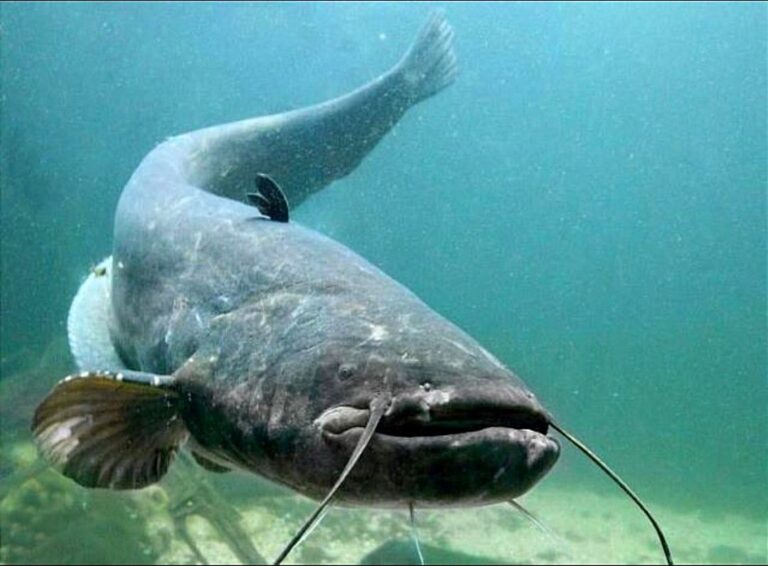
Wels Catfish Lake Garda Emergency: Contextualizing Environmental Challenges
Explore the Wels Catfish Lake Garda Emergency by Filippo Gavazzoni: containment strategies, native fish protection, and sewage purification priorities.
-
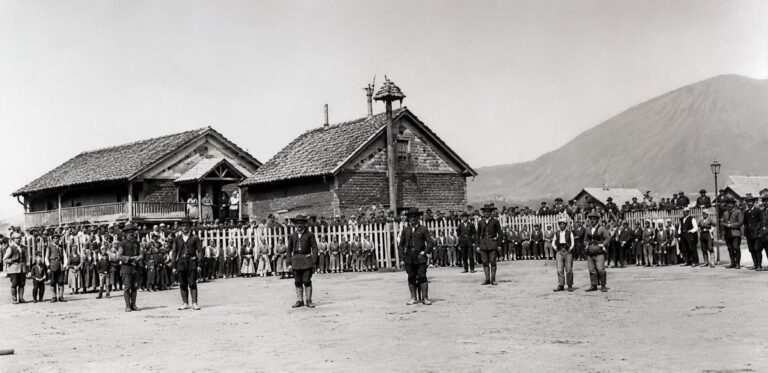
Trans-Siberian Railway: History of the World’s Longest Line
Discover the epic history of the Trans-Siberian Railway, spanning 9,288 km across Russia, built through immense determination, foreign engineering, and sheer human endeavor.
-
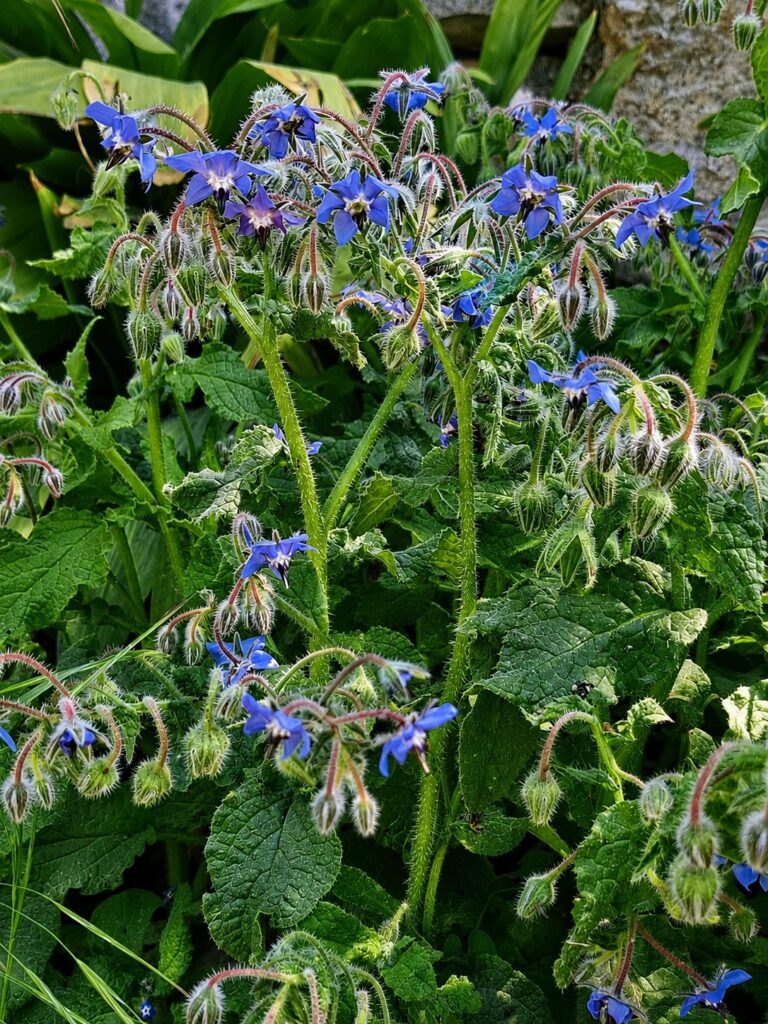
Borage Edible Flowers Green Advice: The Green Witch August Guide
Discover Borage Edible Flowers Green Advice by Marina Boschetti: cultivation tips, culinary uses in savory pies, and eco-friendly water recycling.
-
GN Magazine – August 2026
Digital index and English edition of GN Magazine August 2026 (Issue 212). Discover articles on Lake Garda history, culture, and nature.
-
Terme di Sirmione Count Rambaldo di Collalto: Legacy of Spa Excellence
Discover the history of Terme di Sirmione Count Rambaldo di Collalto: 40 years of visionary leadership, Catullo spa foundation, and medical innovation.
-
Emilio Berti and Lake Garda’s Mandolin Tradition: Adriana’s Memories
Discover the story of Emilio Berti (1908-1987) and Lake Garda’s mandolin tradition, preserved through music, family memories, and passion.