Following on from the articles on the exhibition The Power of Machines and on the conference about the 16th-century peasant wars, published in GN in September and October, I suggest a visit to the copper mines of Predoi, in South Tyrol’s Valle Aurina.
The Predoi Mining Museum takes you into the world of a mining industry that lasted five centuries. Copper was dug here for more than five hundred years, from 1426, as the earliest documents record. The outcrop lay at 2,000 metres, near the Croce di Val Rossa. In those days miners found a seam with a dowsing rod and close observation of nature; then they sank shafts and followed the vein into tunnels.
The first main tunnels, the highest ones (St. Jakob, St. Georg, St. Marx), were dug by hand with chisel and hammer, while the last, St. Ignaz, was blasted with gunpowder, used from 1637, as was St. Nikolaus. We know this from the miners’ contracts. As early as the 15th century the miners had won significant rights, starting with the right to a house (wooden farmsteads) on land granted by the municipality. The same rights then passed to the other workers in the industry: smelters, men who worked the carts and winches, clerks, woodcutters, charcoal burners and those who carried goods to the granary. Together with their wives and children, clerks, entrepreneurs and officers of justice, they made up the mining community. In the early decades the miners were mocked as scruffy gnomes, because they lived on the edge of the village and went into the mine dressed in rags, but over time their standing grew.
They turned their work into a craft and were well paid, as were the pickmen and the workers who washed, refined and smelted the ore. They were exempt from some taxes and from tolls, had first refusal on purchases, the freedom to hunt, fish and gather wood, and rest on the many religious holidays. “Mining requires intelligence and a good hand” (G. E. Löhneyss, Bericht vom Bergwerck, 1617).
The prosperity of mining mattered so much to state finances that the territorial princes upheld these rules even against the interests of the peasants, who, as I mentioned in October, rose up against them.
After the peasant wars came the age of absolutism, and crisis. The princes heavily taxed the building of miners’ houses, forcing many to become subtenants of other miners or of the peasants themselves. Several families shared one house and its stube, the only heated room, and the miners’ shacks showed their poverty for all to see, since money barely covered the most urgent repairs. The working day rose from 8 to 12 hours and holidays were cut. Part of the pay could still be received in kind: goods, work tools, cereals and tallow, stored in the Granary by the administrators and handed to the workers in place of wages.
Copper remained vital to the state economy: the sovereign bought it at favourable prices and sent it to the arms industry, to cast cannon and make brass, and to the textile industry, for the braid on uniforms. The administrative centre was at Cadipietra, where the count lived and where a special court had been set up to settle disputes between peasants and miners. For five hundred years the Predoi mine flourished, drawing skilled miners even from neighbouring villages; it changed hands, but was still running efficiently at the end of the 19th century, when Predoi copper was exported successfully all over Europe.
In 1878 the great Arzbach smelter, owned by the Ahrner Handel company, was buried in mud by the August flood, which reached as far as the church of San Martino in San Giovanni. The mine then belonged to the counts von Enzenberg, who recovered from the loss of the stocks held in storage; a few years later, however, mining began to decline, until it stopped in 1893 because of Chilean copper, extracted from vast open-pit mines at a far lower cost than Predoi’s.
In memory of those events, Count Hugo von Enzenberg left a poem written on the outside wall of the Granary: “Then too much copper came from America, / there they mine it far too easily; / this ruined us in a short time, / I grieve for the people and for the mine!”
Mining resumed briefly in 1957 and ended in 1971. In the 1990s the Province of Bolzano decided to bring the mine back to life: the main tunnel, with a series of spaces housing old machinery, can be visited as a museum of industrial archaeology, while a large chamber to the right of the visitor route is used for speleotherapy.
Let’s explore the museum. The tour starts at the ruins of the Jakob Stube, topped by a well-preserved chimney: these are the remains of the smelter built after the 1878 flood. The path is full of strigoli, bladder campion, a flower that thrives on copper-rich ground.
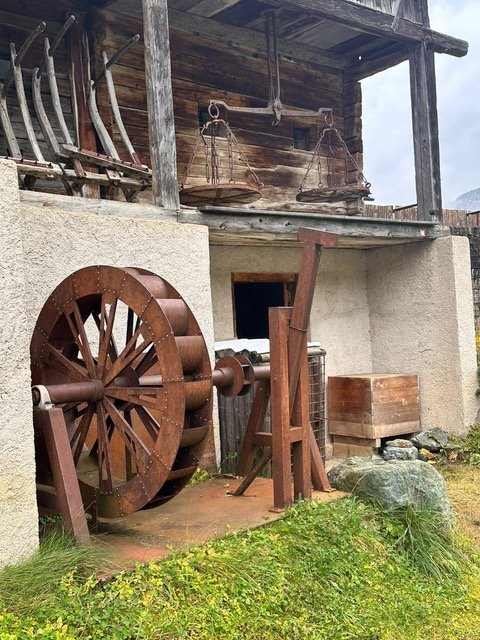
A short climb on foot leads to the former house of the mine surveyor, rebuilt at the entrance to the St. Ignaz main tunnel, with a balcony full of red geraniums; around the lodgings stand old iron tools. Opposite are the changing rooms, where plastic capes and helmets hang ready to be worn over warm clothing, yellow for museum visitors: inside the mine the temperature is between 7 and 9 °C.
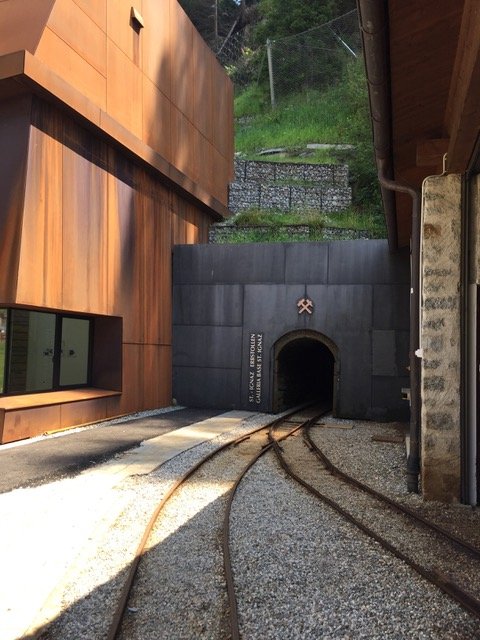
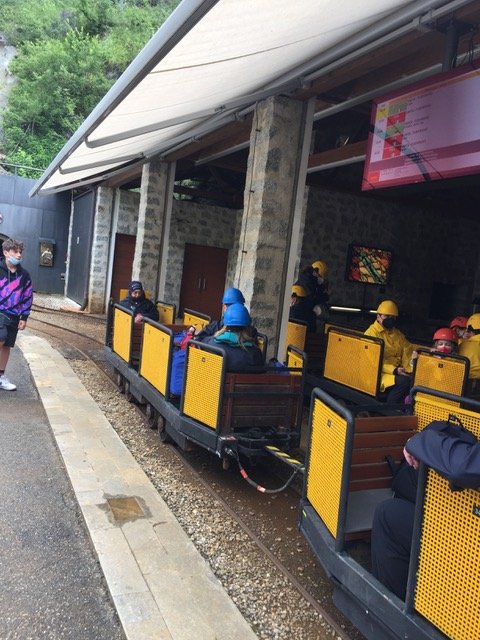
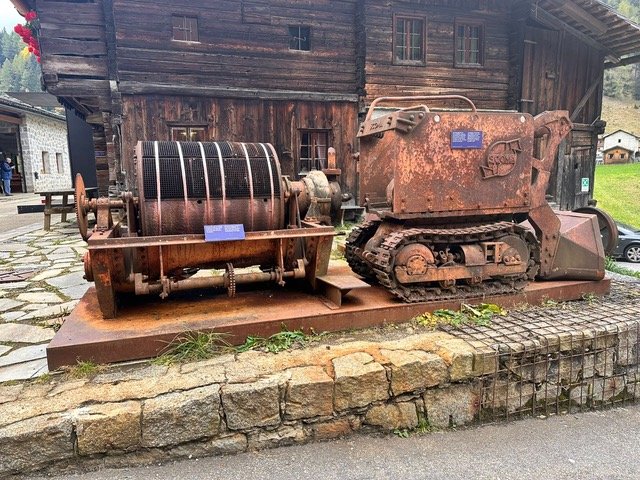
In tiny open wagons, like those the miners used, visitors travel into the heart of the mine along the St. Ignaz tunnel, about 1,100 metres long, to a stopping point where two galleries of 80 and 250 metres branch off. The guide explains how copper was extracted, describes the miners’ work and tells a legend or two, pointing out machines and passages, starting with the winch that hauled baskets of ore up the Herzog shaft, connected to the deposit below the tunnel.
The route, dug entirely by the miners, reveals hollows we imagine inhabited by kobolds, the little spirits the miners trusted like guardian angels. In the tunnels, now shored up with sturdy timber beams and steel bolts and tie rods, large life-size mannequins show scenes of hard labour through the ages, from traditional wool and cotton clothing to the yellow capes of the pneumatic-drill era.
At the end of the tour, visitors return to the first exhibition area of the St. Ignaz tunnel, where historic primitive hand tools are kept…
Mariateresa Martini tells the story of her journey up the valley in Passaggio in Valle Aurina (in Italian).
(to be continued)
Article by Mariateresa Martini for GN Magazine (November 2026).
Read more from GN – November 2026
-
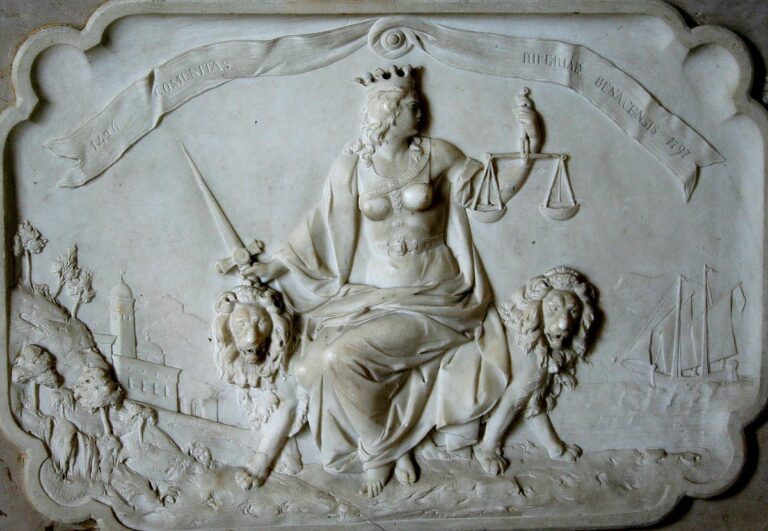
Magnifica Patria di Riviera: Six Centuries Since Lake Garda Turned to Venice
A look at the latest cultural events organised by the Municipality of Salò to mark the sixth centenary of the Magnifica Patria’s dedication to the Republic of Venice on 13 May 1426 On 3 October, the Sala dei Provveditori in Salò‘s town hall hosted the most significant of the fifteen or so conferences planned for […]
-
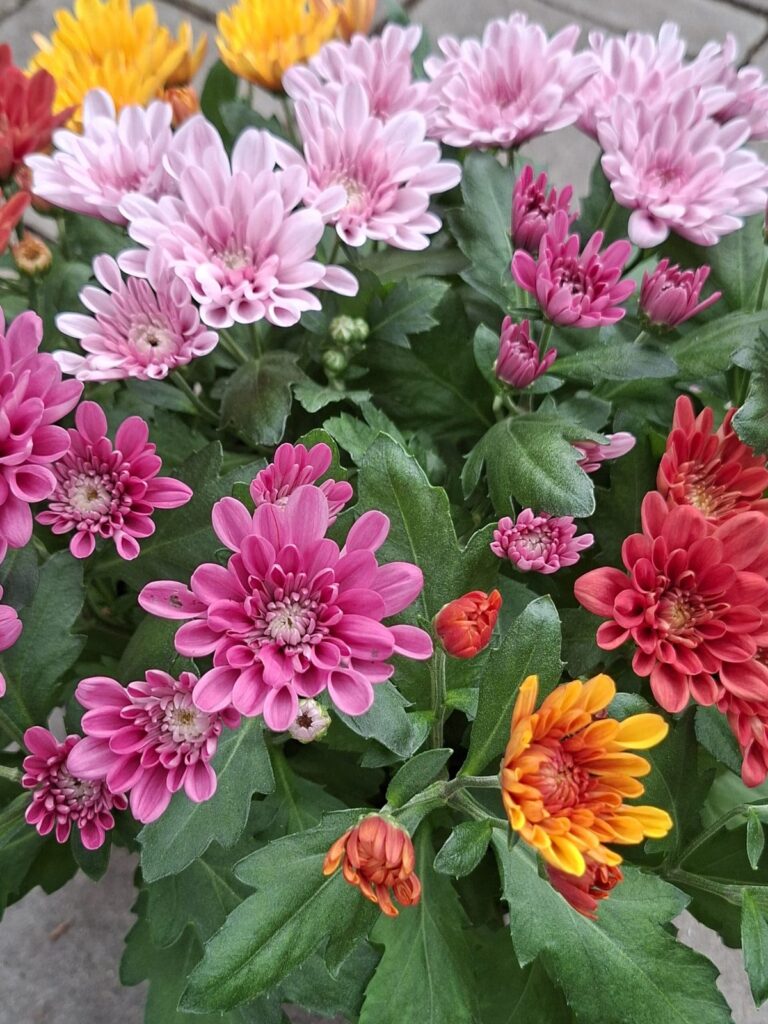
Chrysanthemum: November’s Flower for All Saints
This month I want to talk about a plant you can find everywhere at this time of year, and one tied to a very particular occasion: the chrysanthemum, the flower traditionally brought to our departed loved ones on All Saints’ Day. It is a hardy plant, and it is always in bloom at this point […]
-
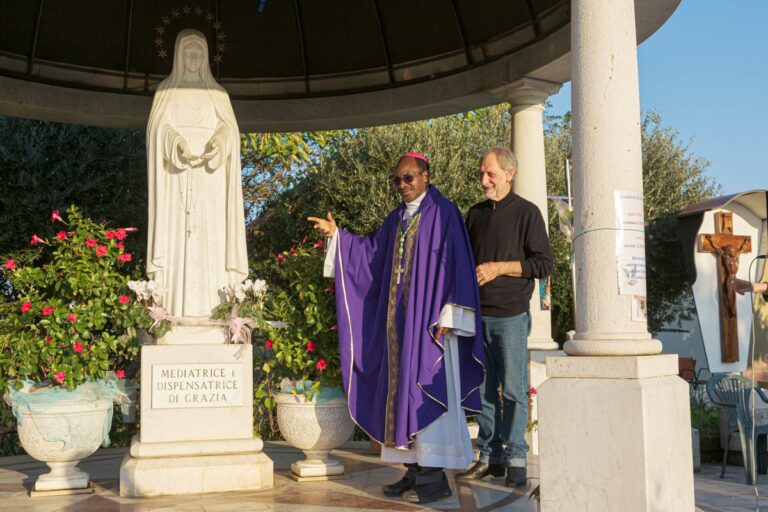
Madonna di San Polo: the 2021 Apparition and Bishop Sayaogo’s Testimony
The apparition of 22 May 2021 to three children The story of the Madonna di San Polo in Lonato del Garda continues. Luigi always wished to become known only after his death, and wanted the place itself to become known through what others told about it. That wish was granted on 22 May 2021, when […]
-
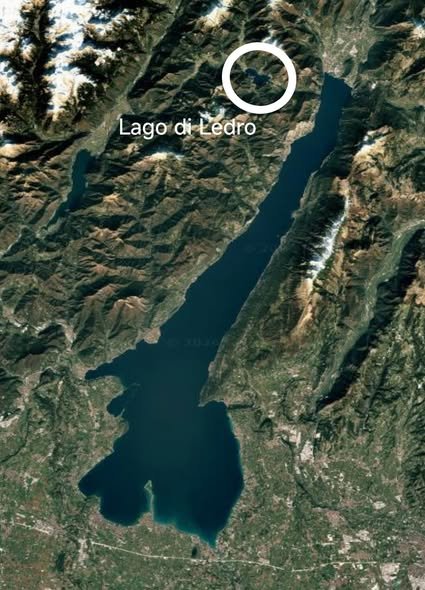
Lake Ledro and Lake Garda: the Hidden Link Between Peschiera and Molina
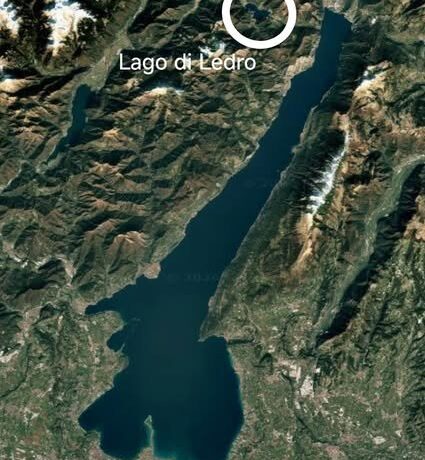
Looking at the two maps that accompany this article, Lake Garda and Lake Ledro seem like two separate worlds, divided by a wall of rock and a drop of some six hundred metres. And yet their waters hide connections that are as unusual as they are fascinating. Lake Ledro is the source of the Ponale […]
-
Ponale Waterfall: Lessons for Tourism on Lake Garda Today
Give yourself a few minutes to read this analysis. It is very relevant to Lake Garda, and it applies just as well to any other area that lives largely on tourism. As is my habit, I will start with a piece of history. It is the late 1920s. The Ponale waterfall, until then roaring and […]
-
Trans-Siberian Railway: the Friulian Workers’ Dilemma at the End of the Line
You see, Luigi, as work on each section of the railway came to an end, with the rails laid and the first test train arriving, all the free workers, that is, those who were not prisoners or otherwise employed by the Russian state, had to decide where to go on with their lives. For most […]