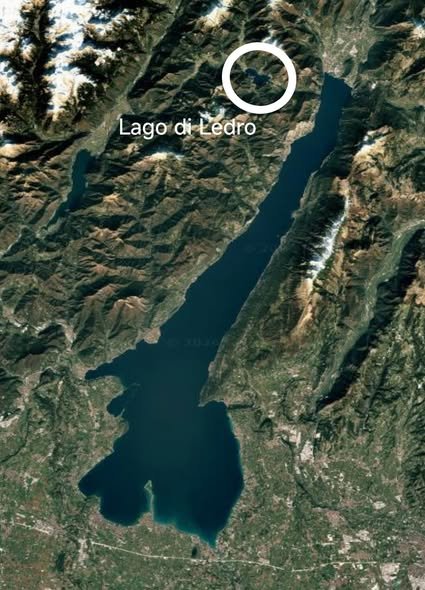
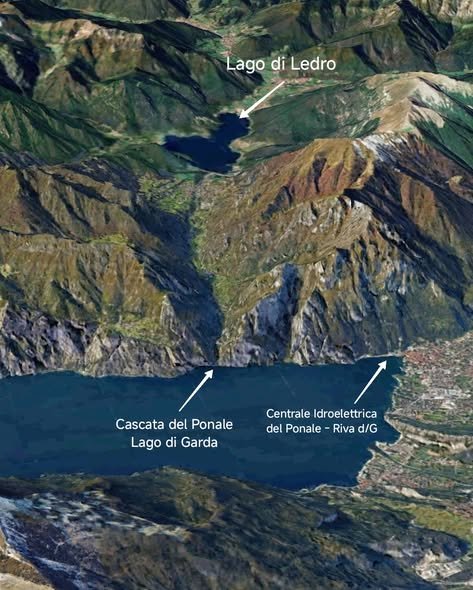
Looking at the two maps that accompany this article, Lake Garda and Lake Ledro seem like two separate worlds, divided by a wall of rock and a drop of some six hundred metres.
And yet their waters hide connections that are as unusual as they are fascinating.
Lake Ledro is the source of the Ponale stream, which runs down the valley until it plunges into Lake Garda in a spectacular waterfall (the second image shows very clearly the funnel-shaped valley that runs from Ledro down to Garda).
What few people would imagine, however, precisely because it is so unusual, is that the waters of Garda make the reverse journey: they climb six hundred metres against gravity to return to Ledro.
To understand how this is possible, and to understand the links I mentioned, we need to go back in time to the early twentieth century.
In those years Italy was in the midst of an industrial boom, and the race for hydroelectric power did not overlook the perfect position of Lake Ledro, perched above Lake Garda.
This is how the Ponale hydroelectric power station at Riva del Garda came into being (today it is run by Dolomiti Energia).
In the autumn of 1929 the time came to dig the water conduits for the plant.
To carry out the work and dig the water intakes below the surface of Lake Ledro, near Mezzolago, the level of the lake had to be lowered drastically. The pumps began draining the water, and a prehistoric Bronze Age pile-dwelling village emerged.
More than ten thousand wooden piles were found, in several campaigns, driven into the lake bed, together with tools and finds in an extraordinary state of preservation.
It was an entirely accidental discovery, born of an industrial building site, which decades later would lead to the site of Molina di Ledro being recognised as a UNESCO World Heritage Site.
As fate would have it, an almost identical story had already happened at Peschiera del Garda, in the mid-nineteenth century.
There, too, the first pile-dwelling settlement was found by chance (it would later be joined by the one at the Laghetto del Frassino), not during the construction of a power plant, but while digging the new military naval dock of the Habsburg Empire, today’s Navigarda dock.
Two discoveries born of chance, which today ideally link Molina and Peschiera on the map of European prehistory.
But we still have to reveal how the water of Lake Garda manages to climb up to Ledro.
The secret lies in how the Ponale power station at Riva del Garda works.
The plant uses the water falling from Ledro to produce electricity. However, to keep production steady without lowering the lake too much (its intakes sit at a depth of about 25 metres, in a lake with an average depth of about 35 metres), the station was also equipped with a reverse system: at the right moments, water from Lake Garda is pumped uphill, against gravity, back up the conduits to Lake Ledro to restore its level.
A strange connection, then, between two lakes and three towns, which began with the construction of the Riva power station. Without knowing it, the plant created the conditions for the archaeological discoveries that later “united” Peschiera and Molina… That is how I like to tell this story.
All this came at a price, though: it changed part of the landscape of Lake Garda and the water regime of Ledro.
Before the power station was built, the Ponale waterfall was a force of nature with a considerable flow (as old pictures show).
In the age of the Grand Tour, opened by the famous pages of Johann Wolfgang von Goethe, artists, poets and travellers from all over Europe came to Lake Garda partly to admire the spectacular Ponale falls.
Diverting the water to drive the turbines inevitably reduced the flow of the stream and shrank the waterfall, marking, according to some historical sources, the passage from the age of nineteenth-century Romantic landscape to that of modern engineering.
Walking along Lake Ledro, I pictured these overlapping stories and these coincidences, which also created opportunities, bringing back to light after thousands of years the traces of a civilisation that is still little known, that of the Bronze Age. The dreams of the nineteenth-century poets of the Grand Tour, the culture of the Habsburg officers who recognised the archaeological finds at Peschiera del Garda and catalogued and preserved them, and the work of the twentieth-century engineers who launched our country into the modern age… all joined together in the endless flow of water.
Article by Filippo Gavazzoni for GN Magazine (November 2026).
Read more from GN – November 2026
-
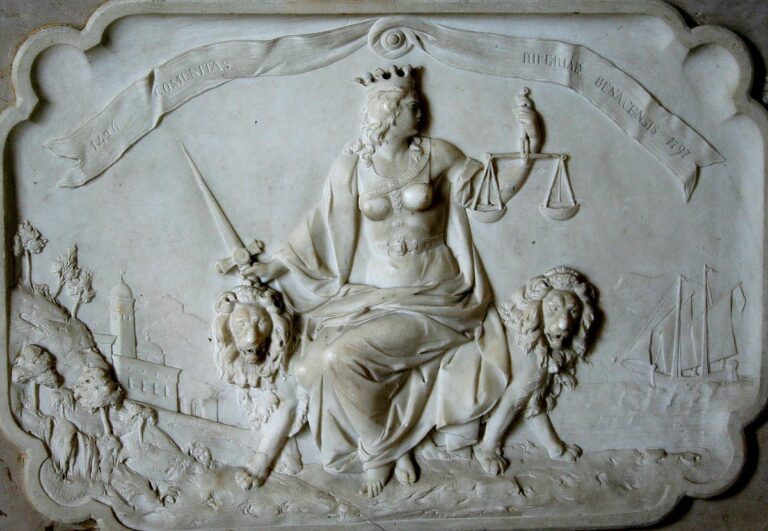
Magnifica Patria di Riviera: Six Centuries Since Lake Garda Turned to Venice
A look at the latest cultural events organised by the Municipality of Salò to mark the sixth centenary of the Magnifica Patria’s dedication to the Republic of Venice on 13 May 1426 On 3 October, the Sala dei Provveditori in Salò‘s town hall hosted the most significant of the fifteen or so conferences planned for […]
-
Chrysanthemum: November’s Flower for All Saints
This month I want to talk about a plant you can find everywhere at this time of year, and one tied to a very particular occasion: the chrysanthemum, the flower traditionally brought to our departed loved ones on All Saints’ Day. It is a hardy plant, and it is always in bloom at this point […]
-
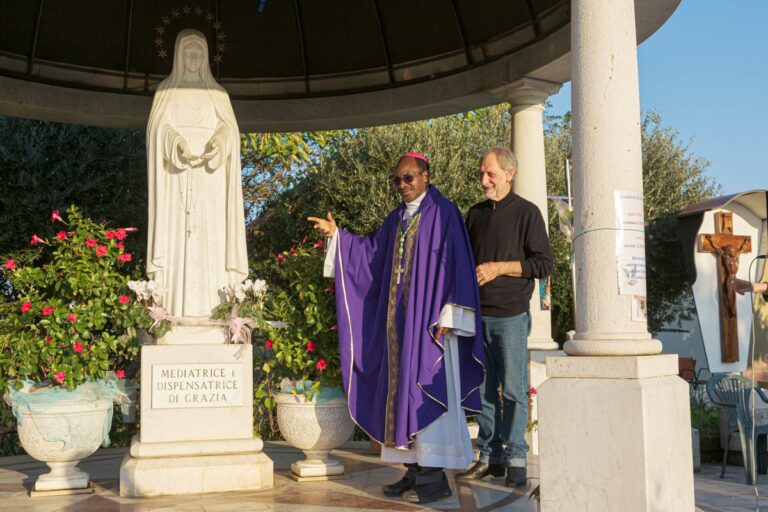
Madonna di San Polo: the 2021 Apparition and Bishop Sayaogo’s Testimony
The apparition of 22 May 2021 to three children The story of the Madonna di San Polo in Lonato del Garda continues. Luigi always wished to become known only after his death, and wanted the place itself to become known through what others told about it. That wish was granted on 22 May 2021, when […]
-
Ponale Waterfall: Lessons for Tourism on Lake Garda Today
Give yourself a few minutes to read this analysis. It is very relevant to Lake Garda, and it applies just as well to any other area that lives largely on tourism. As is my habit, I will start with a piece of history. It is the late 1920s. The Ponale waterfall, until then roaring and […]
-
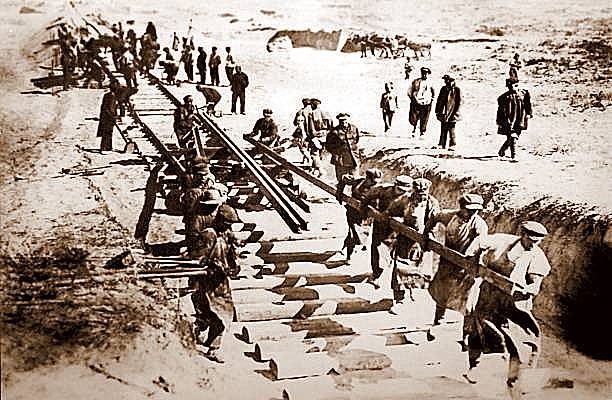
Trans-Siberian Railway: the Friulian Workers’ Dilemma at the End of the Line
You see, Luigi, as work on each section of the railway came to an end, with the rails laid and the first test train arriving, all the free workers, that is, those who were not prisoners or otherwise employed by the Russian state, had to decide where to go on with their lives. For most […]
-
Goethe and Music: the Poet as Singer-Songwriter
Calling Goethe a “singer-songwriter” is certainly a bold move. But if we think of Italian cantautori such as Franco Battiato, Fabrizio De André, Francesco Guccini and Roberto Vecchioni, to name just a few who wrote true poetry set to music, we may dare to call the German poet par excellence a “poet-songwriter”. The music, of […]