Contextualizing the Emergency: The Wels Catfish and Lake Garda’s Environmental Challenges
by Filippo Gavazzoni
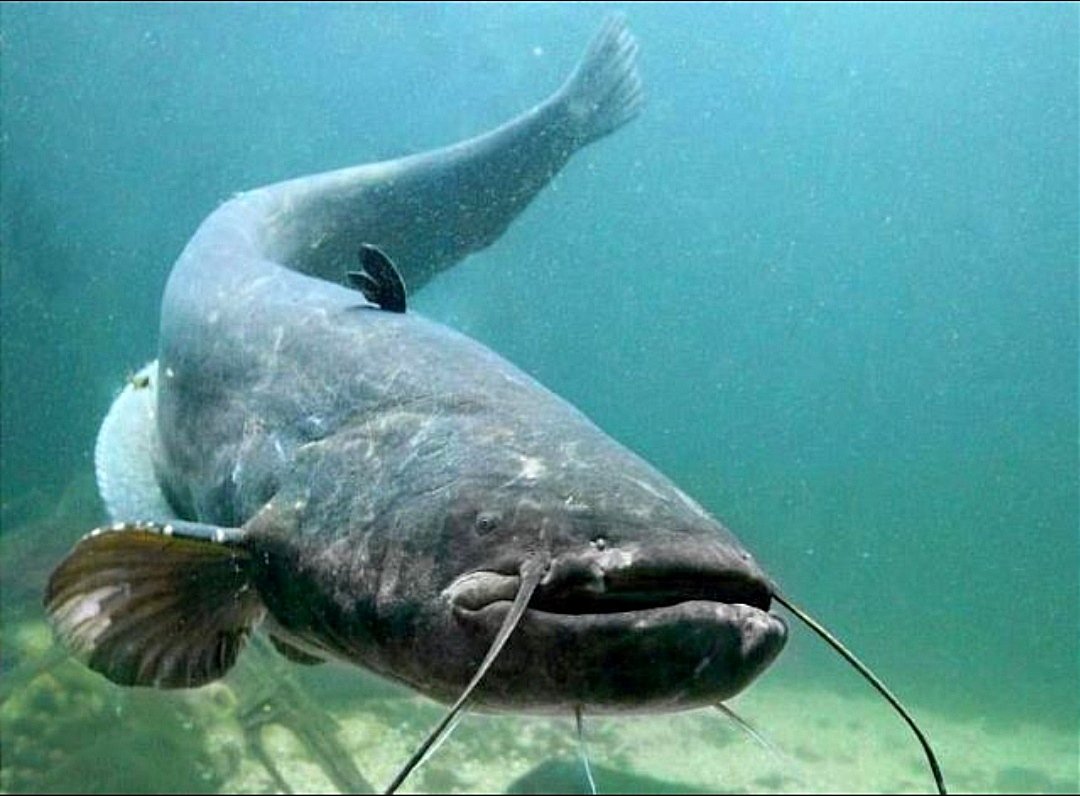
When discussing the Wels Catfish Lake Garda Emergency (Silurus glanis), debates often ignite among anglers, local politicians, and the media. I believe I was the first on Lake Garda to highlight the exponential increase of this species and, consequently, to advocate not for an extreme solution like total eradication—which scientifically remains virtually impossible—but rather for systematic containment measures, also useful for monitoring its presence to understand its habits, primary distribution areas, diet, and reproduction.
As always, it is precisely a proper understanding of the problem that enables decision-makers to structure actions correctly, contextualizing them within the reality of the territory. It is therefore right to clarify that the Wels catfish is not the root cause of Lake Garda’s troubles regarding the depletion of its native fish fauna, as I often read. This misconception can be misleading, diverting attention from far more serious issues.
I recall that this fish was cataloged for the first time in 1988 at Peschiera del Garda and in 1995 near the mouth of the Sarca River in Torbole. The Wels catfish has thus been present in Lake Garda for nearly four decades. What remains indisputable, however, is its recent exponential surge over the past five years. Why it has increased so dramatically is unknown due to a lack of scientific evidence, but my constant field observations lead me to suspect illegal voluntary introductions contrary to all environmental logic and legal norms, alongside other factors I have previously outlined.
This statement stems directly from field observation: just a few years ago, in the lower lake area, extremely high quantities of catfish were caught—unprecedented in the history of Lake Garda. The specimens captured back then—sometimes reaching 250 kg per net—were all roughly the same size and weight. The reality today is that the presence of the Wels catfish is constant and growing.
This phenomenon unfolds during a difficult historical moment for Lake Garda regarding native fish populations. Consequently, the sudden surge of this fish becomes a problem, but it remains one problem among many, not THE problem. This distinction is crucial: because this topic has become fashionable and stirs passionate debate, there is a risk that the limited funds arriving for Lake Garda and the attention of regional politics might be diverted solely toward this issue, neglecting others.
Instead, the top priority for Lake Garda is not the Wels catfish or the cormorant (another hotly debated topic), but taking action against the degradation of the native plant aquatic ecosystem and native fish species. Lake Garda must complete two fundamental projects:
• the renewal of its urban wastewater collection system and the new purification plant as designed, so that the collection network finally becomes efficient, modern, and capable of handling the actual hydraulic flow generated by massive tourist volumes;
• the application for the EU Life Grant (in progress) for the reconstruction and regeneration of the littoral plant ecosystem and spawning beds in the river mouth areas of Lake Garda.
These are the two major challenges to win and support as top priorities. Naturally, supporting these projects does not mean neglecting others. Indeed, local and regional politics must make a major effort to rationalize, according to scientific logic, the essential priorities for Lake Garda, structuring dedicated interventions and funding for Italy’s largest lake. The future of the Garda region is tightly linked to the overall health of Lake Garda and the quality of its waters—which in turn depend directly on the quality and quantity of the lake’s vegetation, indispensable for restoring fish biomass.
In conclusion, the Wels catfish in Lake Garda is an invasive alien species demonstrating the true meaning of that term. Being a top predator at the apex of the food chain—though not responsible for the historical decline of native fish—if not adequately contained in the near future, it will certainly contribute to that fatal blow Lake Garda might suffer, which it absolutely cannot afford.
The keyword must be: contextualization. Various interventions are needed, and containing the Wels catfish certainly belongs among them, but priorities dictate that we first complete the new sewage collection and purification system, alongside regenerating the aquatic vegetation by investing the maximum available resources there. Concurrently, we can initiate a serious revision of current professional and sports fishing rules, including catfish containment and habitat restoration essential for native species survival. The media overexposure surrounding the Wels catfish on Lake Garda must not distract attention from our most urgent environmental necessities.
Read more from GN Magazine – August 2026
-
Curzio Malaparte Italian Literature: La Pelle, Maledetti Toscani and Prato’s Rags
Discover Curzio Malaparte Italian Literature: Alberto Pachera’s analysis of La Pelle, Maledetti Toscani, and the legendary history of Prato’s rags.
-
Trans-Siberian Railway: History of the World’s Longest Line
Discover the epic history of the Trans-Siberian Railway, spanning 9,288 km across Russia, built through immense determination, foreign engineering, and sheer human endeavor.
-
Borage Edible Flowers Green Advice: The Green Witch August Guide
Discover Borage Edible Flowers Green Advice by Marina Boschetti: cultivation tips, culinary uses in savory pies, and eco-friendly water recycling.
-
GN Magazine – August 2026
Digital index and English edition of GN Magazine August 2026 (Issue 212). Discover articles on Lake Garda history, culture, and nature.
-
Terme di Sirmione Count Rambaldo di Collalto: Legacy of Spa Excellence
Discover the history of Terme di Sirmione Count Rambaldo di Collalto: 40 years of visionary leadership, Catullo spa foundation, and medical innovation.
-
Emilio Berti and Lake Garda’s Mandolin Tradition: Adriana’s Memories
Discover the story of Emilio Berti (1908-1987) and Lake Garda’s mandolin tradition, preserved through music, family memories, and passion.