Driving along the road from Desenzano to Salò, you cannot miss it: set on a gentle rise west of the village, Moniga Castle catches the eye with its understated elegance and its remarkable state of preservation.
It was never the lavish residence of a feudal lord, nor a military fortress, but a communal castle, where the local population took refuge in times of danger. The type is well known in the Valtenesi, which has many fortified structures dating from the 13th and 14th centuries, all broadly alike: a raised position that commanded the surrounding countryside; walled enclosures of modest size, punctuated by towers and ringed by ditches of varying depth; and the keep, a taller and sturdier tower guarding the entrance.
A fortification of this kind was also the heart of community life. This was where the vicinia, the assembly of the heads of household, met. Defending and maintaining the walls fell to the inhabitants, who were also required to replenish, at regular intervals, the food stores kept inside the castle in the canipe, rooms that served as storehouse, cellar and depot.
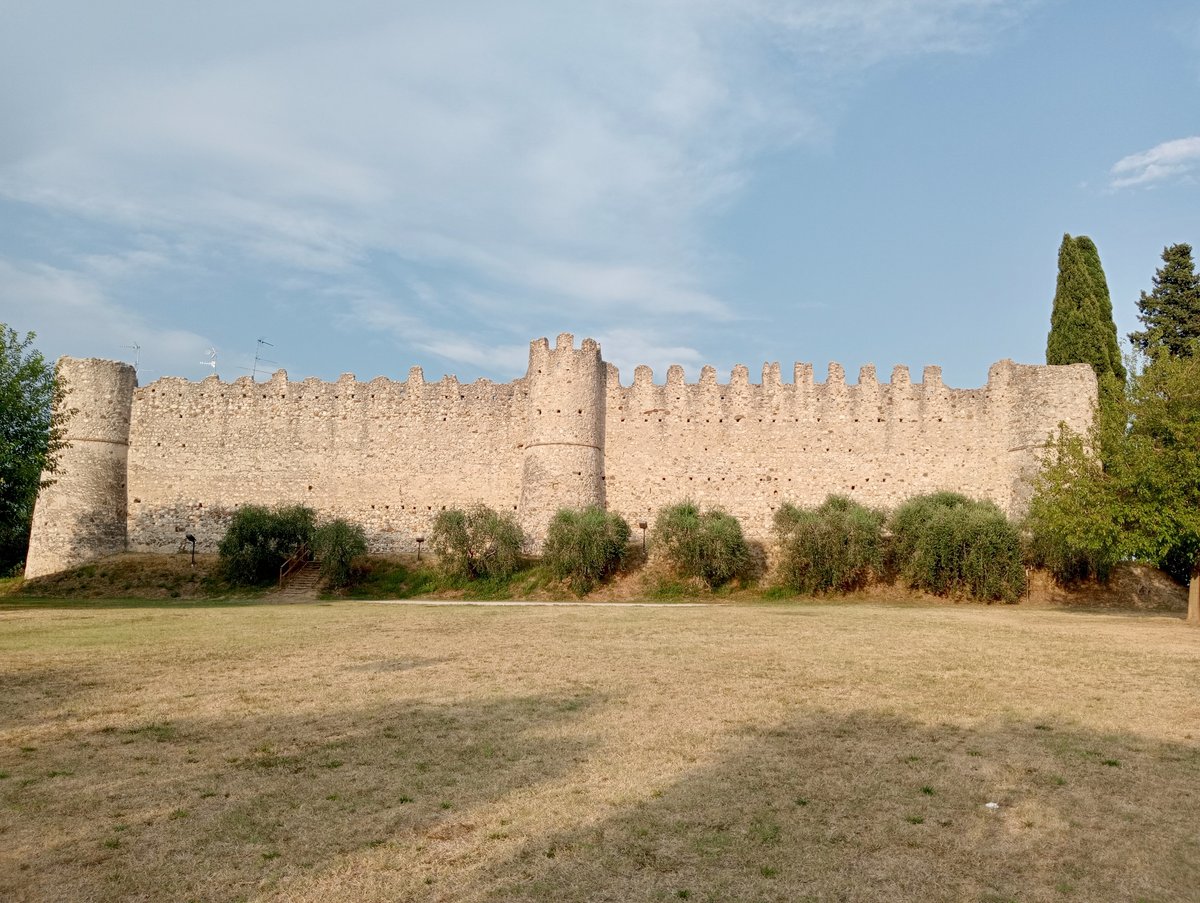
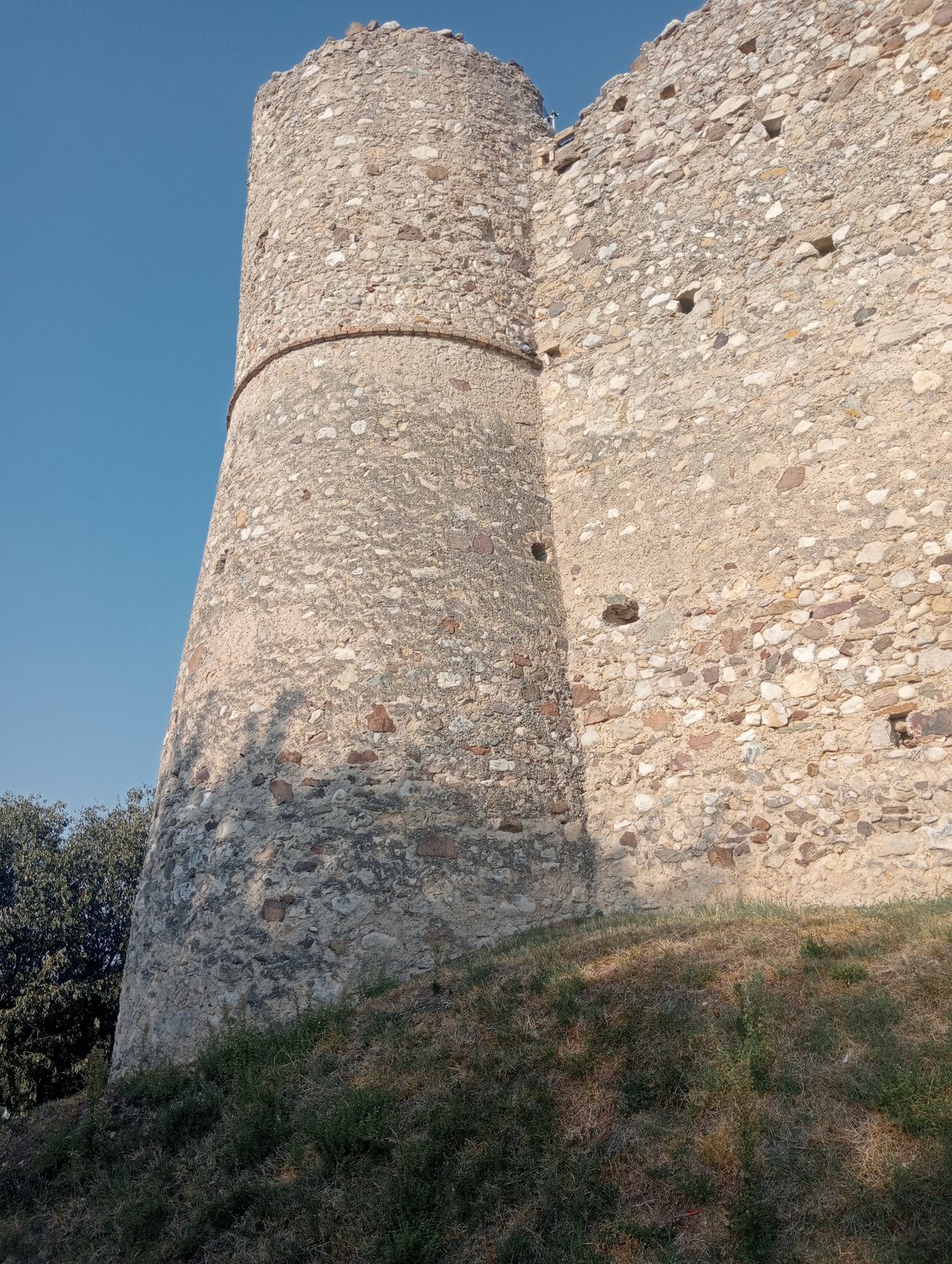
Within this common pattern, Moniga has some distinctive features. To begin with, it appears to have been built later than the other castle-refuges of the Valtenesi. Professor Gian Pietro Brogiolo suggests a date between the late 14th and early 15th century, based on several architectural clues. The first is the masonry: irregular stonework without zeppe. Between the 11th and 13th centuries, to lock round, smooth stones such as river cobbles in place and stop them from slipping, builders packed the gaps between them with tiny flakes of flat stone or fragments of brick, the zeppe. Between the 14th and 15th centuries, however, came a technical turning point: lime mortar improved in composition and preparation to the point of setting far more strongly, making the systematic use of these flakes to stabilise a wall unnecessary.
The second clue is that the corner and intermediate towers are round rather than square, as they were in older fortifications. This marks a major step forward, driven by the need to withstand attack after the arrival of gunpowder: curved walls deflected and dispersed the force of artillery fire and of the new hand-held firearms, sharply reducing the risk of structural collapse.
Another feature of the Moniga refuge, found elsewhere in the Valtenesi only in nearby Padenghe, is the presence of real houses inside the walls. Arranged in four parallel rows facing the three main streets, they form a small, quiet village that still intrigues visitors today.
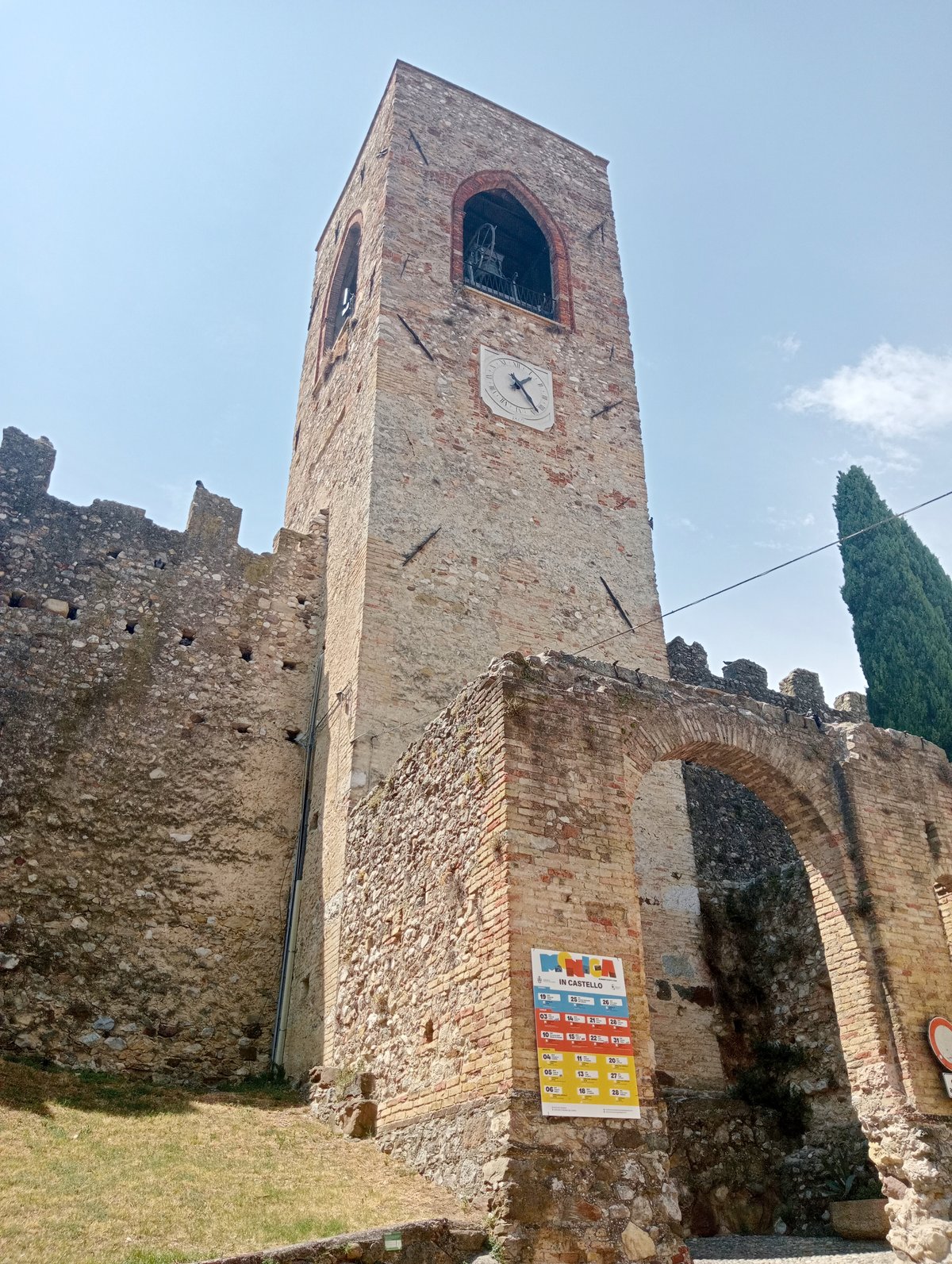
The buildings have changed a great deal over time: the plots once used as vegetable gardens have become garages or courtyards, stables and haylofts have been turned into homes, and the houses have gradually crept up against the walls. Yet stepping through the entrance arch still feels like a leap into the past, where time seems to have stood still.
It was precisely to rebuild this past that the Moniga Community Archive project was recently launched, run by ASAR (the Historical and Archaeological Association of the Riviera del Garda) together with the municipality. The project is not limited to the castle: it aims to gather information on the history and landscape of the village and make it available to everyone, by involving residents, promoting historical research and organising events.
This archival research has already turned up some discoveries. At the end of the 18th century, for example, the castle housed the Monte del Miglio, a grain bank: an institution similar to the Monte di Pietà pawnbroking charities, but designed specifically to manage and lend cereals. In the province of Brescia and the surrounding valleys, such bodies helped farmers and families in difficulty, including by supplying seed to sow for the following harvest.
Another curious detail concerns the social life of the village in the late 18th century. Land tax records suggest that a space inside the castle was used for the “ball game”. This was probably pallone col bracciale, the most popular and thrilling sport of the age: a forerunner of tennis in which players, wearing a heavy grooved wooden gauntlet studded with points, competed to strike a leather ball hard against the walls.
These are just a few of the many stories waiting to be uncovered and told. They could shed light not only on the history of one of the village’s most representative monuments, but also on the true identity of the area, and strengthen people’s sense of belonging.
Sources: G. P. Brogiolo, “Castelli della Val Tenesi”, offprint from the Commentari dell’Ateneo di Brescia for 1971, Geroldi, Brescia 1972; G. Villari and B. Scala (eds.), “Itinerario nei castelli-ricetto della Valtenesi”, Istituto Italiano dei Castelli, Brescia 2006.
Article by Carla Ghidinelli for GN Magazine (November 2026).
Read more from GN – November 2026
-
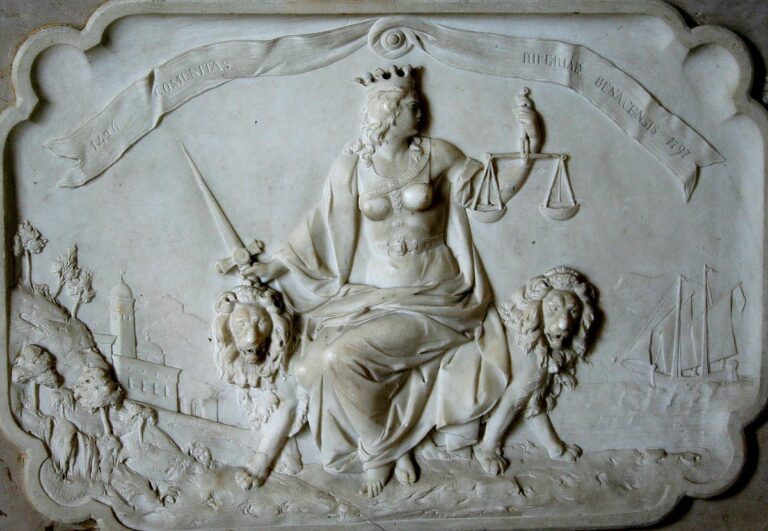
Magnifica Patria di Riviera: Six Centuries Since Lake Garda Turned to Venice
A look at the latest cultural events organised by the Municipality of Salò to mark the sixth centenary of the Magnifica Patria’s dedication to the Republic of Venice on 13 May 1426 On 3 October, the Sala dei Provveditori in Salò‘s town hall hosted the most significant of the fifteen or so conferences planned for […]
-
Chrysanthemum: November’s Flower for All Saints
This month I want to talk about a plant you can find everywhere at this time of year, and one tied to a very particular occasion: the chrysanthemum, the flower traditionally brought to our departed loved ones on All Saints’ Day. It is a hardy plant, and it is always in bloom at this point […]
-
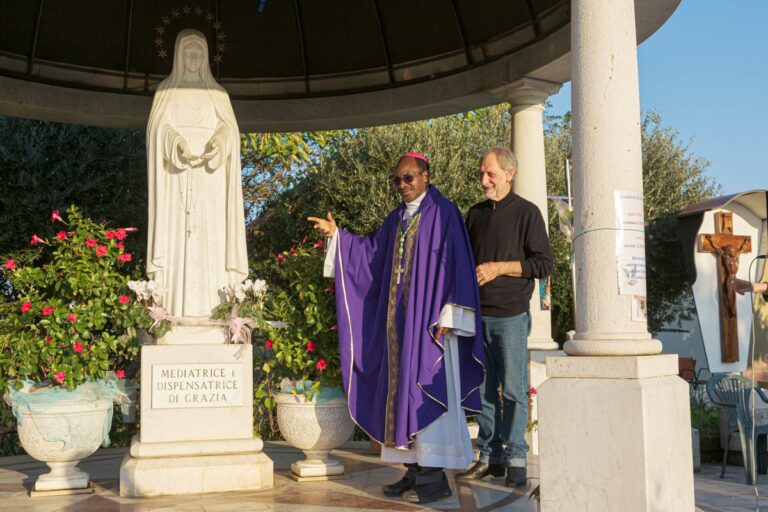
Madonna di San Polo: the 2021 Apparition and Bishop Sayaogo’s Testimony
The apparition of 22 May 2021 to three children The story of the Madonna di San Polo in Lonato del Garda continues. Luigi always wished to become known only after his death, and wanted the place itself to become known through what others told about it. That wish was granted on 22 May 2021, when […]
-
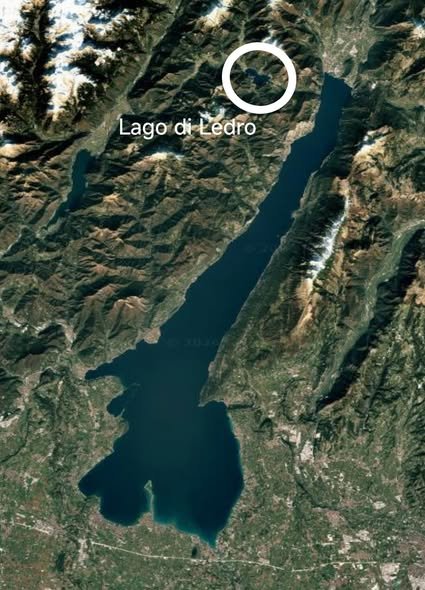
Lake Ledro and Lake Garda: the Hidden Link Between Peschiera and Molina
Looking at the two maps that accompany this article, Lake Garda and Lake Ledro seem like two separate worlds, divided by a wall of rock and a drop of some six hundred metres. And yet their waters hide connections that are as unusual as they are fascinating. Lake Ledro is the source of the Ponale […]
-
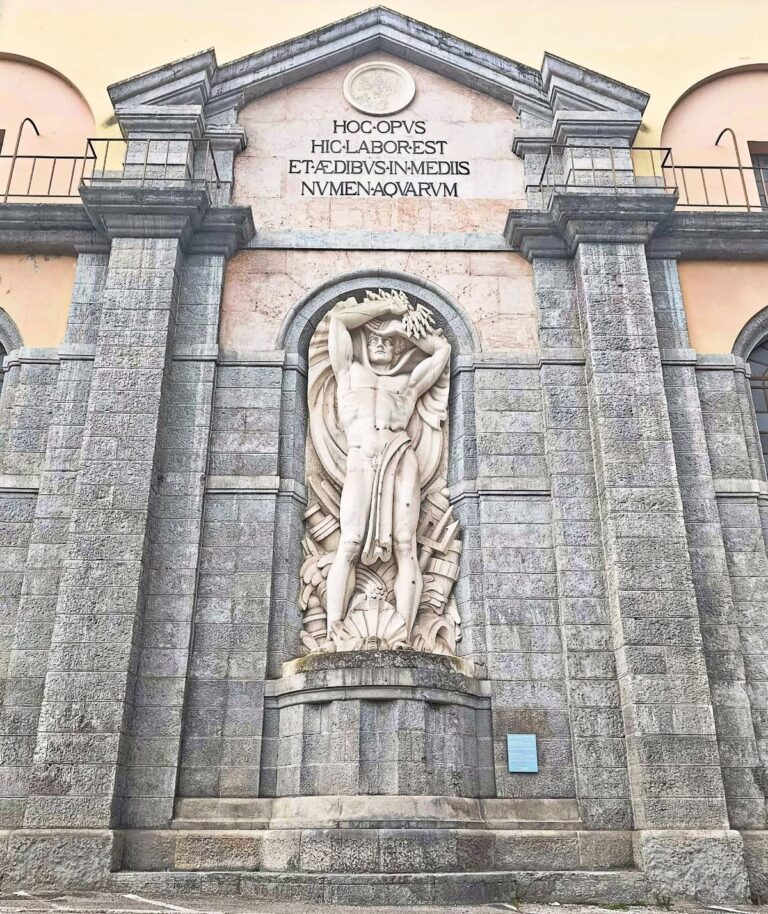
Ponale Waterfall: Lessons for Tourism on Lake Garda Today
Give yourself a few minutes to read this analysis. It is very relevant to Lake Garda, and it applies just as well to any other area that lives largely on tourism. As is my habit, I will start with a piece of history. It is the late 1920s. The Ponale waterfall, until then roaring and […]
-
Trans-Siberian Railway: the Friulian Workers’ Dilemma at the End of the Line
You see, Luigi, as work on each section of the railway came to an end, with the rails laid and the first test train arriving, all the free workers, that is, those who were not prisoners or otherwise employed by the Russian state, had to decide where to go on with their lives. For most […]