Goethe on Lake Garda famously uncovered the luminous gateway to Italy in September 1786, but few realize how deeply the great German poet’s visual impressions were intertwined with an enduring passion for music that would link him to Carl Friedrich Zelter and the young prodigy Felix Mendelssohn.
Johann Caspar Goethe (1710–1782) had imposed rigorous intellectual standards upon his children, Johann Wolfgang and Cornelia. By the age of fourteen, the siblings practiced piano diligently; by late August of that year, the family attended the Frankfurt concert of a seven-year-old Wolfgang Amadeus Mozart. During his law studies in Leipzig (1765–1768), Goethe formed a close bond with Bernhard Theodor Breitkopf, heir to the renowned musical publishing house. In 1769, Breitkopf set several of the twenty-year-old, yet-unknown Goethe’s poems to music in the collection Neue Lieder, later republished as Goethes Leipziger Liederbuch.
Goethe’s deep musical sensibility accompanied his literary, botanical, and philosophical investigations throughout his Italian Journey. Departing Lake Garda, he paused in Venice in late September 1786, enraptured by the celestial singing of a women’s choir at the Church of the Mendicanti and attending opera at Teatro San Moisè. In Rome and Naples between 1786 and 1787, he celebrated the theatrical brilliance of Italian opera, praising “our beloved Cimarosa”.
Upon his return to Weimar, Duke Carl August appointed him artistic director of the Court Theatre, a post he commanded from 1791 to 1817. Here Goethe fostered a pivotal friendship with composer and conductor Carl Friedrich Zelter (1758–1832), director of the Sing-Akademie in Berlin. Zelter became Goethe’s trusted musical adviser and confidant.
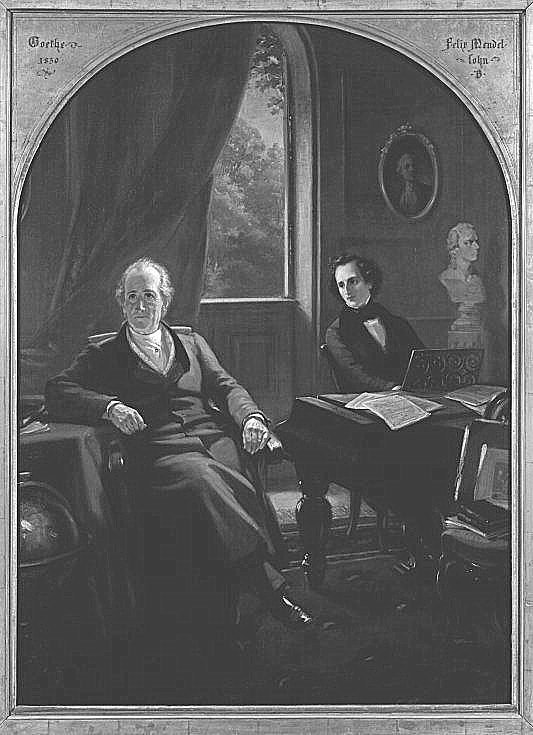
In 1821, Zelter introduced Goethe to his brightest pupil: a twelve-year-old boy named Felix Mendelssohn (1809–1847). Between 1821 and 1830, the young composer visited Goethe’s Weimar residence on four extended occasions. While Mendelssohn listened with reverent awe to the venerable poet’s artistic counsel, Goethe was captivated by Felix’s virtuosity and the compositions of his talented sister Fanny, prompting Goethe to pen the lyrical poem “An die Entfernte” (To the Distant One).
It was through Mendelssohn that Goethe came to understand the profound genius of Johann Sebastian Bach. In 1825, Mendelssohn dedicated his Piano Quartet No. 3 in B minor, Op. 3 to Goethe, and in 1829, at just twenty years old, Felix revived Bach’s monumental St Matthew Passion at the Sing-Akademie. Zelter wrote to Goethe describing the concert as standing “between earth and heaven”; Goethe replied that it felt as though he had heard “the distant echo of the sea”.
Curated by Pia Dusi and Giancarlo Ganzerla for GN Magazine.
Read more from GN – October 2026
-
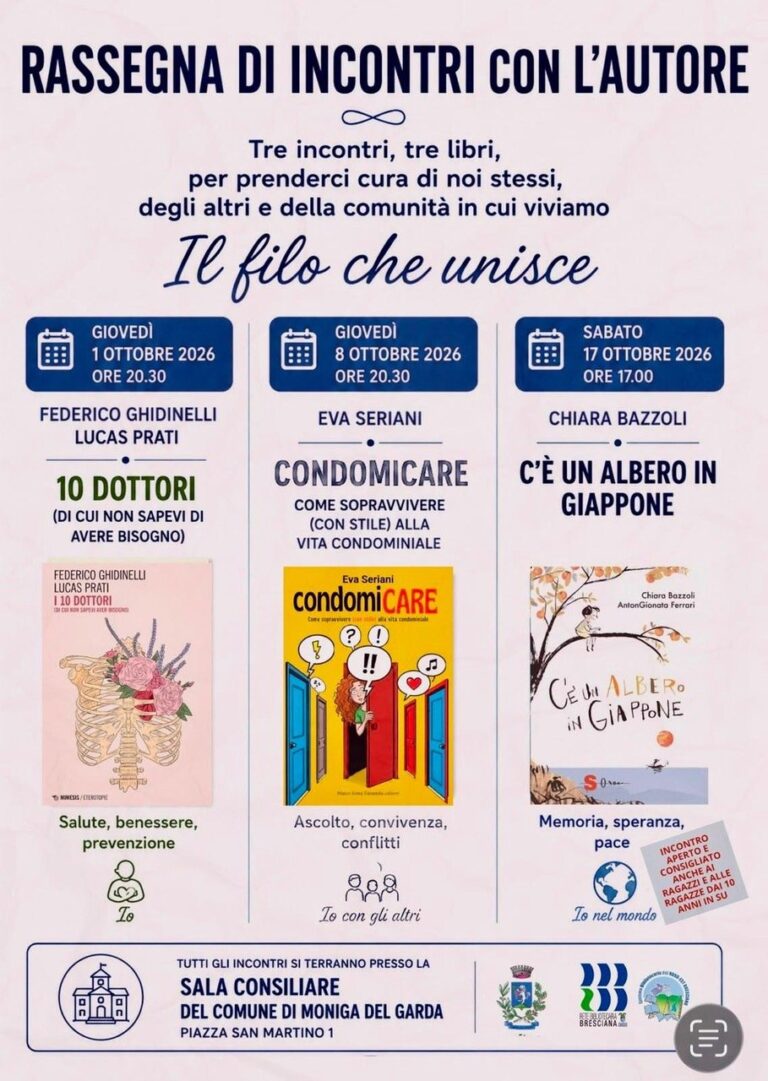
The Thread That Connects: Autumn Cultural Encounters in Moniga del Garda
A three-part cultural series in Moniga del Garda exploring personal wellbeing, community dialogue, and the memory of peace with authors Ghidinelli, Prati, Seriani, and Bazzoli.
-
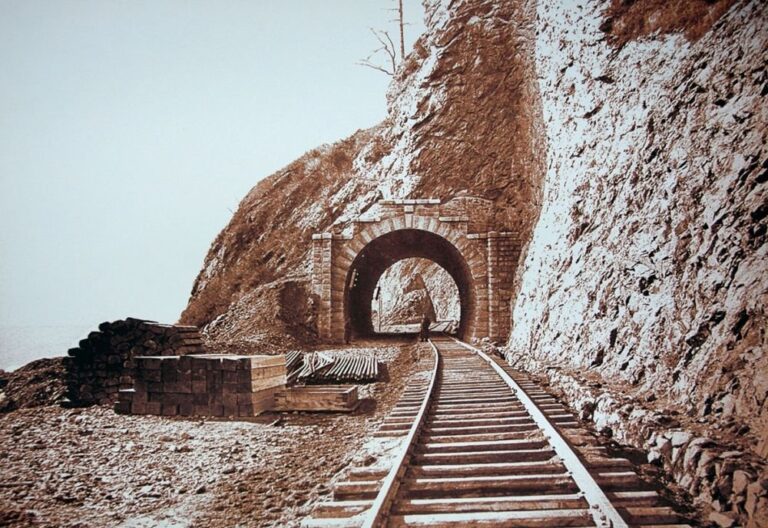
Trans-Siberian Railway: Friulian Stonemasons on Lake Baikal
The Trans-Siberian Railway represents one of the most astonishing engineering feats in human history, and along the dramatic, granite-bound shores of Lake Baikal, its realization was indelibly shaped by the hands and sweat of master Italian stonemasons, chiefly from Friuli. Construction around Lake Baikal demanded unrelenting perseverance under brutal sub-Arctic conditions. Work proceeded non-stop, 24 […]
-
Great Voices at the Sirmione Thermal Spa: From Arrigo Boito to Maria Callas
Great Voices at the Sirmione Thermal Spa have long found a haven of inspiration and therapeutic renewal on the shores of Lake Garda, beginning with the Paduan composer Arrigo Boito. In the winter of 1901–1902, following the passing of Giuseppe Verdi—for whom he had written the immortal librettos to Otello and Falstaff—Boito took up residence […]
-
Saint Angela Merici: The Spiritual Heart of Lake Garda and the Magnifica Patria
Saint Angela Merici remains one of the most transformative spiritual and social figures of Renaissance Italy, uniting the shores of Lake Garda, the city of Brescia, and the maritime civilization of the Venetian Republic in an enduring legacy of lay leadership and feminine education. Born on March 21, 1474, in Desenzano del Garda—then a prosperous […]
-
Lazzaretto of Salò: Venice’s Plague Defense on Lake Garda
The Lazzaretto of Salò stands as a formidable historical monument to Renaissance public health and maritime disease containment, linking the sanitary cordon of the Venetian Republic directly to the western shores of Lake Garda. On Saturday, October 24, 2026, the Municipality of Salò and the ASAR (Historical-Archaeological Association of the Riviera) host a major conference […]
-
1525 Peasant Revolts: The Power of Machines in Tyrol and Trentino
The 1525 Peasant Revolts—known throughout Central Europe as the Bauernkrieg—erupted five centuries ago across the Alpine valleys of Tyrol and the Prince-Bishopric of Trentino, challenging feudal power structures and raising profound questions about technology, labour, and governance that remain startlingly urgent today. Marking this 500th anniversary, the MUSE and Palazzo delle Albere in Trento organized […]