The Trans-Siberian Railway represents one of the most astonishing engineering feats in human history, and along the dramatic, granite-bound shores of Lake Baikal, its realization was indelibly shaped by the hands and sweat of master Italian stonemasons, chiefly from Friuli.
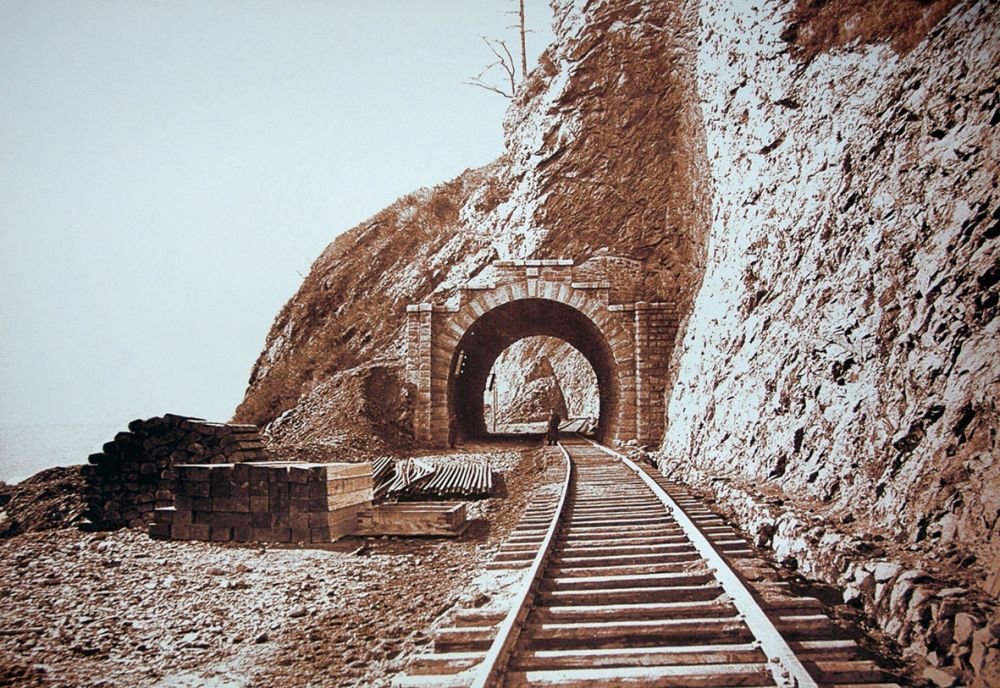
Construction around Lake Baikal demanded unrelenting perseverance under brutal sub-Arctic conditions. Work proceeded non-stop, 24 hours a day in rigorous eight-hour shifts. The most experienced Friulian builders were swiftly appointed site supervisors and foremen, tasked with the hazardous construction of bridges spanning Siberian torrents and immense tunnels driven through sheer cliff faces.
Climatic extremes dictated a strictly divided construction cycle. During the short summers, bridge piers were erected in riverbeds using timber caissons and compressed-air chambers to hold back rushing waters, allowing masons to work in dry pits surrounded by deep currents. In the depths of winter, when temperatures plunged to 40 or 50 degrees below zero and river ice hardened to over a meter in thickness, crews erected insulated, stove-heated timber enclosures (known locally as tepljak). Inside these shelters, stone blocks could be cemented in uniform temperatures, and wooden centering arches were mounted directly atop the frozen ice sheet to raise stone spans.
Deep inside the tunnels, where icy water constantly dripped from the rock vaults drenching the workers, identical heated wooden structures were installed to enable the precise masonry work required to support the tunnel crowns. In spring, before roadbeds could be stabilized, massive wood fires were kept burning day and night directly on the ground to thaw the thick layer of permafrost, allowing excavators to shovel away frozen muck until reaching solid bedrock.
Historical records show that over 500 Italians worked on Lake Baikal out of a workforce of 10,000. Italian stoneworkers had enjoyed an esteemed reputation across the Russian Empire since the 1860s, having labored in Saint Petersburg, Crimea, and the Caucasus. While over 300 Friulians formed the core, they were joined by 82 workers from the province of L’Aquila in Abruzzo—recruited by the young entrepreneur Domenico di Paola—as well as specialized craftsmen from Bergamo and Trentino.
From November 1902, at Tunnel No. 7 beneath the Katorzhanka promontory, the entire Floriani family from Nimis (Friuli) worked alongside Giovanni Venchiarutti from Osoppo, Giacomo Tomat from Vito d’Asio, and Bortolo Cuchiaro from Trasaghis. They operated five cutting-edge electric drilling rigs powered by an early hydroelectric plant set on the Baikal shore, completing the bore in 1904. Valentino Floriani brought his family to Siberia, including his wife Pierina Savorgnan di Brazzà Cergneu, a noblewoman and teacher who taught Latin at the Irkutsk gymnasium and became affectionately known as “the mother of the Italians”, translating paperwork and writing letters home for illiterate workers.
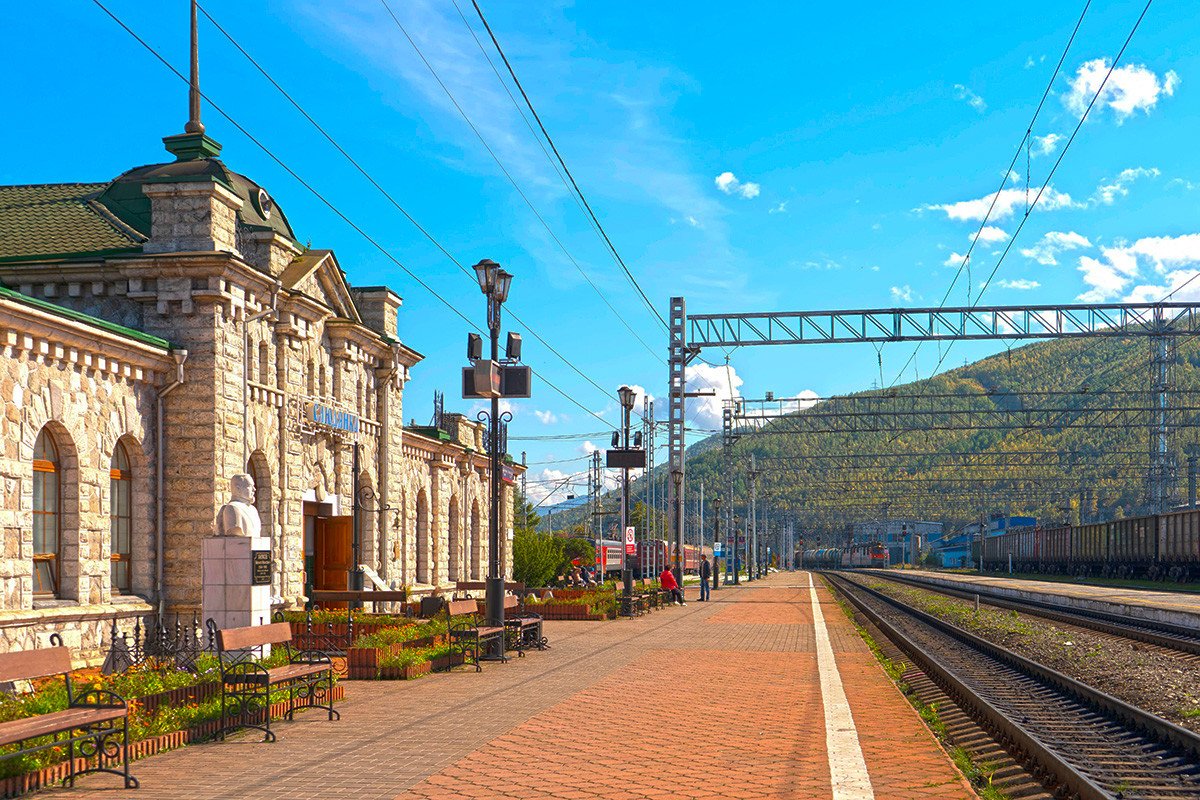
One of the most monumental legacies of this era is the marble station of Slyudyanka, built entirely out of hand-hewn pink and white Baikal marble in 1903. Nearby on the Angasolka river, thirty-year-old Leonardo Rizzolati of Clauzetto led twelve fellow Friulians in constructing a 74-meter stone viaduct echoing the grandeur of a classical Roman aqueduct.
When the October Revolution of 1917 erupted, the world changed dramatically. Countess Pierina Savorgnan organized the daring evacuation of dozens of Italian families aboard the Japanese steamers England Maru and Texas Maru, reaching Trieste in April 1920. Yet many chose to remain, marrying Russian women and weaving their ancestry into the vast tapestry of Siberia—an indelible bridge connecting Italy, the Alps, and Lake Baikal.
Curated by Giancarlo Ganzerla for GN Magazine.
Read more from GN – October 2026
-
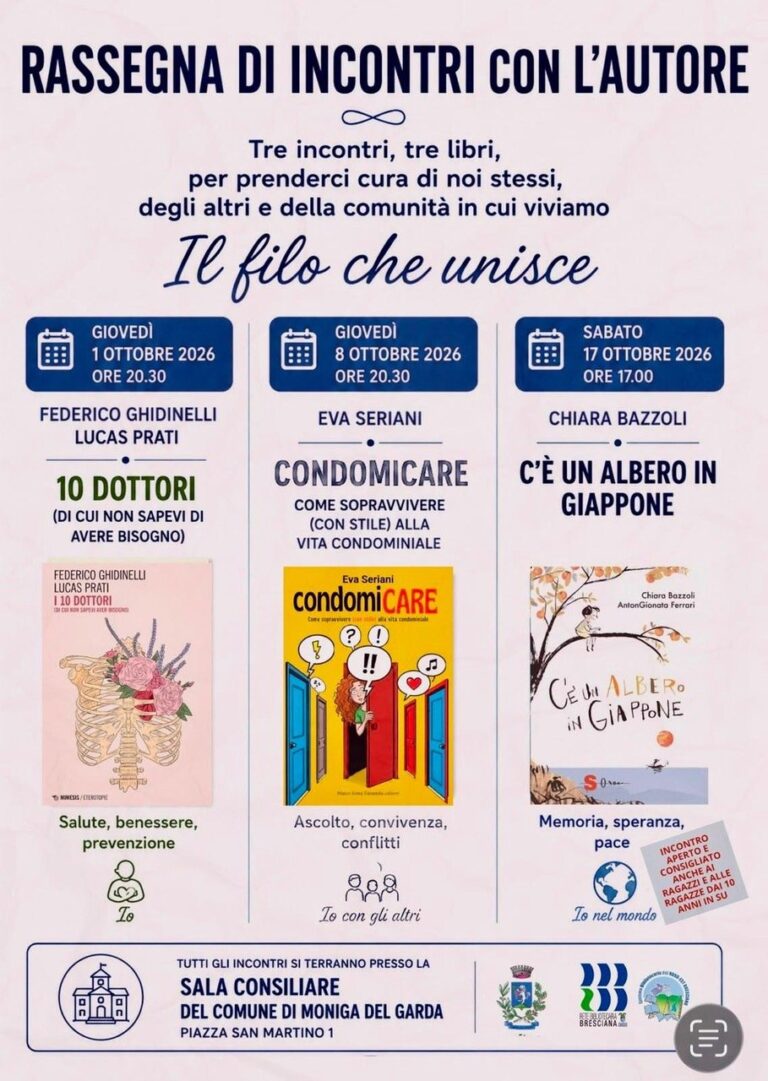
The Thread That Connects: Autumn Cultural Encounters in Moniga del Garda
A three-part cultural series in Moniga del Garda exploring personal wellbeing, community dialogue, and the memory of peace with authors Ghidinelli, Prati, Seriani, and Bazzoli.
-
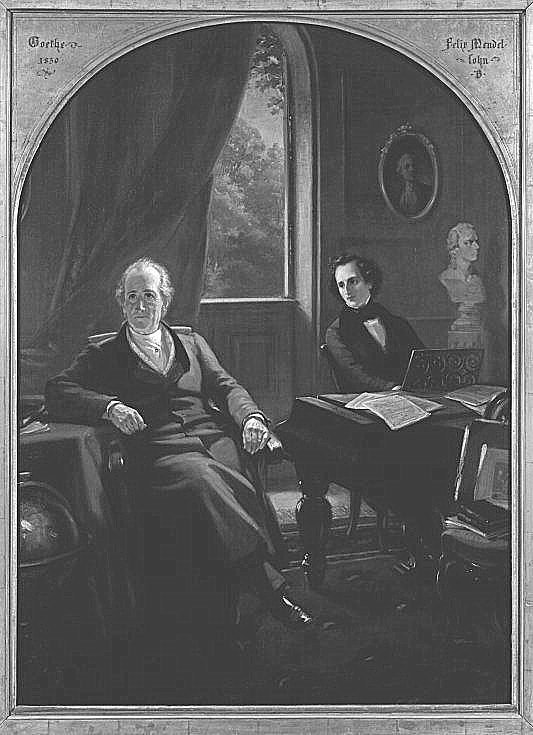
Goethe on Lake Garda: Musical Friendships with Zelter and Mendelssohn
Goethe on Lake Garda famously uncovered the luminous gateway to Italy in September 1786, but few realize how deeply the great German poet’s visual impressions were intertwined with an enduring passion for music that would link him to Carl Friedrich Zelter and the young prodigy Felix Mendelssohn. Johann Caspar Goethe (1710–1782) had imposed rigorous intellectual […]
-
Great Voices at the Sirmione Thermal Spa: From Arrigo Boito to Maria Callas
Great Voices at the Sirmione Thermal Spa have long found a haven of inspiration and therapeutic renewal on the shores of Lake Garda, beginning with the Paduan composer Arrigo Boito. In the winter of 1901–1902, following the passing of Giuseppe Verdi—for whom he had written the immortal librettos to Otello and Falstaff—Boito took up residence […]
-
Saint Angela Merici: The Spiritual Heart of Lake Garda and the Magnifica Patria
Saint Angela Merici remains one of the most transformative spiritual and social figures of Renaissance Italy, uniting the shores of Lake Garda, the city of Brescia, and the maritime civilization of the Venetian Republic in an enduring legacy of lay leadership and feminine education. Born on March 21, 1474, in Desenzano del Garda—then a prosperous […]
-
Lazzaretto of Salò: Venice’s Plague Defense on Lake Garda
The Lazzaretto of Salò stands as a formidable historical monument to Renaissance public health and maritime disease containment, linking the sanitary cordon of the Venetian Republic directly to the western shores of Lake Garda. On Saturday, October 24, 2026, the Municipality of Salò and the ASAR (Historical-Archaeological Association of the Riviera) host a major conference […]
-
1525 Peasant Revolts: The Power of Machines in Tyrol and Trentino
The 1525 Peasant Revolts—known throughout Central Europe as the Bauernkrieg—erupted five centuries ago across the Alpine valleys of Tyrol and the Prince-Bishopric of Trentino, challenging feudal power structures and raising profound questions about technology, labour, and governance that remain startlingly urgent today. Marking this 500th anniversary, the MUSE and Palazzo delle Albere in Trento organized […]