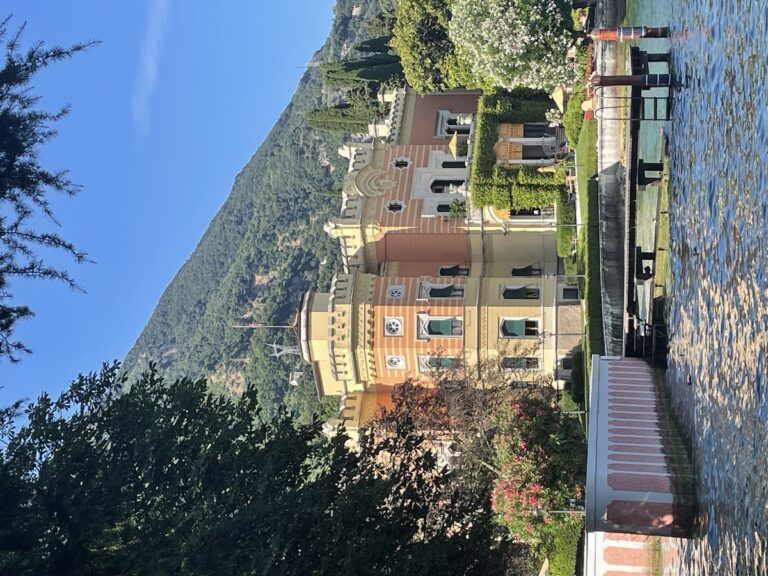
Great Voices at the Sirmione Thermal Spa have long found a haven of inspiration and therapeutic renewal on the shores of Lake Garda, beginning with the Paduan composer Arrigo Boito. In the winter of 1901–1902, following the passing of Giuseppe Verdi—for whom he had written the immortal librettos to Otello and Falstaff—Boito took up residence at the Albergo Promessi Sposi (now part of Hotel Sirmione), then owned by Cavaliere Angelo Gennari, a visionary forerunner of the nascent thermal spa therapies.
Fresh from the acclaimed success of his Mefistofele, Boito recounted in a personal letter that he had finally found in Sirmione the complete harmonic palette of tones needed for his opera Nerone (which would be staged posthumously in 1924). In what he fondly described as his “wondrous hermitage,” the ancient Roman ruins of Catullian memory offered him profound creative inspiration.
Many other luminaries of world literature—from Ezra Pound to James Joyce in 1920—as well as Italian authors such as Salvator Gotta and Mario Rigoni Stern, experienced and celebrated the curative virtues of Sirmione’s waters. Uniquely suited to the respiratory tract, these mineral-rich thermal springs naturally found their most devoted patrons among the elite of the operatic world.
In the post-war years, a poignant testimony comes from Countess Emanuela Castelbarco, granddaughter of maestro Arturo Toscanini: “My grandfather considered Sirmione and its thermal baths an oasis of absolute peace, truly unique in its kind. During the 1950s he loved strolling through the ancient village with unassuming simplicity, savoring the timeless romance of this haven.”
Another celebrated icon of the Catullus peninsula was undoubtedly Maria Callas, captured in two splendid historic photographs: intently absorbed in inhalation therapies in the first, and serene and radiant before the «Catullo» Thermal Establishment in the second.
From that era onward, countless exceptional voices of the international operatic stage benefited from Sirmione’s therapeutic waters: Bianca Scacciati, Gina Cigna, Toti Dal Monte, Mafalda Favero, Rosanna Carteri, Marcella Pobbe, Antonietta Stella, Mario Del Monaco, Franco Corelli, Maria Zamboni, Carlo Bergonzi, and Lina Aimaro. Four vocal titans, above all, deserve special commemoration: Tancredi Pasero, Ettore Bastianini, Giuseppe Di Stefano, and Giulietta Simionato.
The celebrated bass Tancredi Pasero owned a magnificent villa here; the inimitable baritone Ettore Bastianini passed away in Sirmione in 1967; while the unsurpassed tenor Giuseppe Di Stefano, an avid patron of the Grand Hotel Terme, loved to repeat: “Singing at the Verona Arena and staying in Sirmione: absolute perfection!”
And we conclude with the moving testimony of the twentieth century’s most acclaimed mezzo-soprano, Giulietta Simionato, who affirmed: “At the Grand Hotel Terme I rested between one thermal session and the next before performing at the Verona Arena, where I experienced my greatest triumphs!”
Curated by Michele Nocera for GN Magazine.
Read more from GN – October 2026
-
The Feltrinelli Family of Gargnano: An Enterprising and Munificent Dynasty
From alpine timber merchants to titans of European finance and visionary philanthropists: the extraordinary story of the Feltrinelli family in Gargnano on Lake Garda.
-
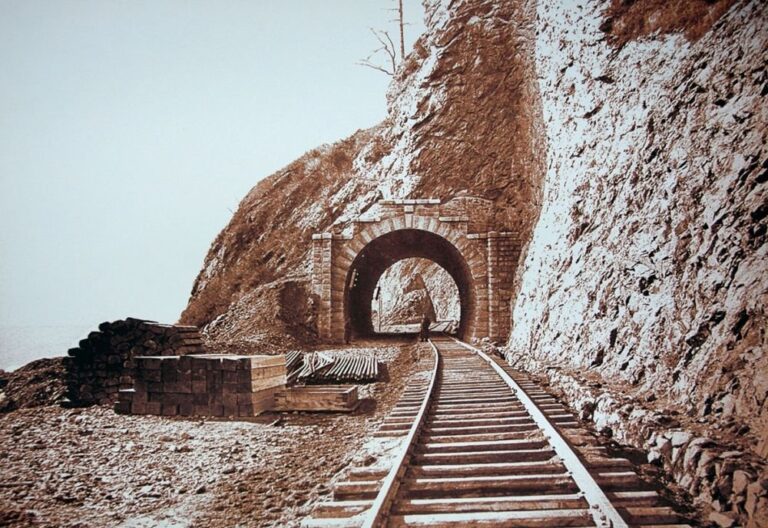
Trans-Siberian Railway: Friulian Stonemasons on Lake Baikal
The Trans-Siberian Railway represents one of the most astonishing engineering feats in human history, and along the dramatic, granite-bound shores of Lake Baikal, its realization was indelibly shaped by the hands and sweat of master Italian stonemasons, chiefly from Friuli. Construction around Lake Baikal demanded unrelenting perseverance under brutal sub-Arctic conditions. Work proceeded non-stop, 24 […]
-
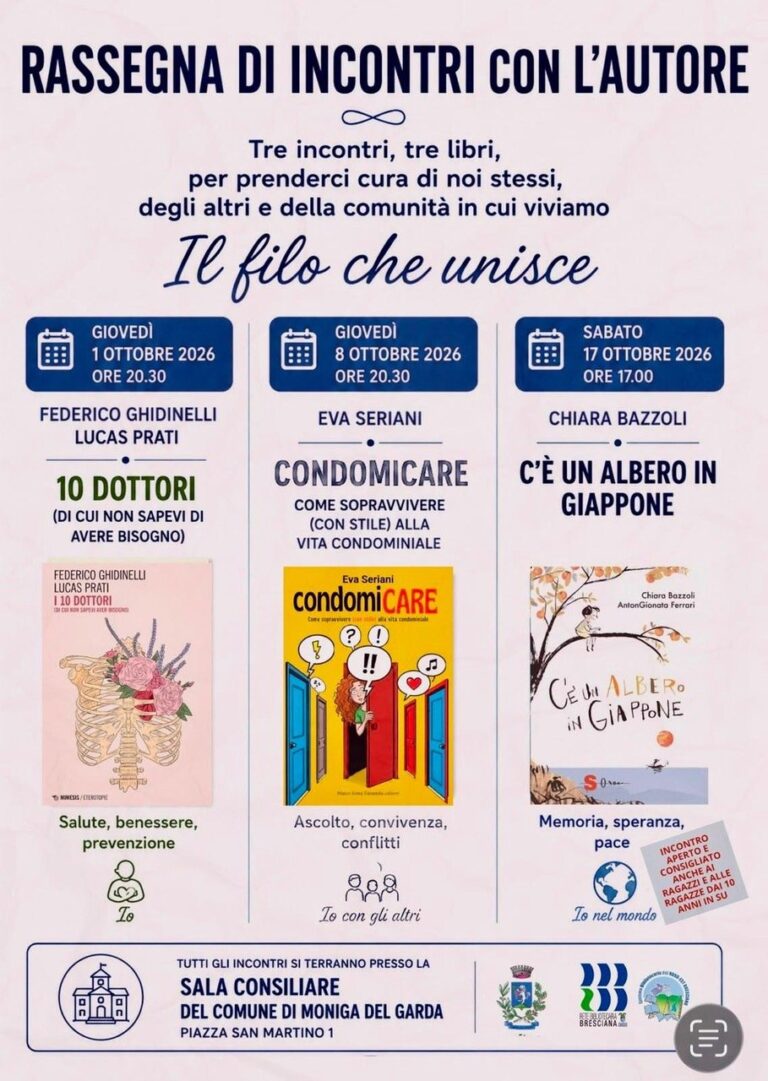
The Thread That Connects: Autumn Cultural Encounters in Moniga del Garda
A three-part cultural series in Moniga del Garda exploring personal wellbeing, community dialogue, and the memory of peace with authors Ghidinelli, Prati, Seriani, and Bazzoli.
-
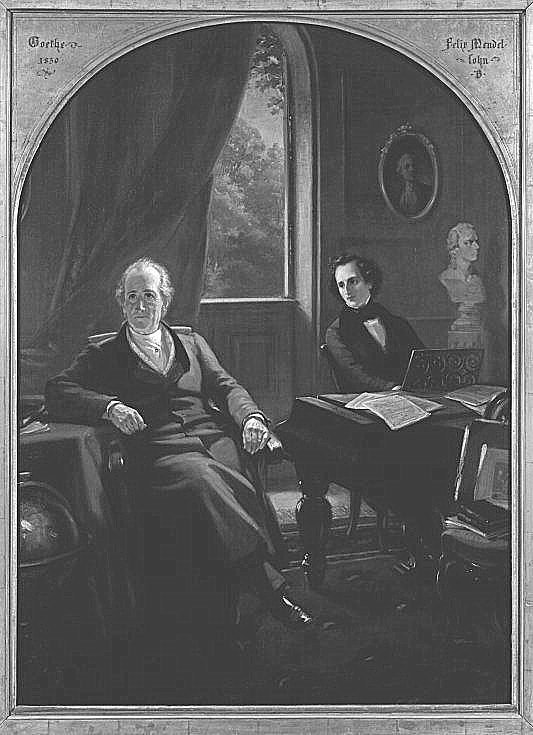
Goethe on Lake Garda: Musical Friendships with Zelter and Mendelssohn
Goethe on Lake Garda famously uncovered the luminous gateway to Italy in September 1786, but few realize how deeply the great German poet’s visual impressions were intertwined with an enduring passion for music that would link him to Carl Friedrich Zelter and the young prodigy Felix Mendelssohn. Johann Caspar Goethe (1710–1782) had imposed rigorous intellectual […]
-
Saint Angela Merici: The Spiritual Heart of Lake Garda and the Magnifica Patria
Saint Angela Merici remains one of the most transformative spiritual and social figures of Renaissance Italy, uniting the shores of Lake Garda, the city of Brescia, and the maritime civilization of the Venetian Republic in an enduring legacy of lay leadership and feminine education. Born on March 21, 1474, in Desenzano del Garda—then a prosperous […]
-
Lazzaretto of Salò: Venice’s Plague Defense on Lake Garda
The Lazzaretto of Salò stands as a formidable historical monument to Renaissance public health and maritime disease containment, linking the sanitary cordon of the Venetian Republic directly to the western shores of Lake Garda. On Saturday, October 24, 2026, the Municipality of Salò and the ASAR (Historical-Archaeological Association of the Riviera) host a major conference […]