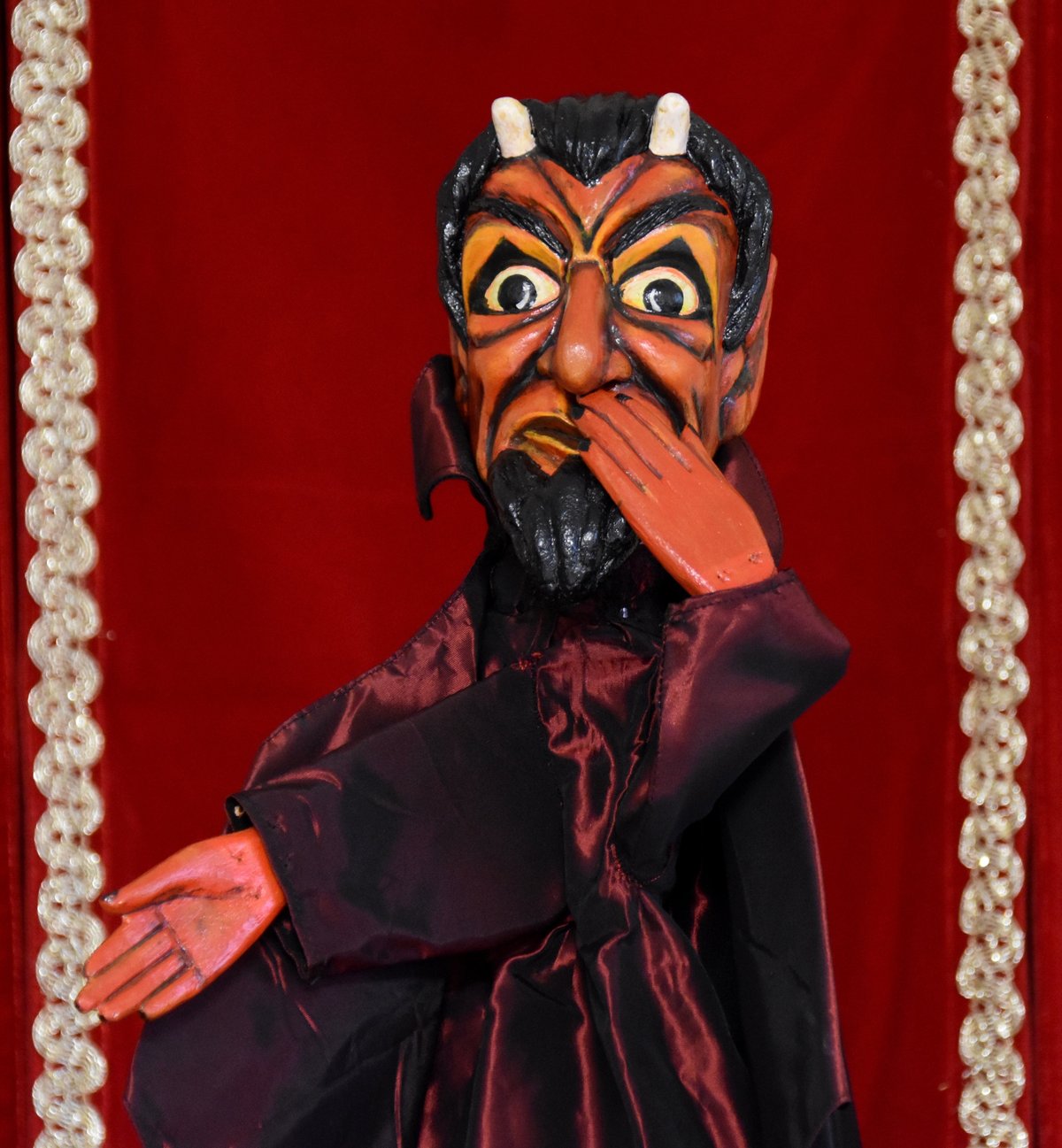
The Devil in Puppet Theater represents one of the most mesmerizing, technically intricate, and beloved archetypes of Italian popular stage craft—a character recognized instantly by horns, a pointed goatee, a crimson face, and a swirling black cloak.
Dating back centuries, demonic figures infiltrated traditional theater and even left subtle remnants in masks that appear entirely secular. Chief among them is Arlecchino (Harlequin), whose historical roots trace back to medieval subterranean demons such as Hellequin or Dante’s Alichino in the Divine Comedy. To this day, Harlequin’s dark leather mask occasionally features small forehead protuberances—the faint anatomical echoes of ancient horns.
Berlicche, Berlocche, and Stage Transformations
Across Northern Italian puppet traditions, the Prince of Darkness adopts a variety of colorful dialect names: Berlicche, Berlich, Berloc, Barloch, or Berlichete. The moniker is ancient: in the Bergamo valleys, the name explicitly appears in the late sixteenth-century fresco of the Last Judgment at the Sanctuary of the Madonna di Prato in Casnigo.
Rather than a solitary, terrifying entity, the puppeteer’s devil is a versatile dramatic device: an eccentric boogeyman, a final obstacle in fairy tales, an assistant to wicked witches, or a theatrical disguise assumed by crafty tricksters like Brighella. In Sicilian marionette chivalric epics (Opera dei Pupi), devils serve necromancers, at times becoming the enchanted mount of the sorcerer Malagigi.
Historically, puppets were built with ingenious internal mechanisms allowing instantaneous physical metamorphism: a gentle maiden would turn into an ancient hag before morphing into the horned, scarlet demon. In certain Bolognese traditions, the dual-faced puppet was known as Berlicche e Berlocche depending on which side was revealed, while in battle scenes a single large devil would split into two smaller green and red figures before vanishing amid sulfur and thunderclaps.
Smoke, Fire, and the Humorous Fate of a “Poor Devil”
Historic inventories in Italy’s General Catalogue of Cultural Heritage preserve late nineteenth-century Emilian puppets engineered with internal tubes to expel real smoke and sparks from their mouths and ears using firecracker powder or concealed candles. Traditional troupes crafted handheld brass blowpipes loaded with fine pitch powder (colophony): blowing into the pipe created a sudden, dazzling plume of fire just as the devil emerged from the trapdoor, leaving audiences in the front rows feeling the genuine warmth of the underworld.
Yet for all the fiery spectacle, the devil in popular folklore rarely remains fearsome. In classic Roman puppetry, the folk hero Rugantino interrogates the demon with comedic cheekiness, asking about his marital status and who gave him those horns. Indeed, popular legend often endowed the devil with an overbearing, nameless wife (and mother) who bastinadoes him relentlessly in the depths of Hell.
In our family company’s heritage, Uncle Giacomo staged a cherished comedy entitled Il Diavolo Innamorato, where Berlichete abducts the peasant maiden Margì like an earthy Persephone, forcing the rustic hero Gioppino to exert all his cunning to rescue her. Such remains the enduring fate of the puppet devil: to erupt across the stage in smoke and fury, roar ferociously, and ultimately suffer a triumphant, cathartic beating from the common folk.
Curated by Fulvia Marai for GN Magazine (BUdiBÀ racconta i Burattini).
Read more from GN – October 2026
-
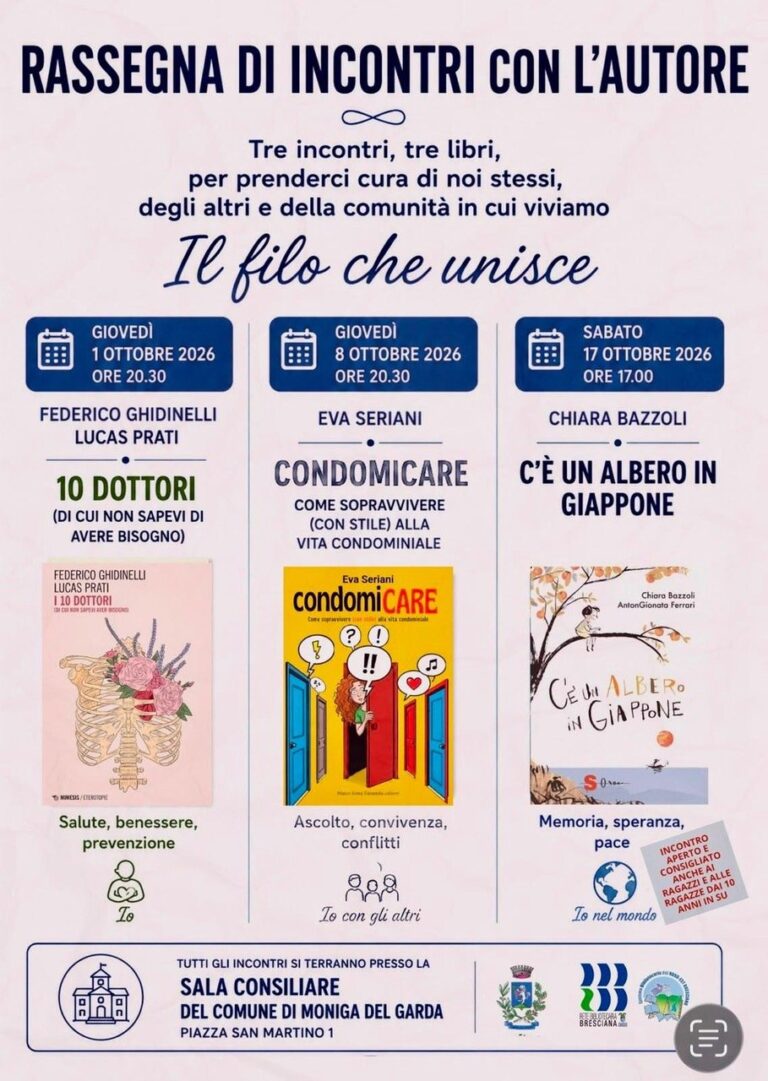
The Thread That Connects: Autumn Cultural Encounters in Moniga del Garda
A three-part cultural series in Moniga del Garda exploring personal wellbeing, community dialogue, and the memory of peace with authors Ghidinelli, Prati, Seriani, and Bazzoli.
-
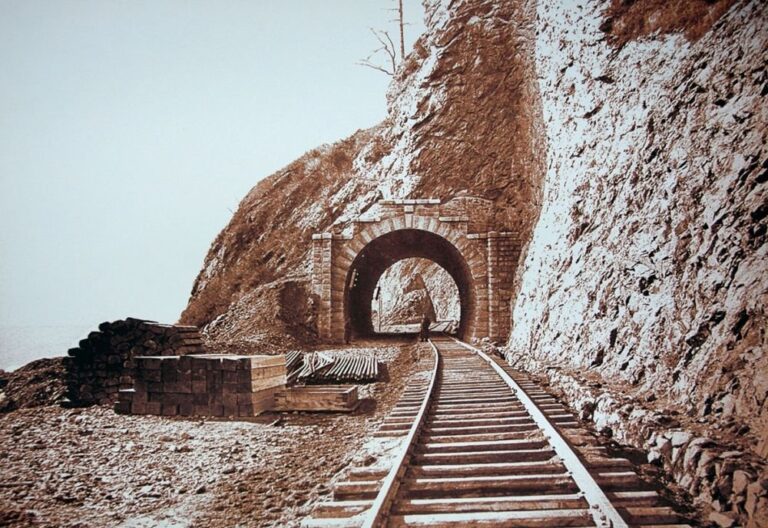
Trans-Siberian Railway: Friulian Stonemasons on Lake Baikal
The Trans-Siberian Railway represents one of the most astonishing engineering feats in human history, and along the dramatic, granite-bound shores of Lake Baikal, its realization was indelibly shaped by the hands and sweat of master Italian stonemasons, chiefly from Friuli. Construction around Lake Baikal demanded unrelenting perseverance under brutal sub-Arctic conditions. Work proceeded non-stop, 24 […]
-
Great Voices at the Sirmione Thermal Spa: From Arrigo Boito to Maria Callas
Great Voices at the Sirmione Thermal Spa have long found a haven of inspiration and therapeutic renewal on the shores of Lake Garda, beginning with the Paduan composer Arrigo Boito. In the winter of 1901–1902, following the passing of Giuseppe Verdi—for whom he had written the immortal librettos to Otello and Falstaff—Boito took up residence […]
-
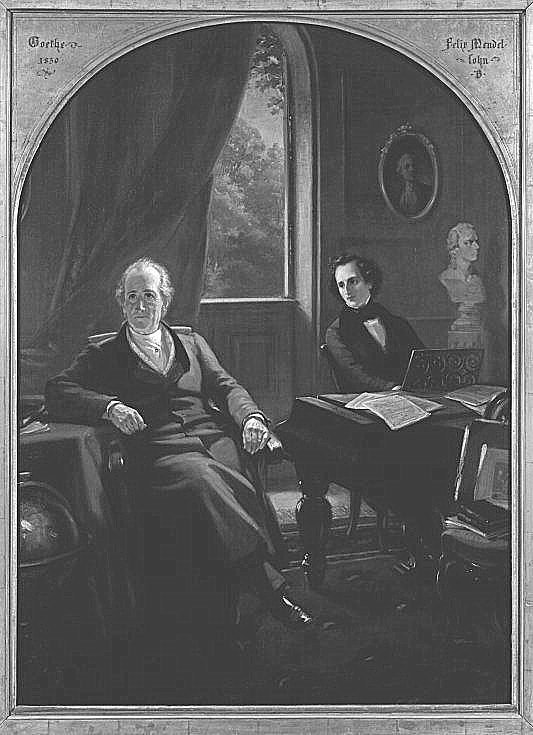
Goethe on Lake Garda: Musical Friendships with Zelter and Mendelssohn
Goethe on Lake Garda famously uncovered the luminous gateway to Italy in September 1786, but few realize how deeply the great German poet’s visual impressions were intertwined with an enduring passion for music that would link him to Carl Friedrich Zelter and the young prodigy Felix Mendelssohn. Johann Caspar Goethe (1710–1782) had imposed rigorous intellectual […]
-
Saint Angela Merici: The Spiritual Heart of Lake Garda and the Magnifica Patria
Saint Angela Merici remains one of the most transformative spiritual and social figures of Renaissance Italy, uniting the shores of Lake Garda, the city of Brescia, and the maritime civilization of the Venetian Republic in an enduring legacy of lay leadership and feminine education. Born on March 21, 1474, in Desenzano del Garda—then a prosperous […]
-
Lazzaretto of Salò: Venice’s Plague Defense on Lake Garda
The Lazzaretto of Salò stands as a formidable historical monument to Renaissance public health and maritime disease containment, linking the sanitary cordon of the Venetian Republic directly to the western shores of Lake Garda. On Saturday, October 24, 2026, the Municipality of Salò and the ASAR (Historical-Archaeological Association of the Riviera) host a major conference […]